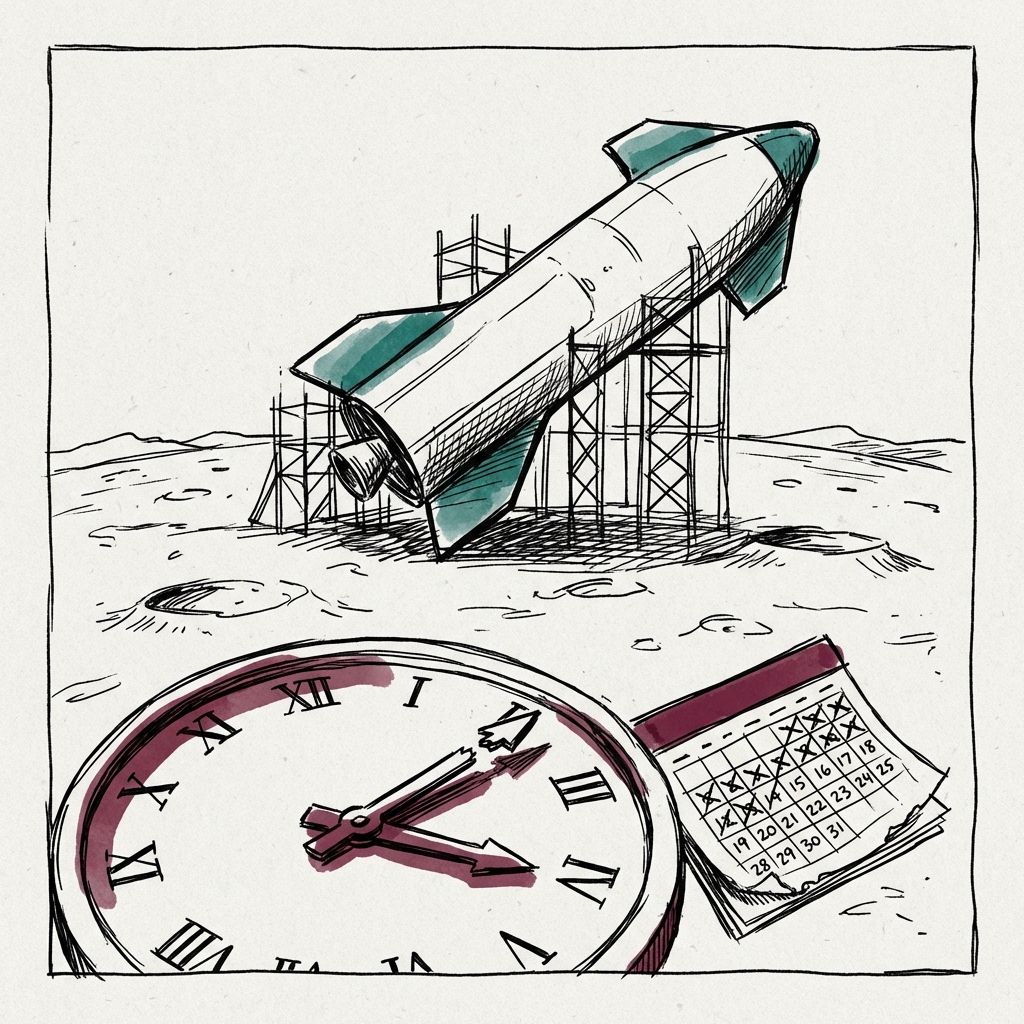
Starship HLS
SpaceX Human Landing System for Artemis III; two years behind schedule per OIG IG-26-004.
Last refreshed: 7 April 2026 · Appears in 1 active topic
Why is Artemis III not landing on the Moon as originally planned?
Timeline for Starship HLS
Mentioned in: Artemis III core stage ships Monday
Artemis II Moon MissionMentioned in: Three Orion reworks named in one call
Artemis II Moon MissionMentioned in: Kshatriya won't put months on float
Artemis II Moon MissionDocumented by OIG audit IG-26-004 as at least two years behind schedule for mid-2027 docking
Artemis II Moon Mission: Isaacman pledges 2028 Moon landing dateMentioned in: Two NASA schedules from the same podium
Artemis II Moon MissionBackground
Starship HLS is the SpaceX-built Human Landing System selected by NASA in April 2021 to carry Artemis III astronauts from lunar orbit to the surface. NASA's Office of Inspector General report IG-26-004 found the system to be approximately two years behind schedule relative to the original Artemis III landing target. Following the schedule slip, NASA's Artemis III mission was redesigned around a lunar orbit demonstration rather than a landing, with the surface landing deferred to a later mission. A LEO lander demonstration has been added to the manifest to retire risk before the lunar surface attempt.
Starship HLS is a derivative of SpaceX's full-stack Starship vehicle, modified for lunar landing with a crew elevator and adapted propulsion for the airless lunar environment. The architecture requires orbital propellant transfer in Earth orbit before trans-lunar injection — a procedure SpaceX was still developing and testing as of early 2026. NASA's contract is fixed-price.
The delay carries significant programmatic weight: the Artemis architecture was designed around a single commercial lander. No backup lander is under contract. If Starship HLS further slips, there is no alternative PATH to the lunar surface under the current programme plan. The FY2027 NASA budget protects Artemis funding while cutting Science, suggesting the administration has chosen to absorb the HLS delay rather than contract alternatives.
Why is the Artemis III Moon landing delayed?
What is Starship HLS?
Does NASA have a backup if Starship HLS keeps slipping?
How does Starship HLS get to the Moon?