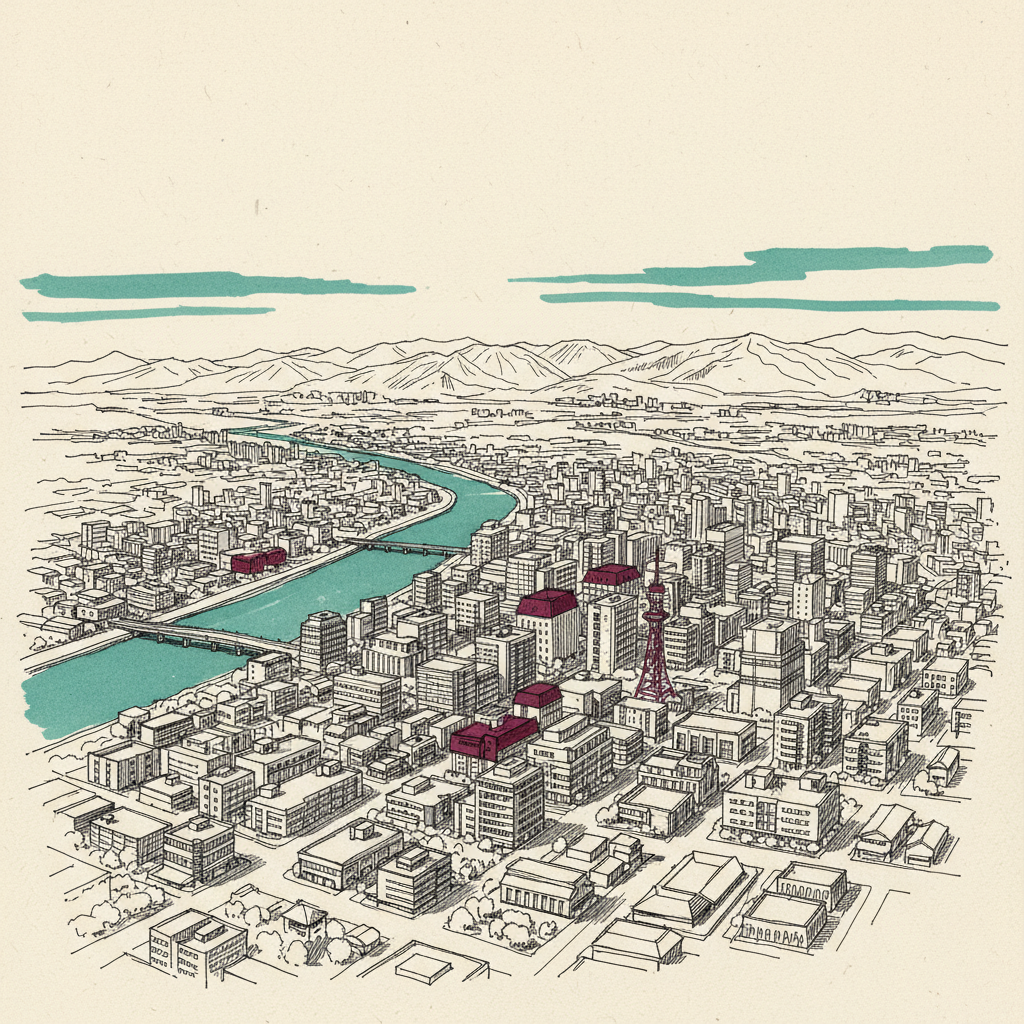
Sapporo
Hokkaido's largest city; stacks its own ¥200–¥500 accommodation tax on top of the prefecture levy.
Last refreshed: 8 May 2026 · Appears in 1 active topic
How many separate accommodation taxes does a visitor pay per night in Sapporo in 2026?
Timeline for Sapporo
Mentioned in: FIFPRO says one match in five was too hot
2026 FIFA World CupAdded ¥200 to ¥500 city surcharge on top of Hokkaido prefecture accommodation tax from 1 April 2026
Nomads & Communities: Japan's lodging tax wave goes structuralBackground
Sapporo is Hokkaido's capital and largest city, with a population of around 1.95 million, making it Japan's fifth largest city. It is best known internationally for its annual SNOW festival and as the gateway to Hokkaido's ski resorts. From 1 April 2026, Sapporo guests pay three accommodation-tax layers on every hotel night: the Hokkaido prefectural charge (¥100–¥500), a Sapporo city surcharge of ¥200 to ¥500, and potentially a municipal layer from one of 15 Hokkaido municipalities depending on location.
Sapporo's three-layer stack is the concrete example the briefing uses to illustrate how the Japanese accommodation-tax model has propagated into structural budgeting rather than remaining a Kyoto-style political instrument. A nomad staying in central Sapporo pays all three simultaneously; the compounding across a multi-week itinerary adds meaningfully to baseline lodging cost.
Sapporo is a viable longer-stay nomad destination: cheaper than Tokyo, accessible by Shinkansen since 2016, with a large university population and coworking infrastructure. The tax stack does not change that calculus dramatically at ¥700–¥1,000/night total, but it sets the pattern others will follow.
How much accommodation tax do I pay in Sapporo in 2026?
Is Sapporo a good city for remote workers in Japan?
What visa do I need to work remotely from Sapporo as a foreigner?
How much does it cost to rent an apartment in Sapporo compared to Tokyo?


