Oregon POWER Act
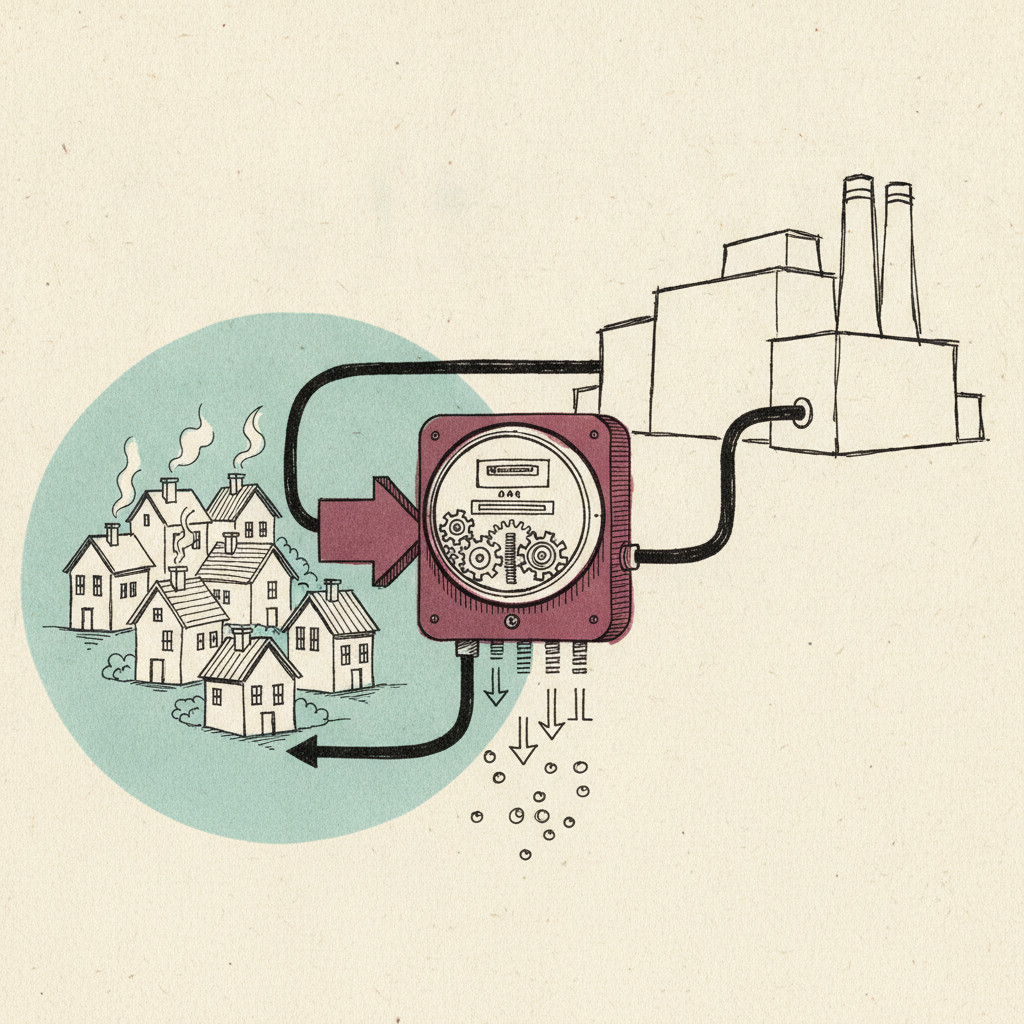
2025 Oregon state law requiring utilities to charge large electricity loads (sites drawing 20 MW or more) the full cost of serving them, creating a dedicated rate class that prevents cross-subsidisation by residential customers.
Last refreshed: 15 July 2026 · Appears in 1 active topic
Can Oregon's POWER Act survive its first regulatory test on 7 July?
Timeline for Oregon POWER Act
Mentioned in: Oregon clears a 29% big-load surcharge
Data Centres: Boom and BacklashMentioned in: Virginia floats a fee on backup gas
Data Centres: Boom and BacklashOregon PUC delays its data-centre tariff
Data Centres: Boom and BacklashProvided the legal mandate for PGE's large-load rate class filing
Data Centres: Boom and Backlash: Oregon bills data centres, not homesBackground
The Oregon POWER Act (Prioritising Operational and Wholesale Energy Responsibility), passed in 2025, is the first US state law under which a utility has fully implemented a dedicated large-load rate class for sites drawing 20 megawatts or more, charging those sites the full cost of serving them rather than spreading grid-upgrade costs across the general residential customer base. Portland General Electric filed the first tariff under the Act on 10 June 2026, and Oregon's Public Utility Commission approved it on 7 July 2026, effective 8 July: a 29% rate increase for qualifying sites and a 1.3% household cut.
Prior to the POWER Act, the conventional US utility model socialised infrastructure costs across all customers: a new 100 MW data-centre campus triggering a substation upgrade would spread that upgrade cost over all ratepayers, effectively subsidising the operator. Oregon's law breaks that model explicitly, requiring cost causation: the party that causes the cost bears it. The 20 MW threshold was set to capture hyperscale and colocation campuses while excluding smaller commercial and industrial loads.
At least a dozen US states have filed or are considering similar cost-attribution bills in 2026. The 7 July OPUC approval is now the first national precedent for whether this approach survives regulatory scrutiny and any industry legal challenge. Its outcome will shape the legislative design of equivalent bills in Texas, Virginia, Georgia, and elsewhere.
Has the Oregon POWER Act taken effect yet?
What is the Oregon POWER Act for data centres?
What is the 20 MW threshold in the Oregon data centre law?
How does the Oregon POWER Act affect household electricity bills?
Which states are copying Oregon's data centre electricity law?
Written with AI from Lowdown's published reporting. Not individually reviewed by an editor. Updated 15 July 2026. Editorial standards.