MM2H
Malaysia My Second Home programme; the high-income second-home tier at 40,000 ringgit/month (~$8,500), separate from the cheaper DE Rantau nomad route.
Last refreshed: 29 May 2026 · Appears in 1 active topic
Is MM2H a digital nomad visa, and what does it actually cost?
Timeline for MM2H
Mentioned in: Thailand halves its visa-free entry window
Nomads & CommunitiesBackground
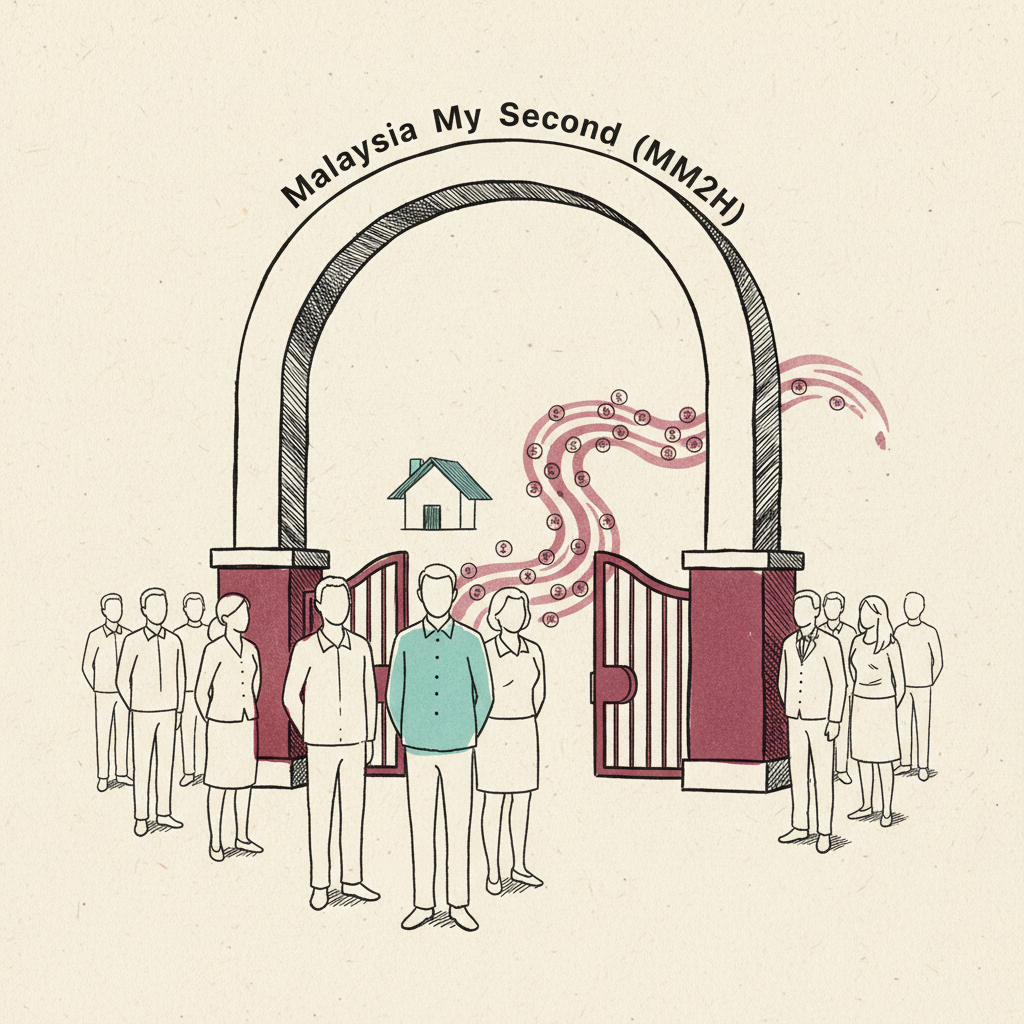
Malaysia My Second Home (MM2H) is a long-term residence programme operated by Malaysia's Ministry of Tourism, Arts and Culture. It is a second-home scheme, not a digital nomad Visa: its target audience is retirees, investors and high-net-worth individuals seeking a Malaysian base, and it requires applicants to place a fixed deposit of substantial size in a Malaysian bank and demonstrate significant monthly offshore income. As of 2026, the monthly offshore income requirement for the standard MM2H tier stands at roughly 40,000 ringgit a month (around 8,500 US dollars), placing it among the world's highest long-stay income floors.
MM2H was tightened significantly in 2021, when the Malaysian government raised income and deposit thresholds sharply, generating controversy among existing holders. The 2021 revision cut enrolment dramatically and prompted legal challenges from holders whose conditions were changed mid-tenure. The scheme is administered separately from Malaysia's DE Rantau digital nomad Visa, which has a FAR lower income requirement and targets active remote workers rather than asset holders. Conflating the two is a common error in coverage of Malaysian mobility policy.
In the context of the May 2026 briefing, MM2H appears as a data point in the global comparison of long-stay income and savings floors: its 40,000-ringgit monthly requirement is the top of the comparison table, and the existence of DE Rantau alongside it illustrates that Malaysia operates a two-tier approach, with a low-friction nomad route and a high-cost second-home route running in parallel.
Is MM2H a digital nomad visa for Malaysia?
How much does the Malaysia My Second Home programme cost in 2026?
What changed with MM2H in 2021?


