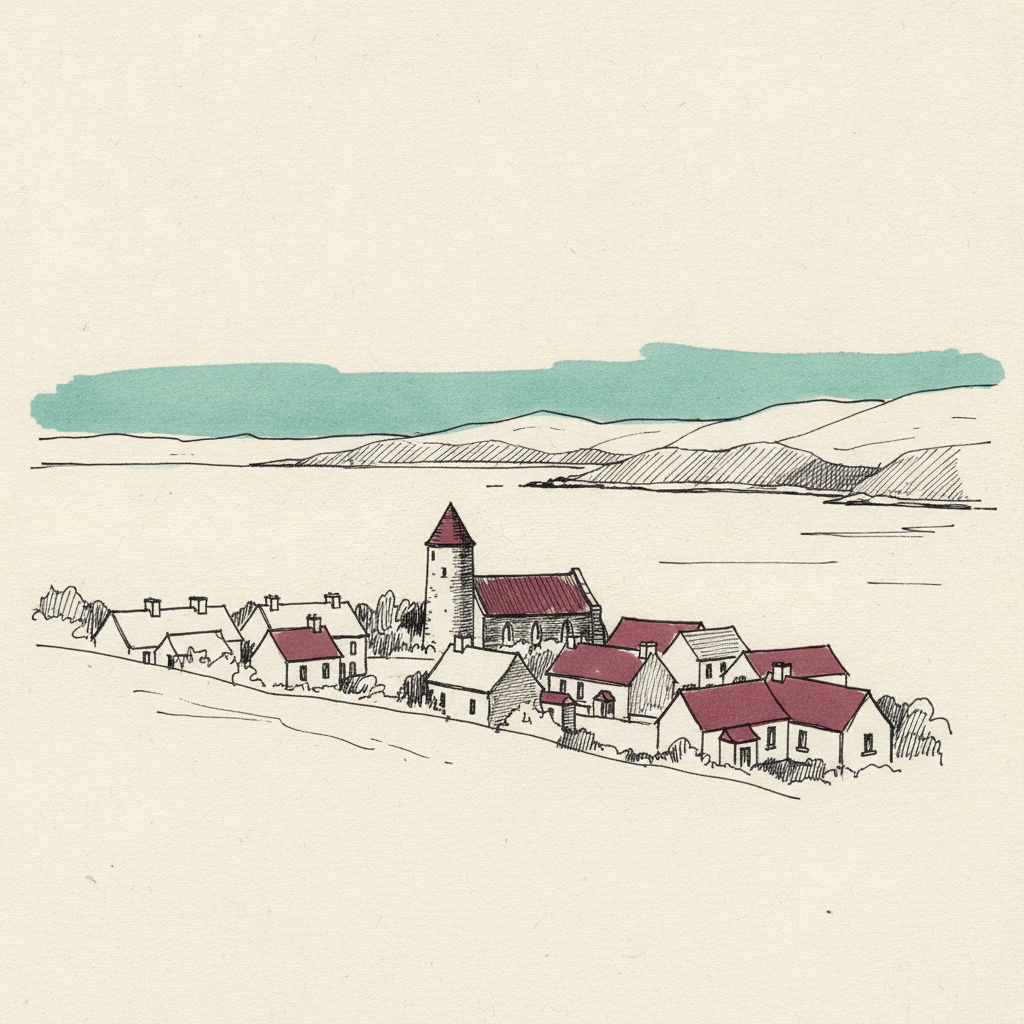
Killala
Village in County Mayo, Ireland, on Killala Bay; site of the 1798 Rebellion landing.
On 17 September, Ireland’s national planning appeals body refused a €1.5bn data-centre proposal at Killala after the developer failed to show a fixed grid connection or renewable-power contract.
Last refreshed: 24 September 2026 · Appears in 1 active topic
Why did Ireland refuse the €1.5bn Killala data centre?
Timeline for Killala
Ireland refuses €1.5bn Mayo data centre
Data Centres: Boom and BacklashBackground
On Killala Bay in County Mayo, the village remains a small west-Irish settlement with a recorded population of about 560 in the 2016 census. Its coastal setting places it on Ireland’s Atlantic-facing western seaboard.
The village holds a distinct place in Irish history as the landing site for General Humbert’s French expeditionary force during the 1798 Rebellion. Rebel forces held Killala for 32 days after the landing, connecting the village to one of the rebellion’s best-known western episodes.
That local identity gives Killala significance beyond its size. Its bay, rural setting and rebellion history remain useful reference points for readers assessing proposals that would alter the area’s infrastructure and land use.
Killala loses planned data centre
On 17 September, Ireland’s national planning appeals body refused the €1.5bn data-centre proposal planned for Killala. The decision overturned Mayo County Council’s 2025 approval, leaving the village without the development that Mayo Data Hub had proposed for the site.
For Killala, the ruling made grid readiness and renewable electricity central to any return of the proposal. The appeals body found no confirmed grid connection and no corporate renewable-power agreement, so the project could not proceed on the evidence before it on 17 September.

