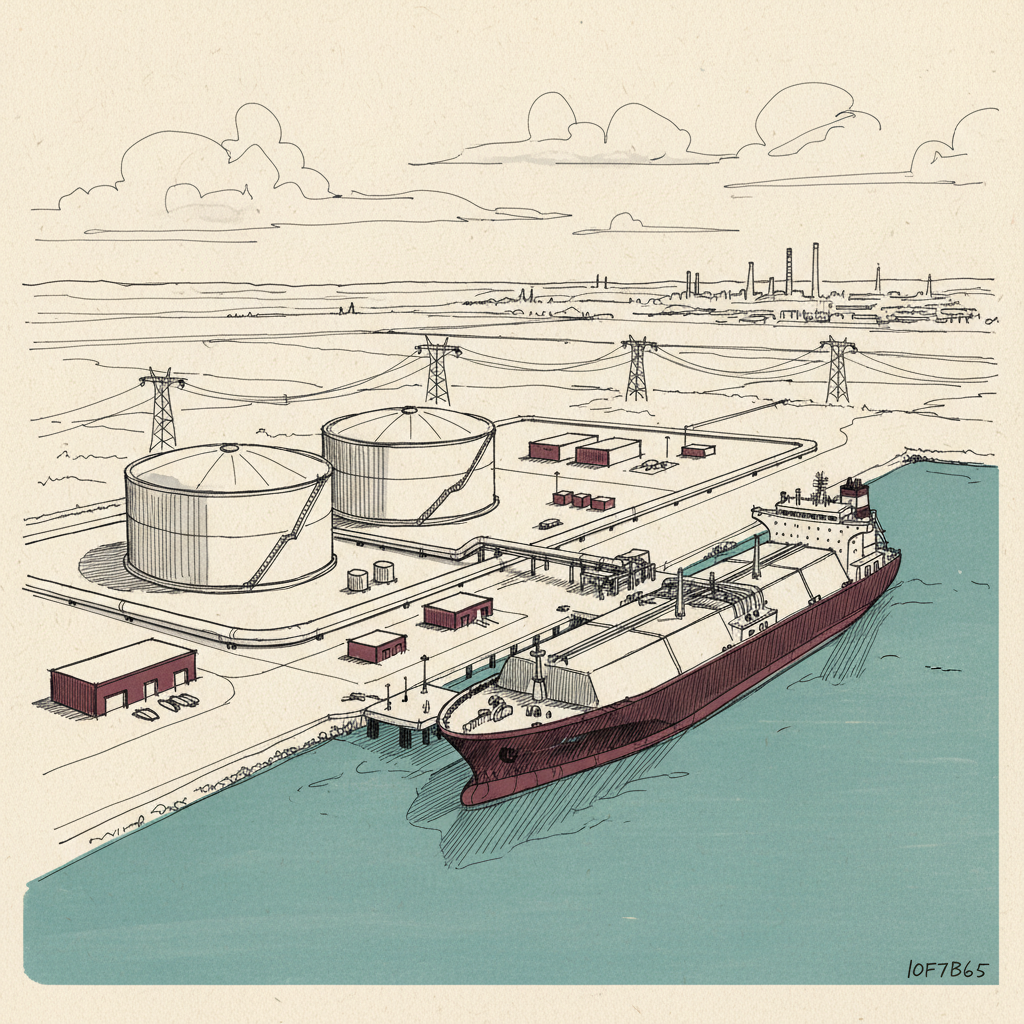
Isle of Grain
UK's largest LNG import terminal in Kent; central to GB supply as Continental pipeline links shrink.
Last refreshed: 29 May 2026 · Appears in 1 active topic
How does Isle of Grain's LNG capacity protect the UK as Continental pipeline links shrink?
Timeline for Isle of Grain
Mentioned in: TTF holds €46-47 range; NBP reaches parity
European Energy MarketsBBL halved, IUK drops in October: GB-Continent link cut
European Energy MarketsBackground
On 28 May 2026, NBP settled at 112.3p/therm, equivalent to roughly €46.5/MWh, reaching effective parity with TTF for the first time in the briefing series. The elimination of the UK's historical LNG-import discount means Isle of Grain can no longer pull Atlantic SPOT cargoes on price alone: buyers in Belgium, France and the Netherlands now face the same delivered cost, compressing the arbitrage window that historically made Isle of Grain the preferred destination for swing LNG in Europe.
The NBP-TTF parity reading coincides with Isle of Grain's structural ascent as GB's primary flexible import buffer. With BBL at 22 MCM/d and IUK scheduled to fall to 36 MCM/d from October 2026, the terminal's send-out capacity represents the dominant flexible import variable for UK winter supply. The convergence of rising structural importance and compressed cargo economics means National Gas's scheduling decisions at Isle of Grain now carry direct implications for both UK winter gas security and Continental SPOT markets competing for the same Atlantic LNG supply.
Where is the Isle of Grain LNG terminal?
Why is Isle of Grain important to UK gas supply in 2026?
How much LNG can the Isle of Grain terminal handle?
Why is UK gas the same price as European gas in 2026?
What is the Isle of Grain LNG terminal and where is it?
How much LNG can the UK import and is it enough for winter?

