GNSS
Satellite positioning and timing technology underlying navigation, critical infrastructure, and defence.
Last refreshed: 18 June 2026
Why does Europe need its own GNSS chip manufacturing capability?
Timeline for GNSS
Mentioned in: Tekever climbs weight classes with AR6
Drones: Industry & DefenceMentioned in: A sovereign chip flow ships at Dresden
European Tech SovereigntyBackground
On 10 June 2026, GlobalFoundries and Dutch startup Qualinx completed the first fully European end-to-end sovereign manufacturing flow for a GNSS positioning chip at GF's Dresden fab, with no design data or materials leaving the continent. The chip targets defence and critical-infrastructure customers, reaching commercial availability in 2027. The milestone matters because GNSS positioning is embedded in everything from aircraft navigation and missile guidance to power-grid synchronisation and financial settlement timestamps, making the sovereignty of the silicon supply chain a national-security question, not just a commercial one.
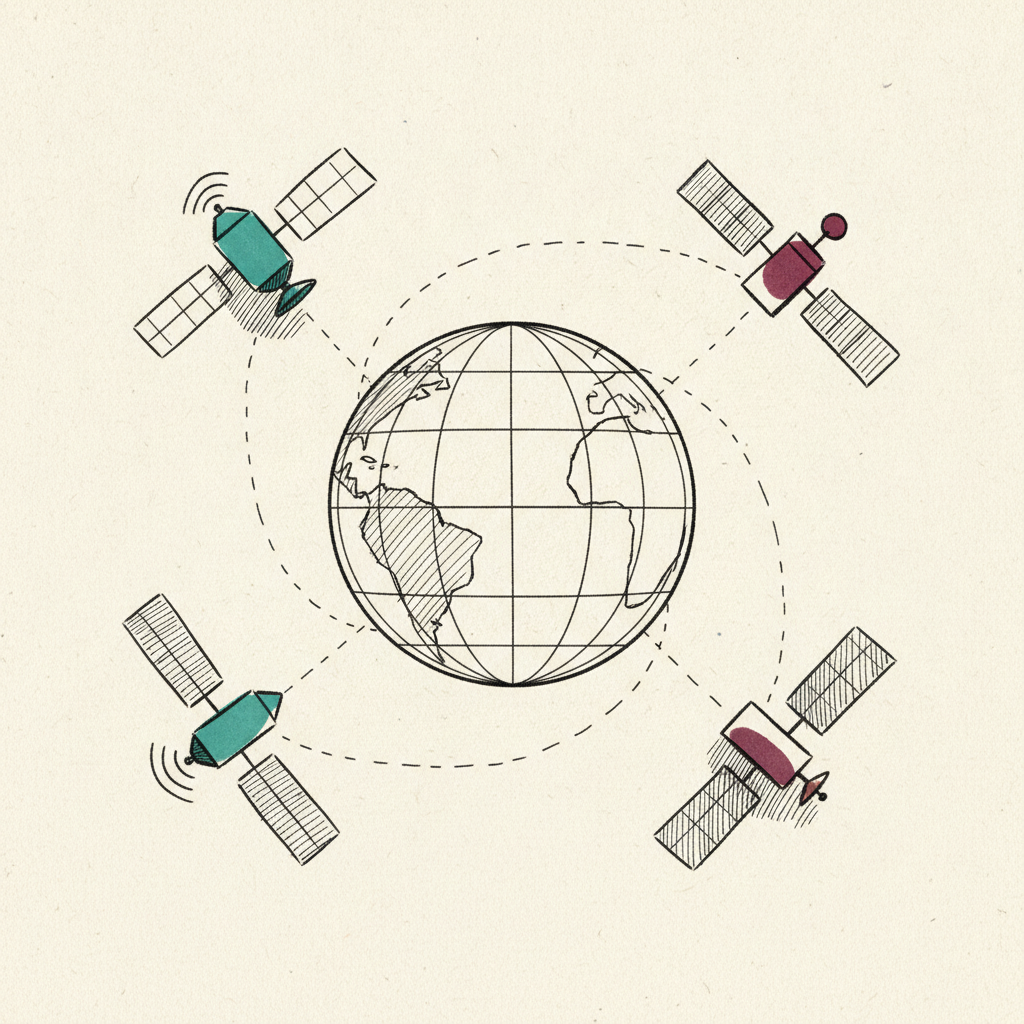
GNSS is the umbrella term for all satellite-based positioning and timing systems. The four major constellations are the US GPS, the EU's Galileo, Russia's GLONASS, and China's BeiDou; most modern receivers are multi-constellation, using signals from whichever satellites are visible to improve accuracy and resilience. The system works by measuring the travel time of signals from at least four satellites simultaneously; because the signals carry atomic-clock timestamps, a GNSS receiver can determine both its precise location and an extremely accurate time reference. That timing function, often overlooked, underpins synchronisation in telecoms networks, power grids, and financial exchanges.
Galileo, declared fully operational in 2016, is Europe's own GNSS constellation, offering a civilian open service and a higher-accuracy commercial service independent of US GPS. The Dresden Qualinx chip represents a further sovereignty layer: not merely using a European signal, but manufacturing the receiver silicon inside Europe under European data-handling rules, closing a supply-chain gap that has persisted since GNSS receivers were first fabbed outside the continent.