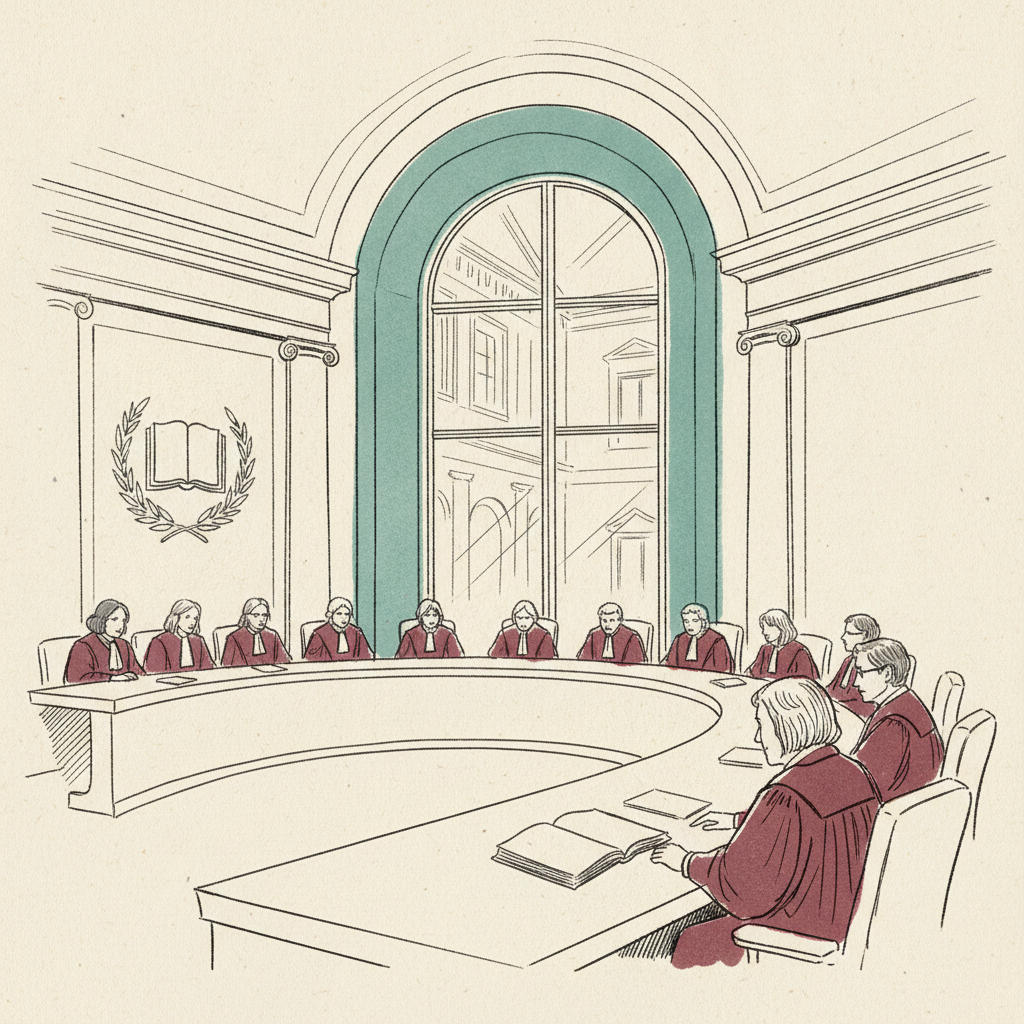
General Court of the European Union
EU judicial body one tier below the Court of Justice; its 9 July 2026 ruling closed Google's route to pre-emptively challenging DMA specification decisions.
The General Court ruled on 9 July 2026 that Google could not obtain pre-emptive judicial review to delay Digital Markets Act compliance, clearing the way for the Commission's 16 July specification decisions and 23 July €890m fine.
Last refreshed: 26 July 2026 · Appears in 1 active topic
Why couldn't Google delay the EU's Digital Markets Act fine through the courts?
Timeline for General Court of the European Union
Mentioned in: EU ministers add nearly 1,600 Russia sanctions listings
Russia-Ukraine War 2026Mentioned in: Google fined €890m four days before EU deadline
European Tech SovereigntyMentioned in: Brussels orders Google to open Android to AI rivals
European Tech SovereigntyBackground
The General Court of the European Union is the EU's second-highest court, based in Luxembourg, sitting one tier below the Court of Justice of the European Union. It hears actions against decisions taken by EU institutions, including the European Commission.
Its rulings on procedural questions, such as whether a gatekeeper can seek pre-emptive review before a specific enforcement decision exists, shape how every designated Digital Markets Act gatekeeper can challenge Commission action going forward, giving the Court an outsized role in how quickly EU tech regulation can actually bite.
Ruling clears way for DMA fines
the Court's 9 July decision held that a designated gatekeeper such as Google cannot obtain a pre-emptive judicial review to delay Digital Markets Act compliance before the Commission issues a specific enforcement decision. That closed Google's last legal route to stall what followed: the Commission's Article 6(7) specification decisions of 16 July, ordering Google to open Android features and share search-ranking data with rivals from January 2027, and the €890 million fine that landed on 23 July.
The procedural point now stands as precedent for how every other DMA gatekeeper can challenge future specification decisions, reinforcing the Commission's ability to enforce on its own timetable rather than waiting out prolonged litigation.
Reference
Where is the General Court based?
What is the General Court of the European Union?
What did the General Court rule on Google and the DMA?
Written with AI from Lowdown's published reporting. Not individually reviewed by an editor. Updated 26 July 2026. Editorial standards.