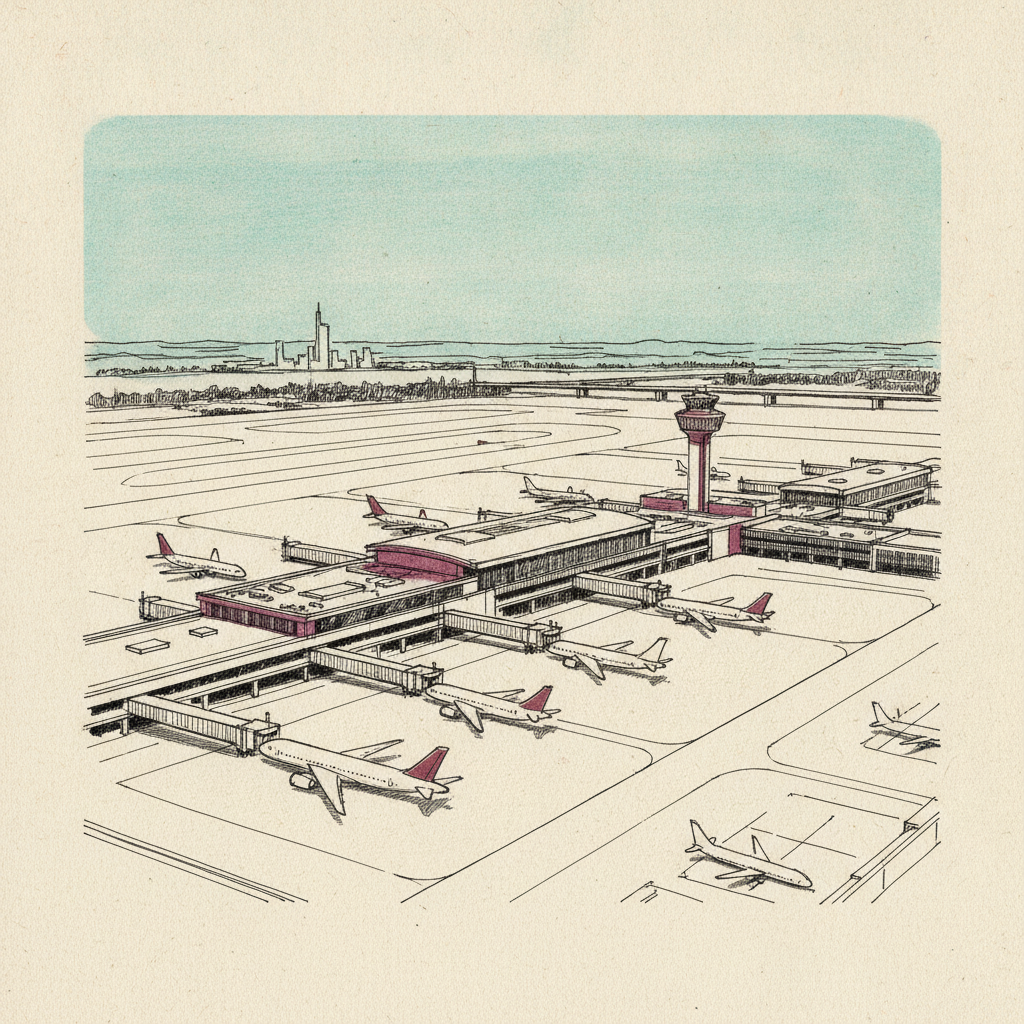
Frankfurt Airport
Germany's largest airport, in Frankfurt am Main.
In 2026, Frankfurt Airport remained Germany's largest airport and a major entry point for long-distance passenger and cargo traffic.
Last refreshed: 22 October 2026 · Appears in 1 active topic
Timeline for Frankfurt Airport
Mentioned in: Belgium logs first home-grown West Nile
Pandemics and BiosecurityMalaria at Frankfurt Airport kills three
Pandemics and BiosecurityBackground
Frankfurt Airport is Germany's largest airport, located in Frankfurt am Main. Its passenger and cargo routes connect Germany with destinations across Europe and other continents.
That traffic makes the airport relevant to public health as well as transport. Aircraft can carry infected travellers, animals or mosquitoes from places where a disease is established. Airport workers and nearby residents may therefore face an exposure route that ordinary travel-history questions miss. Health departments can investigate such risks through staff alerts, mosquito trapping and parasite or pathogen sequencing. These are enduring features of a large international gateway. Individual case clusters and pending test results belong in the timeline rather than the airport's durable background.
When will the Frankfurt malaria genotyping results come?
How many people have died of malaria near Frankfurt Airport?
How did people catch malaria at Frankfurt Airport?
Written with AI from Lowdown's published reporting. Not individually reviewed by an editor. Updated 22 October 2026. Editorial standards.