FinFET
Dominant 3D transistor architecture enabling chip scaling below 16nm.
Last refreshed: 13 April 2026
Will the Dresden fab finally give Europe its first real FinFET capability?
Timeline for FinFET
Mentioned in: ESMC Dresden eyes 2027 first wafers
European Tech SovereigntyMentioned in: ESMC Dresden fab finishes structural build
European Tech SovereigntyMentioned in: Crolles fab suspended as GF pulls back
European Tech SovereigntyBackground
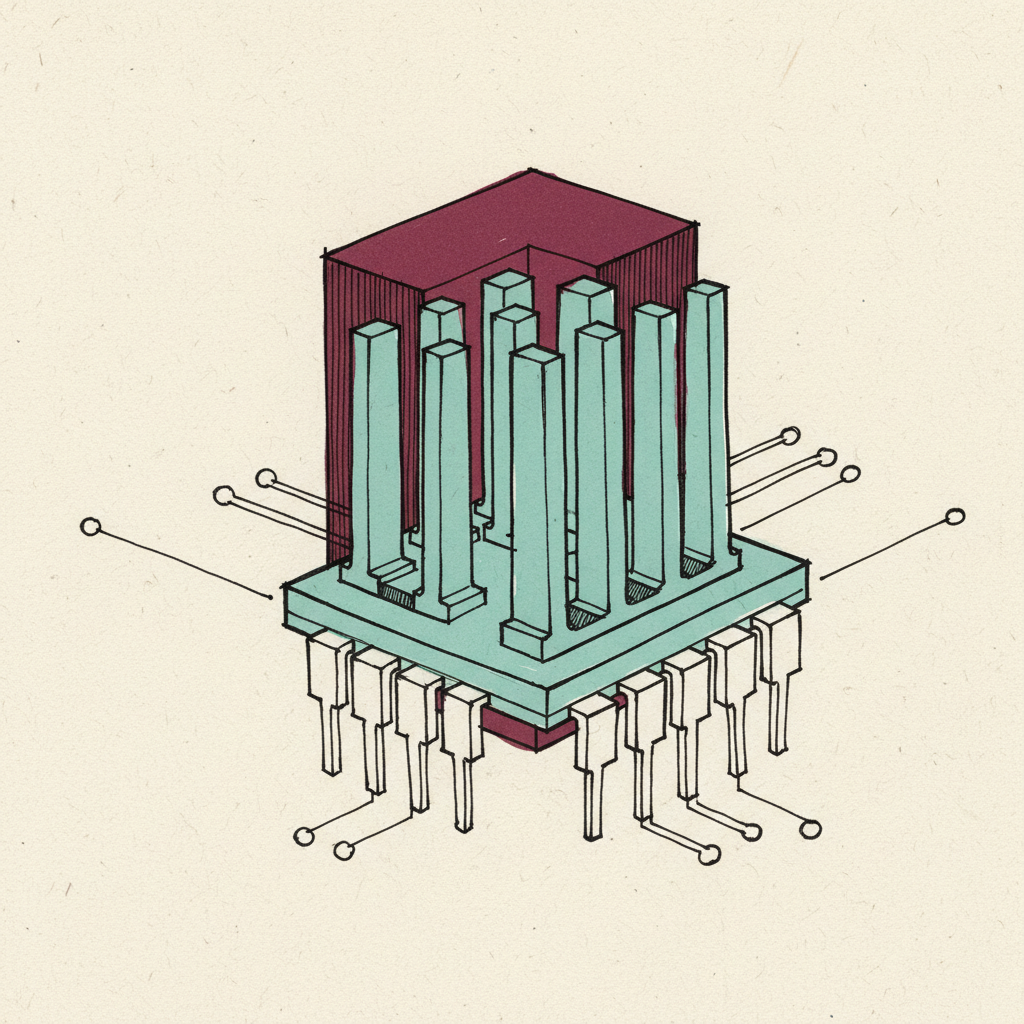
FinFET (Fin Field-Effect Transistor) is the dominant transistor architecture used in semiconductor nodes from 16nm downward, powering the chips in smartphones, data centres, and high-performance computing. The 3D structure of the fin dramatically reduces current leakage and enables continued transistor scaling beyond the limits of planar silicon. FinFET is central to European semiconductor ambitions because the ESMC Dresden fab, a joint venture between TSMC, Bosch, NXP, and Infineon, is being built to produce chips at 12nm and below using FinFET and its successor architectures.
FinFET technology was first demonstrated at Berkeley in the 1990s and commercialised by Intel at 22nm in 2011, followed by TSMC and Samsung. The architecture is now the foundation of virtually all leading-EDGE chip production. Its successor, Gate-All-Around (GAA), is used at the 3nm and 2nm nodes. European fabs historically specialised in older planar nodes (90nm to 28nm), meaning the region has had minimal capability in leading-edge FinFET production until the ESMC and Intel Magdeburg investments under the Chips Act.
The EU Chips Act's target of 10% of global chip production by 2030 is explicitly predicated on European foundries reaching FinFET-capable nodes. The failure of Intel's Magdeburg megafab and the suspension of GlobalFoundries' Crolles expansion both represent setbacks to this ambition, making the ESMC Dresden fab the primary remaining European bet on advanced-node production.