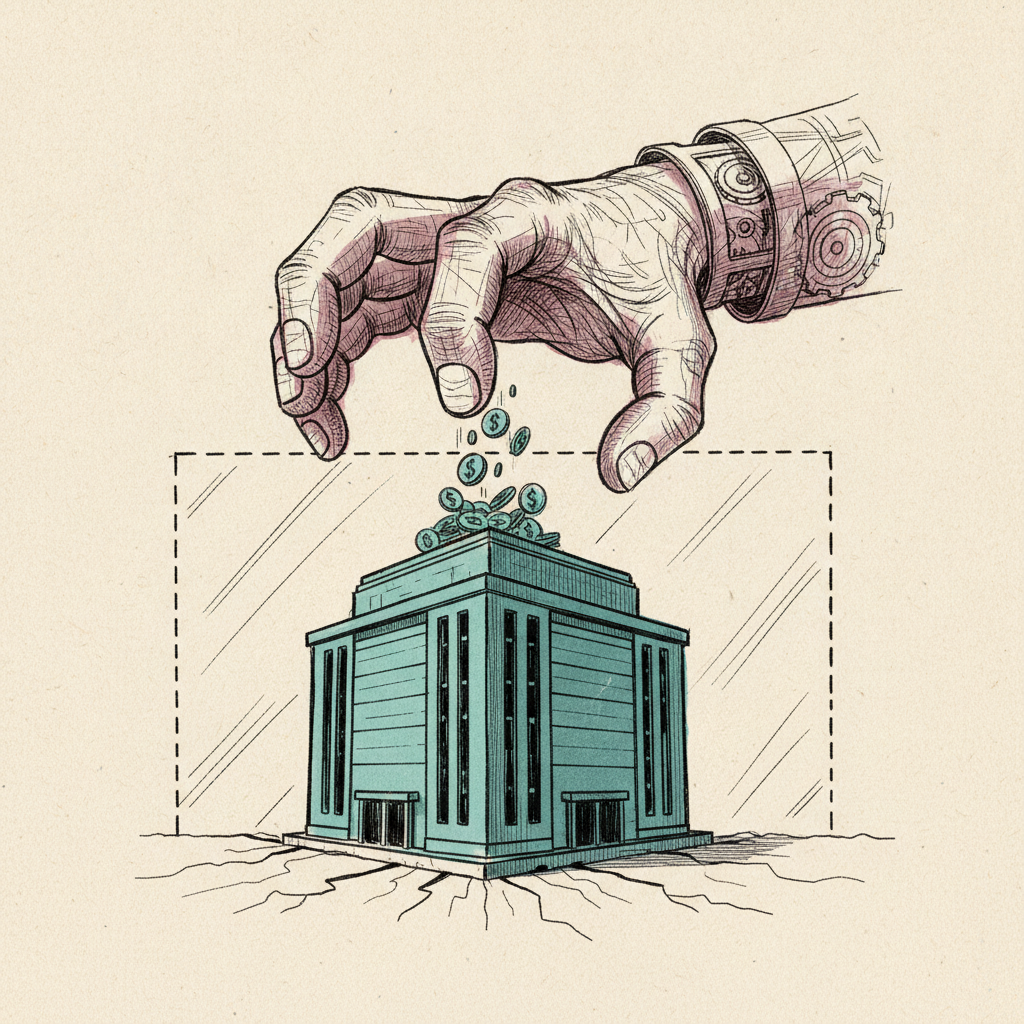
Fifth Amendment
US constitutional Takings Clause; central doctrine behind data-centre moratorium lawsuits challenging property seizure.
Last refreshed: 25 July 2026 · Appears in 1 active topic
Why is the Fifth Amendment central to data-centre moratorium fights?
Timeline for Fifth Amendment
Mentioned in: Amazon nuisance suit clears first test
Data Centres: Boom and BacklashMentioned in: Indiana freezes its 12th county on AI
Data Centres: Boom and BacklashCited as the legal basis for the regulatory-taking claim against the moratorium
Data Centres: Boom and Backlash: Hill County folds, lawsuit lives onBackground
The Fifth Amendment is one of the ten amendments in the US Bill of Rights, ratified in 1791. Its Takings Clause, "nor shall private property be taken for public use, without just compensation", bars government seizure of property without payment, alongside separate protections against self-incrimination and double jeopardy. Courts apply two main tests to takings claims: the categorical Lucas test, where a regulation eliminates all economic value, and the multi-factor Penn Central test, weighing economic impact and interference with investment-backed expectations.
In 2026 the Takings Clause became the central instrument used by data-centre developers to challenge government moratoriums. RCM Hill LLC filed a $100 million federal suit against Hill County, Texas over its moratorium on the 1,235 MW Project Aquila campus; the county rescinded the moratorium unanimously seven days later, on 4 June 2026, though the lawsuit remains active. A separate rehearing filed 28 May 2026 argues the DOE's Section 202(c) grid-curtailment order constitutes a physical and regulatory taking of backup-generation assets.
Courts have historically upheld emergency grid curtailment as settled regulatory power, but a local legislature targeting a single named industry class has weaker precedent protection, making the Hill County case a novel test. The pattern, where local governments retreat rather than litigate a takings claim to conclusion, is likely to recur as more US jurisdictions weigh data-centre moratoriums against developer legal exposure.
Can the Fifth Amendment be used to block a data centre moratorium?
What is a regulatory taking under the Fifth Amendment?
Did Hill County repeal its data centre moratorium because of a lawsuit?
Is the DOE's Section 202(c) curtailment order a constitutional taking?
What is the Fifth Amendment's Takings Clause?
Written with AI from Lowdown's published reporting. Not individually reviewed by an editor. Updated 25 July 2026. Editorial standards.