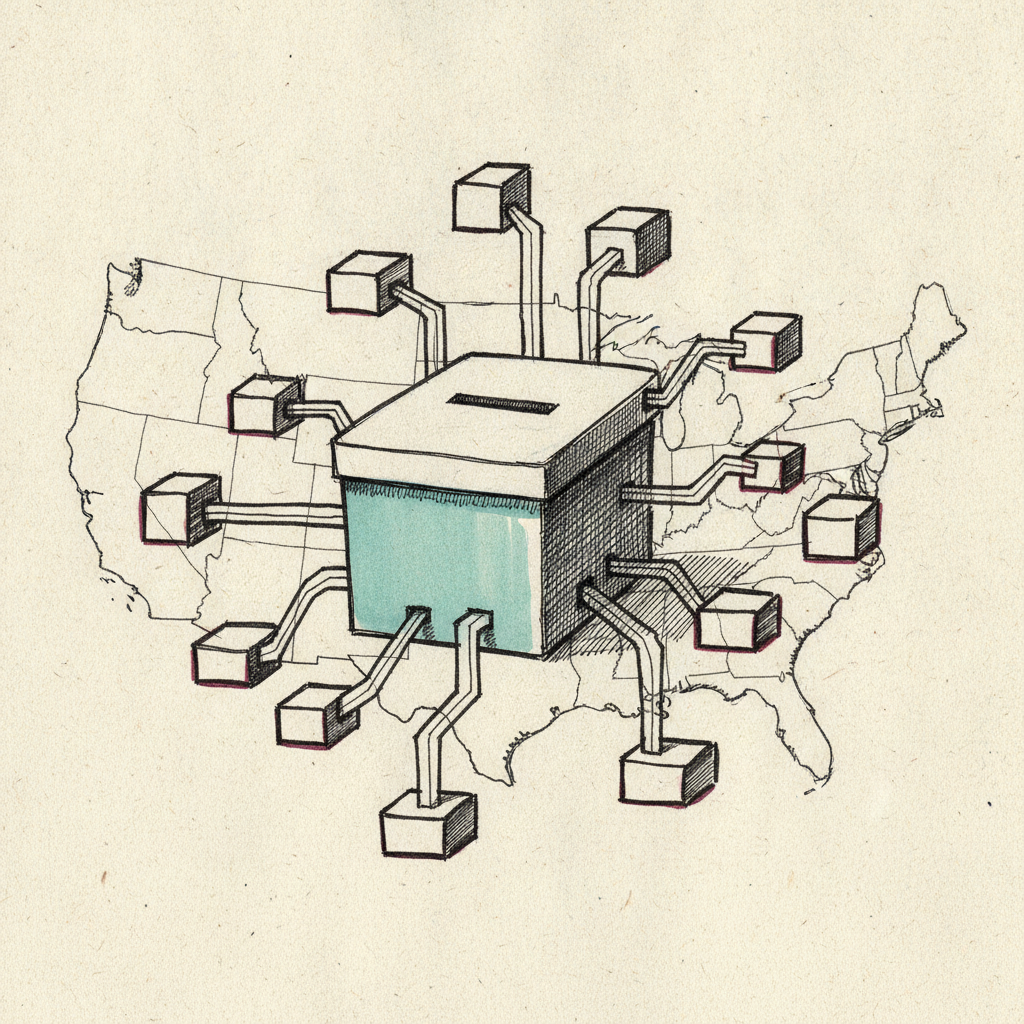
Electoral College
Body of state electors that formally chooses the US president.
The Electoral College is not on the ballot on 3 November 2026, because midterms choose Congress, governors and state offices. Its 538 electors next decide the presidency in 2028, on allocations set by the 2020 census.
Last refreshed: 1 October 2026
Timeline for Electoral College
Mentioned in: Nine Republican PACs file $164m of $259m
US Midterms 2026Background
A midterm year leaves the Electoral College idle, but The House and Senate races of 2026 are fought on the same state map that will decide 2028. Redrawing district lines between censuses does not change a state's elector count, which moves only when House seats are reapportioned after a census.
There are 538 electors, and a candidate needs 270 to win. Each state has as many electors as it has House members plus its two senators, and the 23rd Amendment gives the District of Columbia three. Maine and Nebraska split their electors by congressional district, with two awarded at large. Electors meet on the first Tuesday after the second Wednesday in December, a date set by a 2022 law that moved the meeting from a Monday. Current allocations follow the 2020 census and apply to the 2024 and 2028 elections.
The system can split from the popular vote. In 2016 Donald Trump won 304 electoral votes to 227, while FEC figures show his opponent winning 65,853,514 popular votes to his 62,984,828.