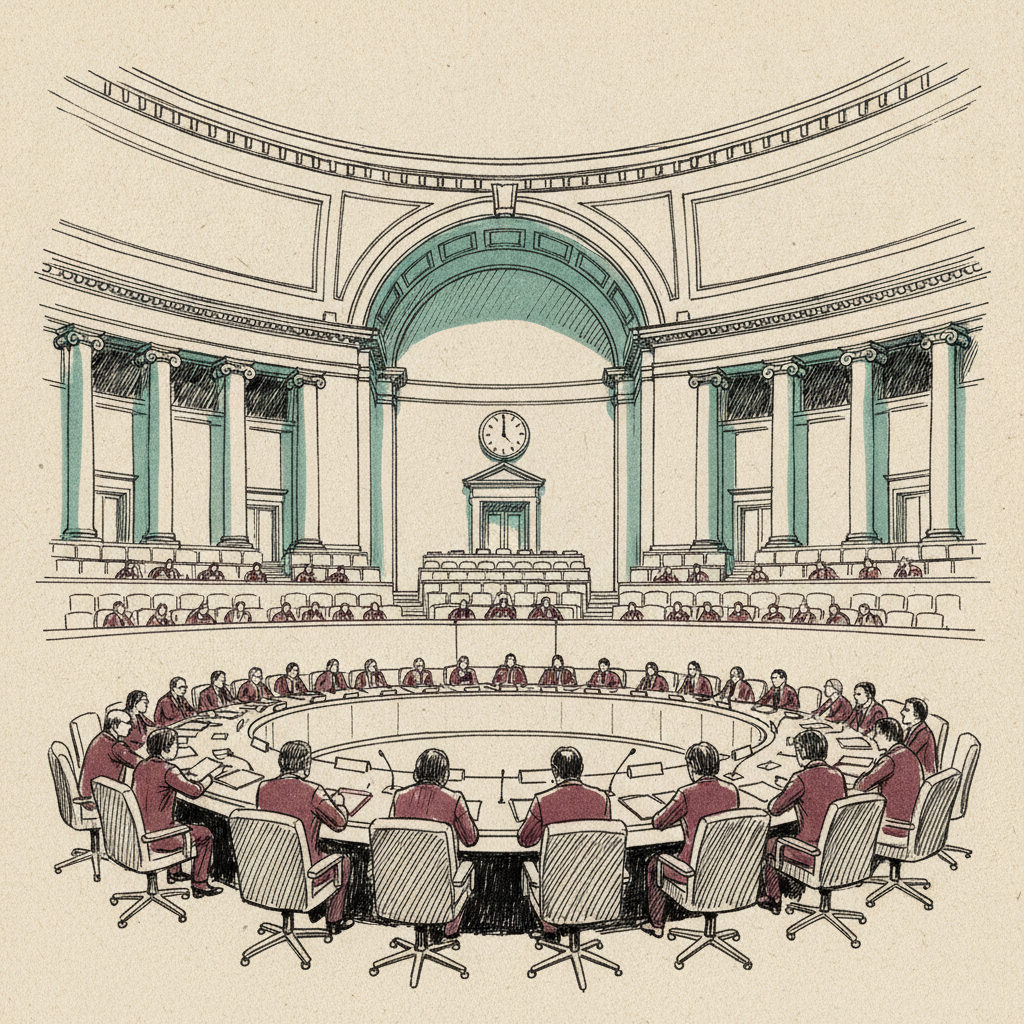
Economic and Monetary Affairs Committee
The European Parliament committee with jurisdiction over financial regulation, monetary policy and capital markets.
Last refreshed: 16 July 2026 · Appears in 1 active topic
Can ECON's digital euro design survive commercial-bank lobbying over deposit limits in trilogue?
Timeline for Economic and Monetary Affairs Committee
Right forces digital euro to the floor
European Tech SovereigntyVoted 43-14 to approve the framework and send it to trilogue
European Tech Sovereignty: Digital euro heads to final trilogueBackground
The European Parliament's Economic and Monetary Affairs Committee (ECON) approved the Digital Euro's legal framework by 43 votes to 14, with one abstention, on 23 June 2026, and sent it directly into trilogue negotiations with the Council and Commission. The vote came the day after the US Senate voted 85 to 5 to ban a domestic central bank digital currency for four years, an opposition that still needs House passage. ECON's decision was notable for its margin and speed; the Digital Euro file had stalled repeatedly under banking-lobby pressure over deposit-flight fears.
ECON's decision to send the framework straight into trilogue without a full plenary vote was itself challenged: on 9 July 2026 the ECR, Patriots for Europe and Europe of Sovereign Nations groups forced the file to the floor, and the Strasbourg plenary backed the negotiating mandate 416 to 169, with 22 abstentions, formally opening trilogue with the Council. The scale of the majority, more than double the votes against, confirmed ECON's committee-level judgement even as the procedural challenge tested it.
ECON is the European Parliament's committee with jurisdiction over financial regulation, monetary policy, banking supervision, capital markets and taxation. It is the committee of first reading for all major financial-system legislation, conducting hearings with the European Central Bank (ECB), Commission and Council before the Parliament forms its negotiating position. The Digital Euro file, which began in 2021, moved through ECON over three years, with committees from several other Parliament groupings feeding in opinions.
The trilogue that ECON triggered is the decisive stage. The three institutions must agree on the holding limits that prevent large-scale withdrawal from commercial banks, the exact scope of merchant-acceptance mandates and the privacy architecture of the offline wallet. Commercial banks and the ECB had competing interests on the deposit-flight question; ECON's design, an offline wallet that behaves like cash rather than a deposit account, is what enabled the committee to move. First issuance is pencilled for 2029.
What did the European Parliament ECON committee vote on in June 2026?
What is the ECON committee in the European Parliament?
What happens in trilogue for the digital euro?
Why has the digital euro taken so long to reach trilogue?
Why did the digital euro mandate go to a full European Parliament vote?
Did the European Parliament approve the digital euro negotiating mandate?
