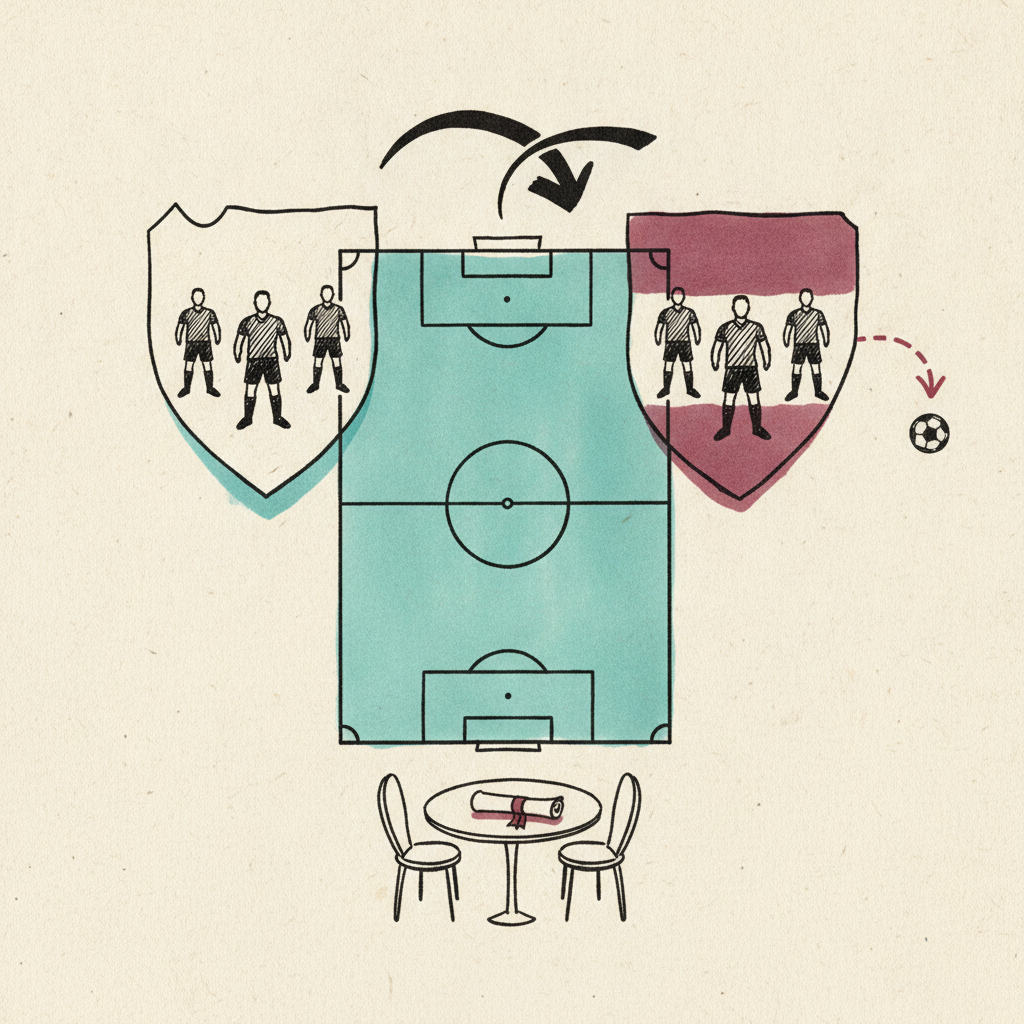
Did Austria and Algeria finally bury the ghost of Gijón with their 3-3 in 2026?
Timeline for Disgrace of Gijon
Austria 3-3 Algeria: both go through
2026 FIFA World CupBackground
The Disgrace of Gijón framed Austria's 2026 group decider against Algeria from the outset. The structural parallel was direct: in 1982 Austria and West Germany met in their final group match knowing a narrow German win would eliminate Algeria; in 2026 Austria and Algeria themselves met knowing a draw would send both through. Austria coach Ralf Rangnick dismissed the collusion comparison before kick-off, and the match delivered its own answer — a 3-3 thriller settled only in the 96th minute.
The original match was played on 25 June 1982 at El Molinón in Gijón, Spain. West Germany took a 10th-minute lead through Horst Hrubesch; thereafter both Teams played out an almost stationary game, with no serious attempt by either side to change the score. The result eliminated Algeria on goal difference despite Algeria having beaten West Germany earlier in the group. The West German television commentator refused to continue describing the match. The Austrian commentator asked viewers to turn off their sets. FIFA ruled no rules had been broken but revised the competition format so that all final group matches within a section must be played simultaneously — a rule that persists in every major international tournament today.
Algeria formally protested at the time and received no redress. The 1982 match remains the defining example of last-game collusion risk in tournament football, and its ghost followed both nations to their 2026 reunion.
What was the Disgrace of Gijon in 1982?
Why did FIFA introduce simultaneous final group games?
How did the 2026 Austria-Algeria match compare to the Disgrace of Gijon?
When was the Disgrace of Gijon?


