COREPER
EU ambassadors' body that prepares Council decisions and authorises European Commission actions.
EU ambassadors in COREPER approved sanctions listings of 743 individuals and 826 entities on 7 October 2026, the core of the 22nd Russia package that foreign ministers adopted in Luxembourg five days later.
Last refreshed: 12 October 2026 · Appears in 2 active topics
Can COREPER's trade-security rulings stand without a Council vote?
Timeline for COREPER
Mentioned in: EU ministers add nearly 1,600 Russia sanctions listings
Russia-Ukraine War 2026Cleared the package after three failed votes on 13, 15 and 22 July
European Oil Markets: EU freezes $44 Russia oil cap 12 monthsMentioned in: Bulgaria delists Lukoil boss and Kirill
European Oil MarketsScheduled a fresh vote on the 21st sanctions package for 22 July
European Oil Markets: Six states hold the 22 July Coreper voteAuthorised Commission to join Pax Silica alliance
European Tech Sovereignty: EU joins US chip pact, France objectsBackground
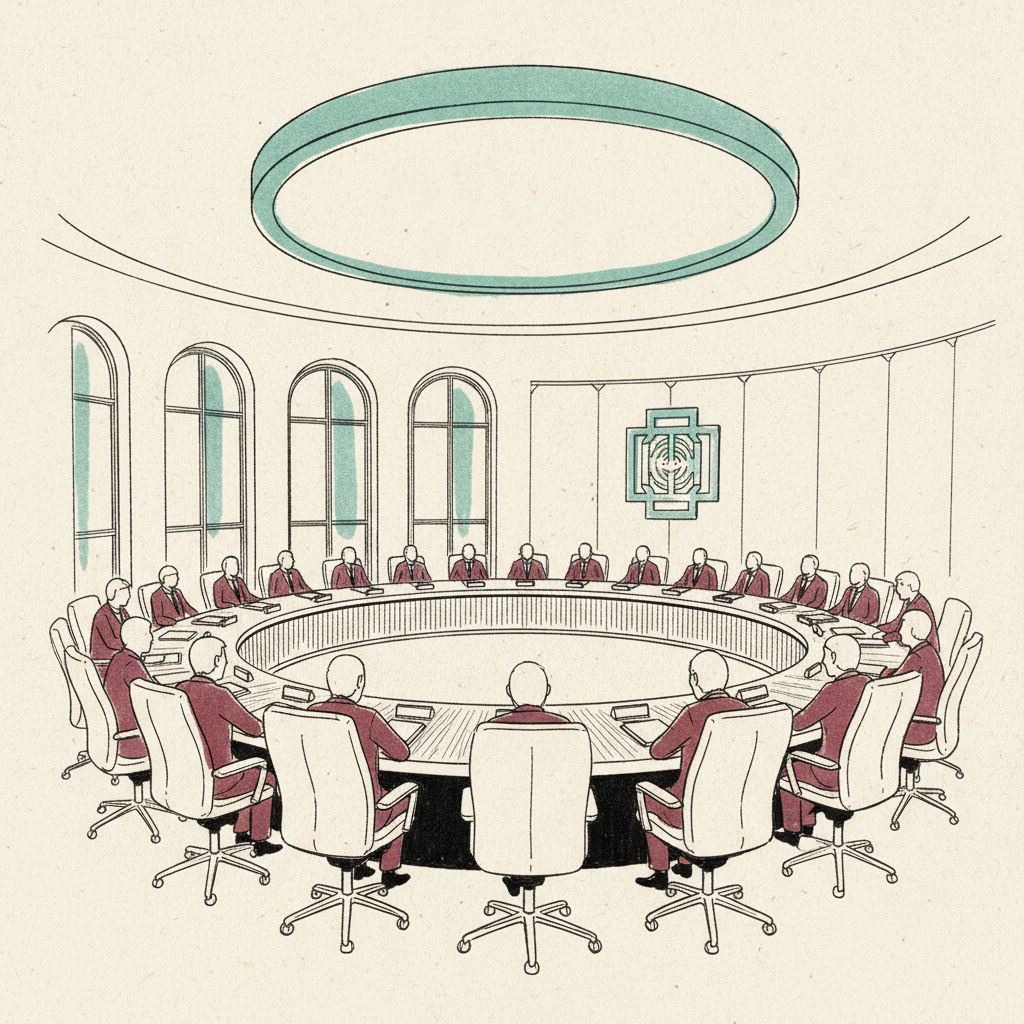
COREPER, the Committee of Permanent Representatives, brings together the ambassadors each EU member state keeps in Brussels. It prepares every substantive decision of the Council of the European Union and can settle uncontested items before they reach ministers. It meets in two formations: COREPER I, of deputy representatives, for technical files, and COREPER II, of full ambassadors, for political, financial and foreign-policy files, including sanctions.
Most of the real bargaining on Russia sanctions happens there. In July 2026 the 21st package took three ambassador-level attempts to clear, and in October the ambassadors agreed the listings at the centre of the 22nd.
Its significance is that leverage over EU policy sits with the permanent representatives more than with ministers. Because it works largely out of public view, a member state's unrelated demands, or a binding commitment such as the June 2026 chip pact, can be settled there before parliaments or voters notice.
Ambassadors cleared the 22nd package
The ambassadors did the work on the 22nd package before ministers met. On 7 October 2026 they approved listings of 743 individuals and 826 entities, and on 12 October foreign ministers in Luxembourg adopted the package, adding nearly 1,600 names to the EU's Russia lists.
That followed a structural change in September. The Council renewed the individual sanctions regime for 36 months, to 2029, rather than the usual six, which removes a renewal vote every six months. The price was paid at ambassador level: Alisher Usmanov and Mikhail Fridman came off the list to win the deal.
Unanimity turned votes into bargaining
The 21st Russia package needed three COREPER attempts between 13 and 22 July 2026. Greece and five other states held it, and Germany, France, Italy, Austria and Portugal each attached conditions that had nothing to do with oil, from fish quotas to visas and bank compensation.
The package cleared in time and was adopted on 23 July, freezing the $44 oil price cap for 12 months, barring 32 Russian banks and targeting more than 40 shadow-fleet vessels. For COREPER the episode showed where its leverage sits: unanimity, not agreement on policy, decides when a package moves.
A qualified majority bound the bloc
On 3 June 2026 the ambassadors authorised the European Commission to join Pax Silica, the US-led semiconductor pact, committing the EU to spend at least $40bn on American AI chips. France opposed; Germany, Italy and the Netherlands carried it.
The Council validated the decision on 8 June, five days later. The sequence shows COREPER's reach on dossiers decided by qualified majority: a binding external commitment was settled at ambassador level, with France asking for clarity on the Council's own oversight role, before ministers or the public engaged.
A qualified majority bound the bloc
How did COREPER authorise EU membership of the Pax Silica chip alliance?
Reference
Why does COREPER matter if it isn't a formal EU institution?
What is the difference between COREPER I and COREPER II?
What is COREPER and what does it do in the EU?


Written with AI from Lowdown's published reporting. Not individually reviewed by an editor. Updated 12 October 2026. Editorial standards.