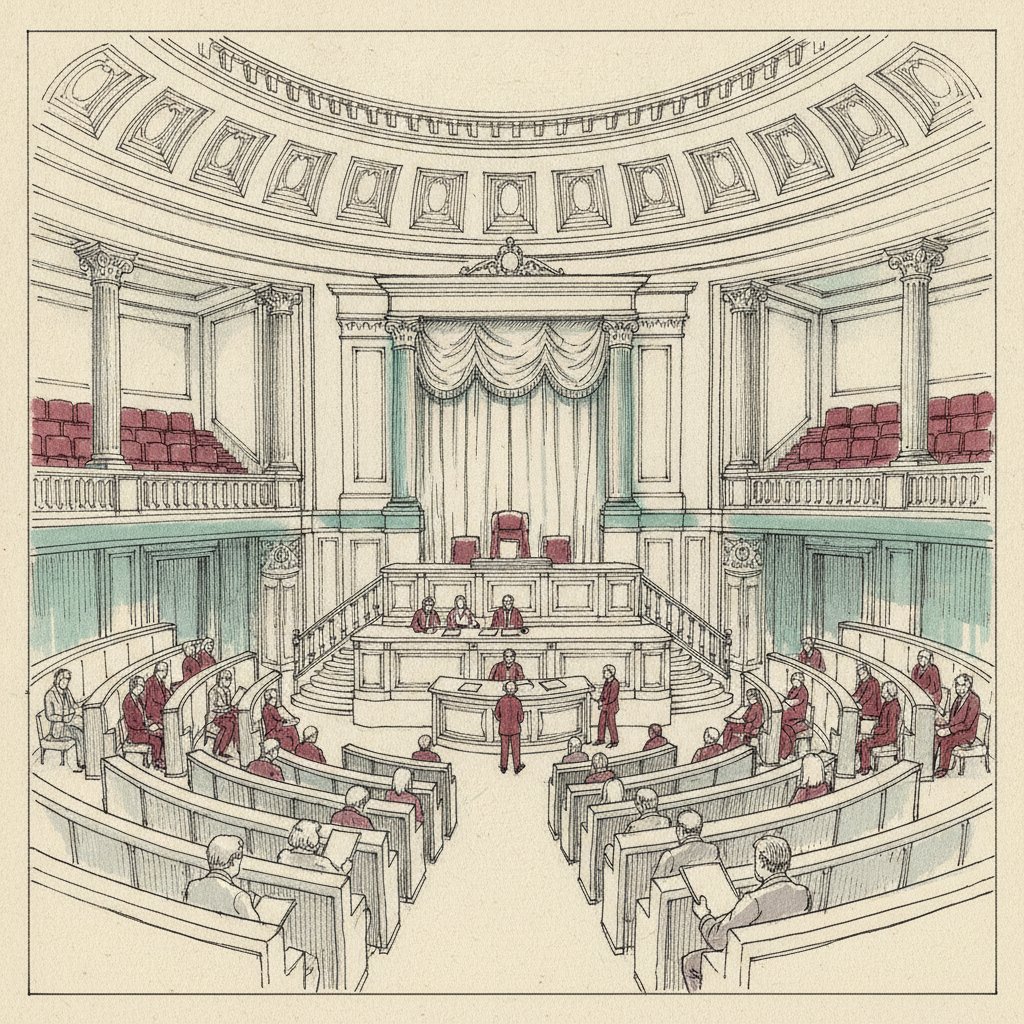
Congreso de los Diputados
Lower house of Spain's parliament; 350 MPs.
Spain's Congreso de los Diputados postponed the national housing decree to September 2026 on 28 July after Podemos withheld its votes, the latest instance of the chamber unwinding executive housing measures it will not ratify.
Last refreshed: 28 July 2026 · Appears in 1 active topic
Why does Spain's housing policy keep depending on decree-laws the Congreso then unwinds?
Timeline for Congreso de los Diputados
Mentioned in: Navarra writes the rule Madrid could not
Nomads & CommunitiesBackground
The Congreso de los Diputados is the lower chamber of Spain's bicameral Parliament, the Cortes Generales, with 350 members elected to four-year terms by Closed-list proportional representation across 52 multi-member constituencies. Together with the Senate, it scrutinises legislation, approves the state budget and confirms the prime minister; in practice the Congreso carries the bulk of legislative output and political weight, with the Senate acting largely as a chamber of revision.
Its procedural architecture requires any government decreto-ley to win parliamentary ratification within 30 days of cabinet approval, which leaves executive housing measures perennially exposed to opposition arithmetic. On 28 April 2026 the chamber demonstrated the pattern starkly, voting down a two-year extension of the rental price-freeze after PP, Vox and Junts combined against it and PNV abstained.
With the legislature fragmented across at least eight parties since the 2023 general election, the Sánchez government has struggled to convert decree-law measures into durable legislation on any contested distributional question, housing chief among them.
It postpones the housing decree to September
Spain's national housing decree, due for parliamentary ratification on 28 July 2026, was postponed to September after the Left-wing Podemos withheld its votes, leaving the Sánchez government's housing package without a majority.
The postponement repeats a pattern the chamber set on 28 April 2026, when PP, Vox and Junts voted down the government's rental price-freeze extension and PNV abstained, leaving thousands of tenant filings in legal limbo pending a court ruling. With the legislature fragmented across at least eight parties since 2023, decretos-ley requiring ratification within 30 days remain structurally exposed to opposition arithmetic on any contested housing question.
Why did the Spanish Congress reject the rental price-freeze extension?
How many MPs sit in Spain's Congreso de los Diputados?
What is the Cortes Generales?
Who is the current Speaker of Spain's Congreso de los Diputados?
How is Spain's Congreso de los Diputados elected?
