California Elections Code
California statute governing elections, including custody of voted ballots.
California's Supreme Court relied on the Elections Code's custody rule on 24 September 2026 when it held, 7-0, that the Riverside County sheriff had no lawful power to take some 650,000 voted ballots, and ordered their return.
Last refreshed: 1 October 2026
Timeline for California Elections Code
Mentioned in: Bianco must hand back 650,000 ballots
US Midterms 2026Background
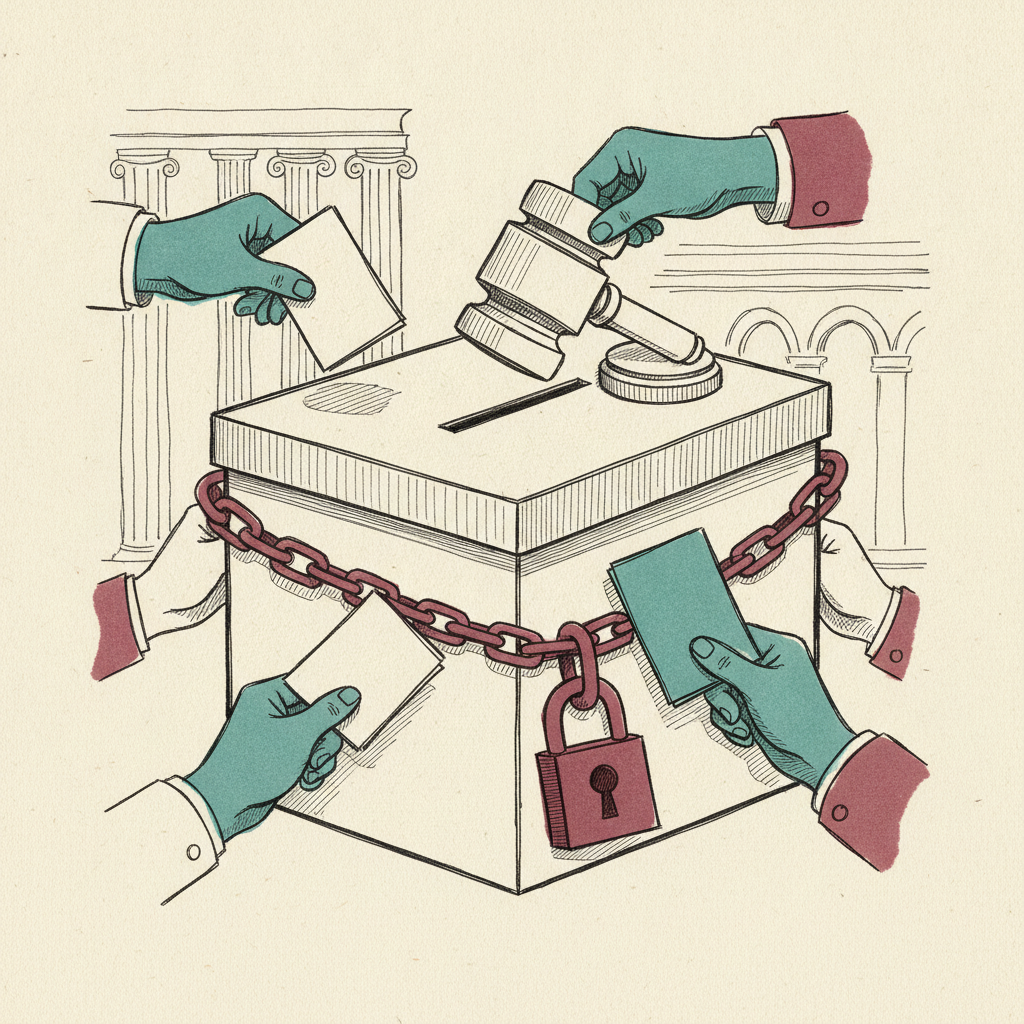
The Code's ballot-custody rule decided the biggest election-law clash in California this year. Sheriff Chad Bianco had obtained a warrant on 9 February 2026 and seized about 650,000 Riverside County ballots from the vote on Proposition 50. On 24 September the state Supreme Court held that section 15551(d), which says voted ballots shall 'in no event' leave the elections official's custody, outranks the general law on search warrants.
The Code is California's body of election law. In the Court's words it 'carefully limits WHO can handle and count voted ballots', and it sets its own procedures for recounting and examining them. Section 18575 makes it a felony for anyone other than an elections officer to handle, count or canvass ballots.
SB 1418, an urgency statute approved by the governor on 19 September 2026, widened section 15551(d) to cover any election material or certified voting technology needed to run an election. It also made it a crime under section 18568 to knowingly take such material from the elections official's custody, punishable by a fine of up to $1,000, imprisonment, or both. Together, the ruling and the amendment leave the Code's custody chain as the legal barrier against law enforcement seizing ballots.