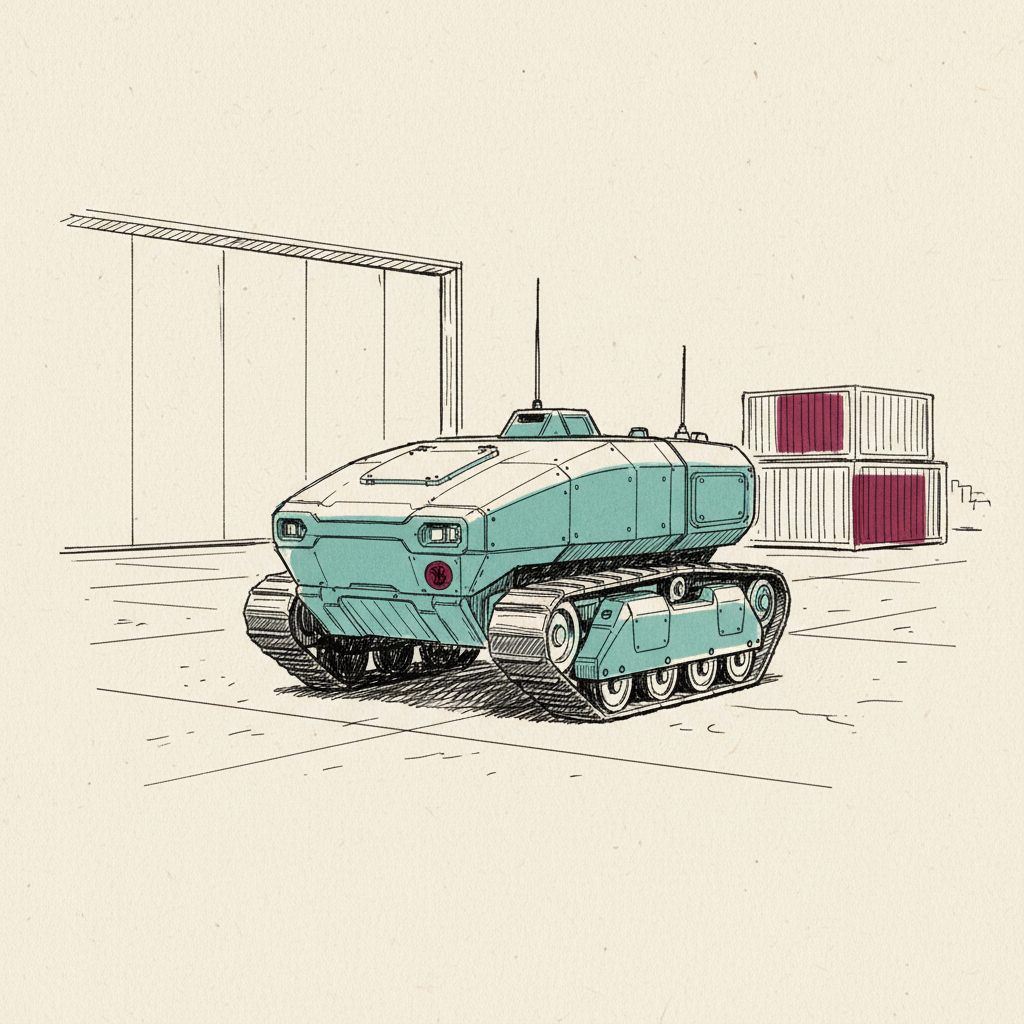
Barkan 3
Havelsan unmanned ground vehicle unveiled in May 2026 after completing eight-unit autonomous swarm field trials.
Havelsan unveiled the Barkan 3 unmanned ground vehicle in May 2026 after completing eight-unit autonomous swarm trials, positioning the Turkish firm to chase the European market Ukraine's 25,000-robot procurement drive is pulling open.
Last refreshed: 24 July 2026 · Appears in 1 active topic
Can the Barkan 3's swarm capability secure Havelsan its first European UGV customer?
Timeline for Barkan 3
Unveiled after eight-unit swarm field trials with Havelsan pursuing European customers
Autonomous Systems: Land & Sea: Ukraine pulls in Europe's robot supplyMentioned in: ARX builds British Army robot line
Autonomous Systems: Land & SeaBackground
The Barkan 3 is an unmanned ground vehicle developed by Turkey's defence firm Havelsan, designed for surveillance, reconnaissance, border patrol and logistics-support missions. It forms part of Havelsan's push to establish a European export market for ground robotics, a sector in which Turkish firms have traditionally lagged UK, German and US rivals.
As a product from a NATO-member state, the Barkan 3 carries interoperability credentials that non-NATO alternatives cannot match, a factor that matters in a European market increasingly organised around NATO standards for battlefield communications and logistics integration. Havelsan's central challenge is less technical than political: converting NATO membership into procurement wins depends on individual European governments' relations with Turkey as much as on the vehicle's own capability.
The European ground-robot market itself is consolidating around systems proven capable of coordinated, low-oversight group operation, rather than single remote-controlled units, a shift driven chiefly by Ukraine's battlefield requirements.
Barkan 3 targets Ukraine's robot demand
Havelsan completed an eight-unit autonomous swarm trial of the Barkan 3 in early May 2026, the technical milestone that lets the Turkish ground robot operate as a coordinated pack rather than a set of individually steered vehicles. The trial landed just as Ukraine's demand for 25,000 ground robots in the first half of 2026 pulled German and British suppliers, among them ARX Robotics and Supacat, into rapid European expansion.
For Barkan 3, that scramble is the opening its NATO membership is meant to exploit: Turkey's interoperability credentials give it a case European buyers cannot dismiss outright, even as it competes against manufacturers already building lines inside the UK and Netherlands. Converting the swarm trial into a funded European order, rather than a demonstration, is the test still ahead.
What is the Barkan 3 and what can it do?
Has the Barkan 3 been sold to any European country?
How does the Barkan 3 swarm work?

