Skip to content
You can now search across every topic, entity and event.What's new
UK Local Elections 2026
22MAY

A fourth county sues over its abolition

3 min read
10:09UTC

Suffolk County Council sent the Communities Secretary a pre-action letter on 1 June, becoming the fourth county to contest a reorganisation that would dissolve it.

PoliticsDeveloping
Key takeaway

Four counties have written pre-action letters against reorganisation, but none has yet filed an actual judicial review claim.

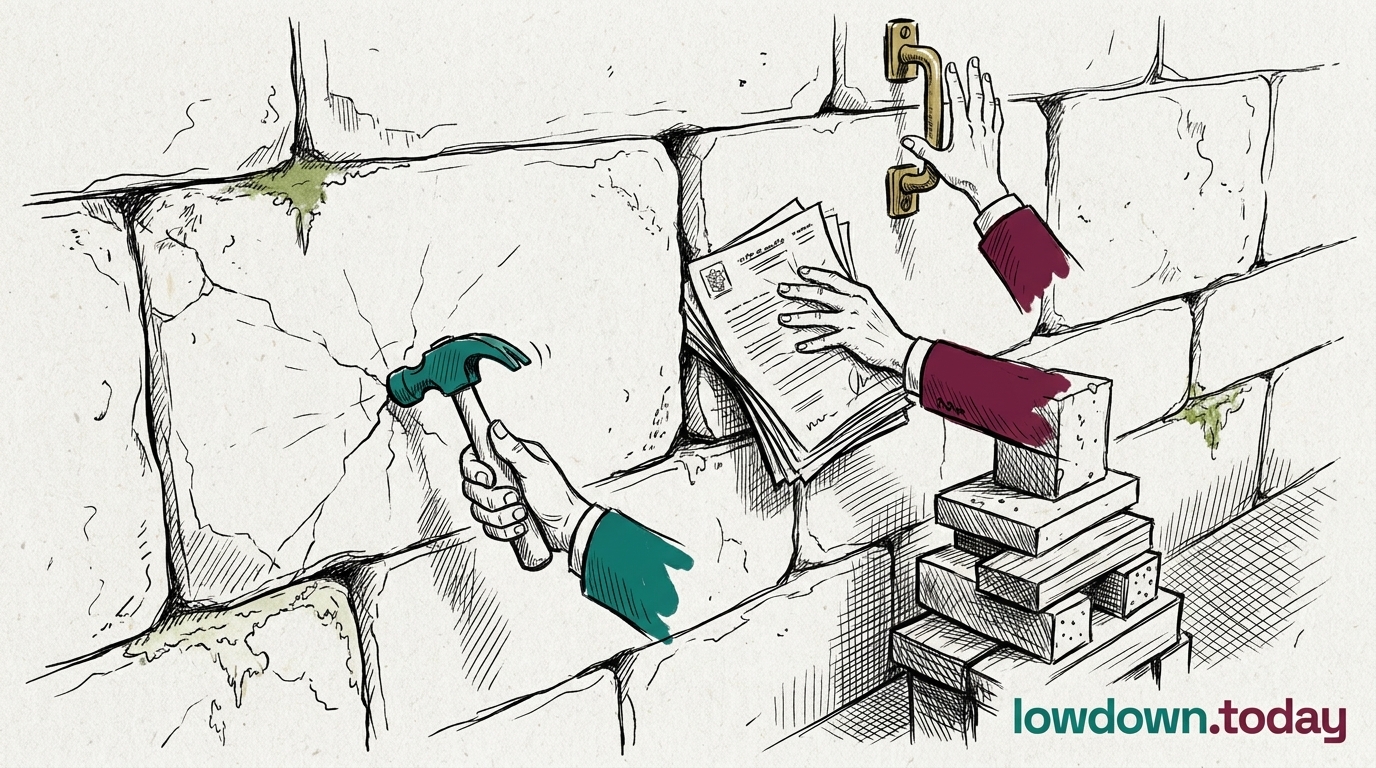
Suffolk County Council issued a pre-action letter to the Communities Secretary on Monday 1 June, one of its new Reform administration's first acts 1. It argues that LGR (Local Government Reorganisation, the redrawing of two-tier counties into single unitary councils) exceeds the Secretary of State's powers and departs from the government's own published criteria. The government has until Friday 12 June to respond. Suffolk joins Essex, which sent its letter in mid-May , plus Norfolk and Hampshire: four counties, all at pre-action stage.

No claim has been filed, no permission granted, no hearing listed. That distinction matters, because the Local Government Chronicle (LGC, the sector's trade title) published its own assessment on Thursday 28 May under the headline that there are "no real prospects of successful LGR legal challenge" 2. A pre-action letter is the first procedural step before a judicial review, the High Court process for testing whether a minister acted within their powers; it commits a council to nothing further. Three of the four counties are Reform-run, and Reform's central promise is to stop councils wasting public money.

So the paradox runs deep. Councils elected to be abolished are spending public money on litigation that the sector's own lawyers expect to fail, to stop the abolition that created the elections that put them there. Suffolk has declined to publish its letter, citing legal privilege, a claim critics dispute for a publicly funded challenge.

Deep Analysis

In plain English

The UK government is currently merging England's two-tier county councils, where you have a big county council and several smaller district councils, into single all-purpose councils called unitaries. It says this will save money and cut bureaucracy. The plan was announced before the May elections. Several of the counties being abolished voted in Reform UK majorities in May. Those new councils are now sending formal legal warning letters to the government, saying the reorganisation breaks the rules. Before you can take the government to court (called a judicial review), you have to send one of these letters first. Suffolk sent its letter on 1 June. Four counties have now done this, but none has actually gone to court yet.

Deep Analysis
Root Causes

The Levelling-up and Regeneration Act 2023 grants the Secretary of State broad powers to direct local government structural change, subject to consultation requirements that the courts have historically given wide ministerial discretion to interpret.

No explicit requirement exists for MHCLG to demonstrate that each unitary boundary meets its own published assessment criteria in every case. This creates a gap between the political expectations set by the criteria and the legal standards required to challenge their application.

A secondary cause is that three of the four challenging counties (Essex, Suffolk, Norfolk) are the same authorities MHCLG specifically designated for reorganisation on 25 March 2026, before the May elections produced Reform majorities. The new administrations inherited a process that was already structurally fixed and that their predecessors had not challenged, leaving the legal route as the only lever available.

What could happen next?
  • Risk

    If no county files a formal judicial review claim after the 12 June deadline, the pre-action letters will have produced no legal effect while creating a political narrative that Reform-controlled councils spent public money on symbolic litigation.

  • Consequence

    Even a failed judicial review at permission stage would generate a detailed court ruling on the scope of the Secretary of State's LGR powers, providing a legal baseline for future reorganisation challenges.

First Reported In

Update #10 · Reform's audit unit hits the spend wall

Local Government Chronicle· 3 Jun 2026
Read original
Different Perspectives
Local Government Association
New chair Eamonn O'Brien broke the LGA's neutrality on reorganisation for the first time since December 2024, telling the incoming prime minister the 'unprecedented scale' of disaggregation risks statutory services and asking him to adjust the LGR timetable, aligning the sector's institutional voice with the judicial review claims Suffolk, Essex and Norfolk have already filed.
Reform UK
Reform UK
Reform's £12m Harborne windfall from 2025 predates the 25 March retrospective crypto-donation ban, so the new law does not reach it; a live police probe into £500,000 of Cottrell donations continues, while the standards inquiry into Harborne's undeclared £5m gift is frozen since Farage vacated Clacton on 8 July.
Incoming Burnham government
Burnham secured 349 of the backing the NEC's 81-MP threshold required by 13 July, becoming Labour leader on 17 July and prime minister on 20 July without a members' ballot. He now inherits the LGR timetable the LGA wants him to adjust and a finance bill his own backbencher, Liam Byrne, is trying to harden further via amendment NC34.
Rupert Lowe / Restore Britain
Lowe called Farage's Clacton contest a 'Reform-sponsored media circus' and kept Restore Britain out of it, pledging instead to stand in the second by-election he expects the Harborne inquiry to force later this year. The boycott doubles as a signal that Restore Britain, not Reform, will contest the 'real' vote.
Kemi Badenoch / Conservative Party
Badenoch dismissed Farage's Clacton contest as a 'fake by-election' and joined the boycott, but reserved the right to fight a genuine second contest if Greenberg's inquiry forces one. The Conservatives are betting their real fight comes in autumn, not July.
Rhun ap Iorwerth / Plaid Cymru
Ap Iorwerth defended a £145m NHS allocation at First Minister's Questions on 1 July, blaming a graduate-nurse shortfall on 2022 training decisions taken before his Plaid-led government took office in May. Answering for choices his government did not make gives his new administration its first real accountability test.