Skip to content
You can now search across every topic, entity and event.What's new
UK Local Elections 2026
24JUL

MHCLG sets unitary structure for four English counties

1 min read
12:51UTC

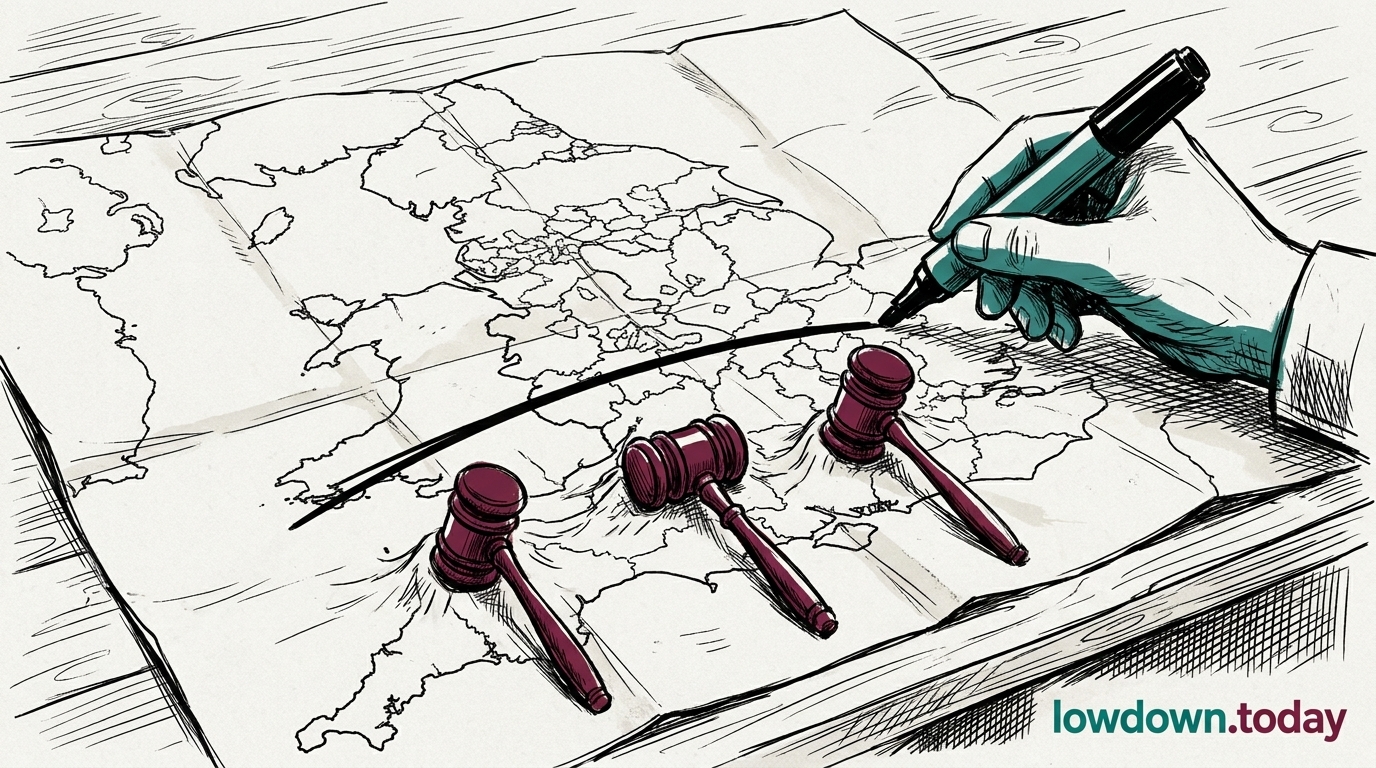
On 25 March 2026 MHCLG confirmed the new unitary structure for Essex, Hampshire, Norfolk and Suffolk: 16 new unitary authorities across four counties, replacing existing county and district arrangements.

PoliticsDeveloping
Key takeaway

MHCLG confirmed 16 new unitaries across Essex, Hampshire, Norfolk and Suffolk, none of which exists in law on polling day.

MHCLG announced on 25 March 2026 its Local Government Reorganisation (LGR) decisions for four shire counties voting on 7 May. Essex, Southend and Thurrock are to be replaced by five new unitaries. Hampshire, Isle of Wight, Portsmouth and Southampton likewise split into five new unitaries. Norfolk is to be divided into three unitaries; Suffolk into another three. Sixteen new councils in total replace the current two-tier county-plus-district structure across the four areas.

The 25 March announcement does not signal when those unitaries come into force. Each needs its own Structural Changes Order, following the Surrey template signed on 9 March. None of the sixteen exists in law on 7 May 2026; the councillors elected that day sit on the outgoing counties and districts, not the unitaries MHCLG has now named on paper. The layer above them, the mayoral combined authorities for Greater Essex, Hampshire and the Solent and Norfolk and Suffolk, has been postponed until 2028.

The 25 March framing therefore confirms the gap between electoral cycles and structural cycles. Voters will elect county councillors in May 2026, knowing the counties themselves are scheduled to be abolished during those councillors' terms. The combined-authority mayors who would normally sit above the new unitaries do not exist yet, and will not until after the 2028 delayed elections. The intervening period is administered by the outgoing two-tier system that MHCLG has already announced it intends to dismantle.

Deep Analysis

In plain English

England organises local government in two main ways. In some areas, you have a single council that does everything — that is called a unitary authority. In other areas, two layers of council share responsibility: a county council (which handles education, roads and social care) and district councils below it (which handle planning, bin collections and housing). The government announced on 25 March 2026 that four large English counties — Essex, Hampshire, Norfolk and Suffolk — will switch to the single-council model. In total, 16 new unitary authorities will replace the current two-tier arrangements across those four areas. None of those 16 new councils exists yet. People voting in those counties on 7 May are electing councillors onto the outgoing county and district councils — which are now publicly scheduled to be abolished.

Deep Analysis
Root Causes

Local Government Reorganisation in 2026 is primarily Treasury-driven. The government's stated rationale is efficiency savings from removing the duplication between county and district tiers.

The Institute for Government estimated in 2024 that a fully implemented LGR programme across England could reduce administrative costs by £500m-£1bn annually, though those figures assume successful integration of back-office functions that in practice has taken longer than projected in earlier reorganisations.

The timing — announcing 16 new unitaries three months before their precursor councils face voters — reflects a political calculation that contested LGR processes are better managed before an election than after one. MHCLG cannot hold the LGR process hostage to electoral cycles, but the compressed timetable between announcement (March 2026) and the elections those councils are fighting (May 2026) is tight by any historical standard.

What could happen next?
  • Consequence

    County councillors elected in Essex, Hampshire, Norfolk and Suffolk on 7 May will serve in councils that MHCLG has already announced will be abolished during their term.

  • Risk

    Each of the 16 unitaries requires its own Structural Changes Order; delays in any one order could misalign the LGR timetable with the absence of combined-authority mayors until 2028.

First Reported In

Update #1 · Wales rewrites parliament no voter has used

MHCLG· 7 Apr 2026
Read original
Causes and effects
This Event
MHCLG sets unitary structure for four English counties
The 25 March decisions define the shape of local government across four shire counties, but the mayoral layer above them does not arrive until 2028.
Different Perspectives
Reform UK
Reform UK
Reform lost Old Catton, the Norfolk seat it won by 1,006 votes ten weeks earlier, to the Conservatives on 16 July, while holding second in both other 16 July by-elections it did not previously hold. The party's May intake already undershot MRP polling by 38%, evidence its local base is thinner than its seat count suggested.
MHCLG / Steve Reed
MHCLG / Steve Reed
Reed confirmed 38 new unitaries for 14 counties on 16 July but held back West Sussex and Cambridgeshire and Peterborough, saying further time was needed. The department locked in the areas it was confident defending and paused the two it was not.
Local Government Association / litigating councils
Harlow's judicial review, filed 22 July, makes it the fifth council suing over reorganisation, joining Essex, Norfolk, Suffolk and Portsmouth, with none yet granted a full hearing. New LGA chair Eamonn O'Brien's 7 July intervention now sits behind their case, arguing the timetable itself risks statutory services.
Local Government Association
New chair Eamonn O'Brien broke the LGA's neutrality on reorganisation for the first time since December 2024, telling the incoming prime minister the 'unprecedented scale' of disaggregation risks statutory services and asking him to adjust the LGR timetable, aligning the sector's institutional voice with the judicial review claims Suffolk, Essex and Norfolk have already filed.
Incoming Burnham government
Burnham secured 349 of the backing the NEC's 81-MP threshold required by 13 July, becoming Labour leader on 17 July and prime minister on 20 July without a members' ballot. He now inherits the LGR timetable the LGA wants him to adjust and a finance bill his own backbencher, Liam Byrne, is trying to harden further via amendment NC34.
Rupert Lowe / Restore Britain
Lowe called Farage's Clacton contest a 'Reform-sponsored media circus' and kept Restore Britain out of it, pledging instead to stand in the second by-election he expects the Harborne inquiry to force later this year. The boycott doubles as a signal that Restore Britain, not Reform, will contest the 'real' vote.