Skip to content
Welcome, thoughtbot's Giant Robots listeners!Start here
Russia-Ukraine War 2026
16APR

Zelenskyy reveals ten offshore factories

2 min read
14:27UTC

Ukraine's wartime export ban is fracturing. One manufacturer sold 1,000 interceptors for $3.5 million while holding a €300 million state contract.

ConflictDeveloping
Key takeaway

Grey-market factories signal Ukraine's export ban is fracturing under commercial pressure.

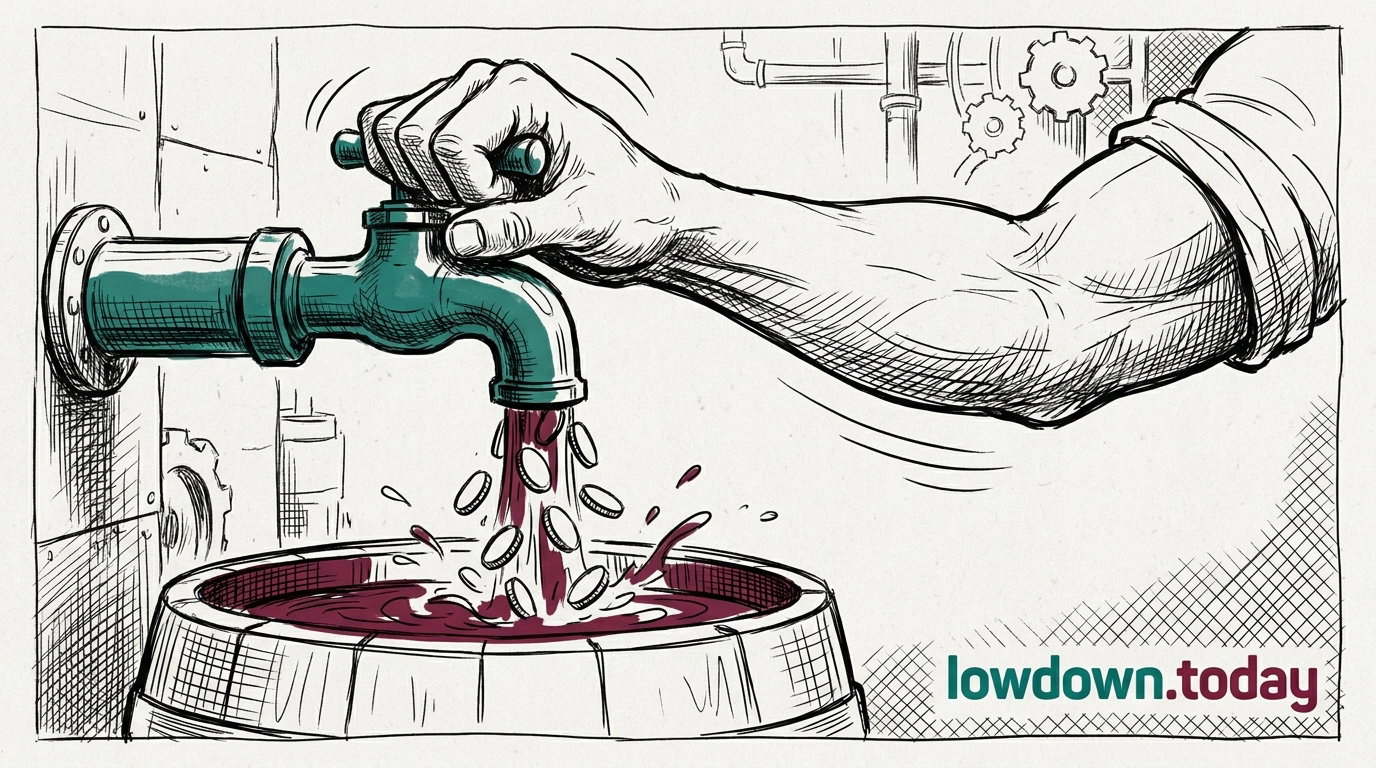
Volodymyr Zelenskyy disclosed on 28 March that approximately 10 drone factories have been built abroad to circumvent Ukraine's wartime export ban.⁠1 One company sold 1,000 interceptor drones to a foreign buyer for $3.5 million while simultaneously holding a €300 million state production contract. At least one European country purchased drones without warheads and then requested Ukrainian operators to accompany them.

The economics explain the leakage. Ukrainian interceptors cost $2,500 to $5,000 per unit.⁠2 A PAC-3 Patriot interceptor costs $13.5 million. That price ratio makes Ukrainian systems irresistible to any buyer facing drone threats, and demand from 11 nations remains blocked by the export ban. Manufacturers with excess capacity and uncertain state payment timelines have rational incentives to seek foreign hard-currency buyers.

Ukraine can technically build 1,000 interceptors per day but is budget-limited to roughly half that. The funding gap, perhaps $5 million to $10 million daily, represents the difference between a cottage industry and a global export platform. Zelenskyy warned the "window of opportunity" is narrowing: private manufacturers are outpacing state coordination.

Deep Analysis

In plain English

Ukraine bans the export of its drones because it is still at war and does not want its most effective weapons reaching enemy hands. But the manufacturers making these drones need cash now, not promises from a government with constrained budgets. So roughly 10 factories have been built outside Ukraine in secret, allowing the drones to be sold to foreign buyers without technically violating the export ban. Zelenskyy revealed this publicly, which is unusual. It signals he sees both the problem (the state is losing control of its most valuable technology) and an opportunity (these exports could become a significant revenue source if formalised).

Deep Analysis
Root Causes

The export ban was enacted in 2022 as a wartime security measure to prevent battlefield-proven designs from reaching adversaries. The problem is that Ukrainian drone manufacturers have matured from cottage workshops into industrial producers, and the state payment infrastructure has not kept pace.

When a manufacturer holds a €300 million state contract but also sells 1,000 units abroad for $3.5 million, the state contract is providing production certainty while the export sale provides cash flow. This is structurally identical to how Soviet-era arms exporters operated in the 1980s: state backing for capacity, grey market for liquidity.

What could happen next?
  • Risk

    Grey-market drone exports undermine Ukraine's ability to control proliferation of its most advanced battlefield technologies, with no guarantee buyers' security practices are adequate.

    Immediate · High
  • Opportunity

    Lifting or restructuring the export ban could generate $2–3 billion annually in hard currency revenue, reducing Ukraine's dependence on Western military aid.

    Short term · Medium
  • Consequence

    The existence of 10 shadow factories signals that Ukrainian drone manufacturers are already operating as a de facto global defence export industry without state oversight.

    Immediate · High
  • Precedent

    If Ukraine formalises exports, it establishes the first wartime-proven small-drone export market, reshaping the global defence procurement landscape for sub-$10,000 strike systems.

    Long term · Medium
First Reported In

Update #3 · Anduril wins $20 billion counter-drone deal

Euromaidan Press· 30 Mar 2026
Read original →
Different Perspectives
Bulgarian government
Bulgaria's Prime Minister, Rumen Radev, said the sinking of HS Dignity "benefits the Russian Federation" while saying Bulgaria lacked solid evidence to accuse anyone, and Defence Minister Dimitar Stoyanov asked NATO for air defence on 16 October. The request comes from a government that stopped state military aid to Ukraine in June.
Radoslaw Sikorski
Radoslaw Sikorski
Poland's foreign minister challenged Elon Musk on X after SpaceX capped Ukraine's Starshield terminals on 14 October. Poland pays about $50m a year for Ukraine's Starlink subscriptions, so Warsaw speaks as the paying customer as well as the ally.
Andy Burnham
Andy Burnham
Burnham fast-tracked £10m of a £45m air-defence missile delivery when Zelenskyy visited London on 14 October, and his ministers are lobbying allies to ban maritime services for Russian liquefied natural gas. The measure targets insurers and shipowners, many of them in London, rather than the gas itself.
Ministry of External Affairs (India)
India's foreign ministry said after the 16 September House vote that New Delhi would take all necessary measures to protect its trade.
European Council
European Council
EU leaders on 15-16 October rejected a US idea to hand Washington the roughly €200bn of frozen Russian assets held in Europe, and Kaja Kallas said the decision belongs to Europeans. The same summit put off a decision on financing Ukraine, saying leaders "will revert to the issue in a timely manner".
Donald Trump
Donald Trump
Trump signed the 16 October order that sets the Graham Act's duties and waives them under section 115(a), with a certification sent to Congress. He says the United States has not stopped sharing intelligence with Ukraine, and on 11 October he said both sides had agreed to halt attacks on energy infrastructure.

Written with AI from Lowdown's published reporting. Not individually reviewed by an editor. Editorial standards.

