Skip to content
You can now search across every topic, entity and event.What's new
Iran Conflict 2026
23AUG

Arrow-3 stocks hit 81 per cent drain

2 min read
19:02UTC

RUSI data shows the missile shield protecting Israel and the UAE will be materially degraded by mid-April. Rebuilding takes years.

ConflictDeveloping
Key takeaway

Iran does not need to win the air war; it needs to outlast the interceptors.

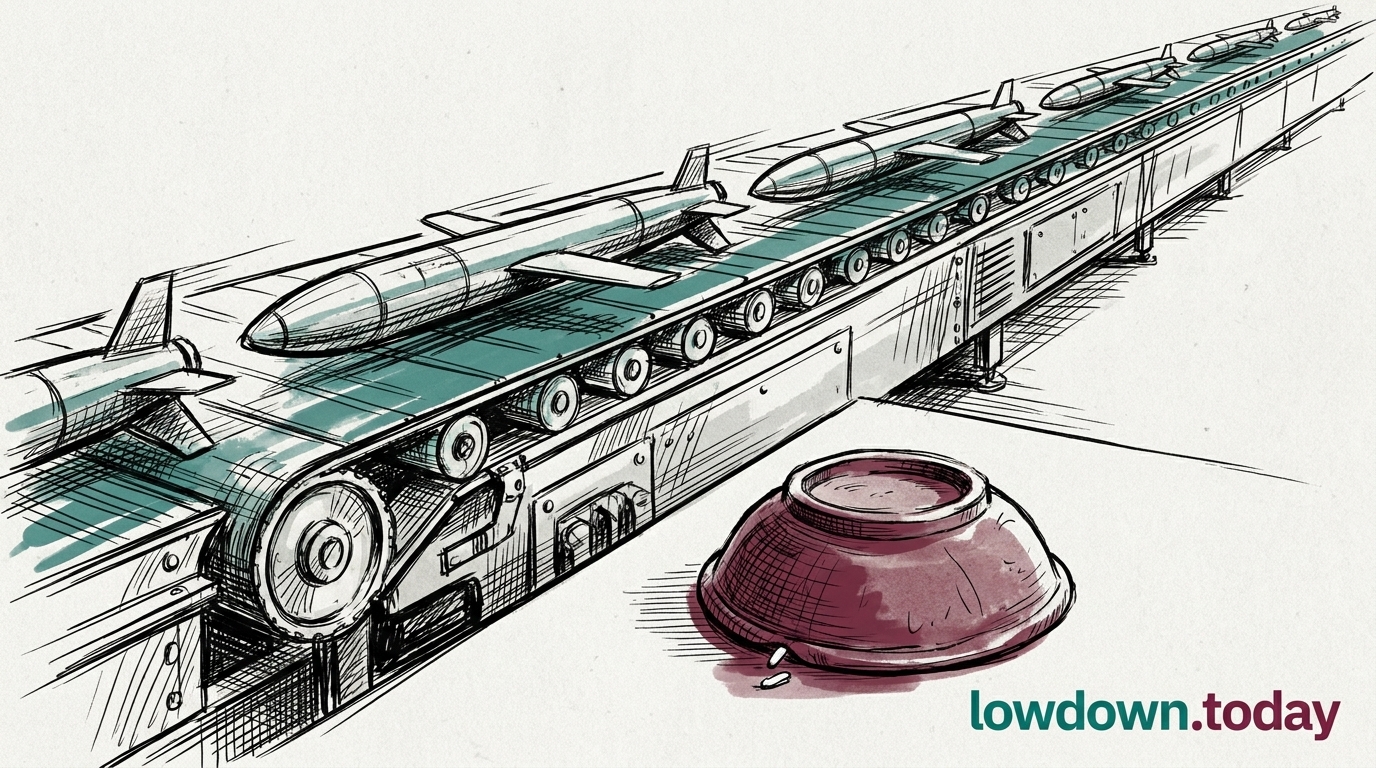
RUSI's "Command of the Reload" report documented 11,294 munitions expended in the campaign's first 16 days at an estimated cost of $26 billion. Arrow-3 interceptors are at 81% depletion by end of March. THAAD stocks are "approximately one month or less" from exhaustion at current expenditure rates . 1

Replenishment is not a logistics problem; it is an industrial one. A single Arrow-3 interceptor costs $2 to $3 million and takes months to produce. Full stock rebuild: two to three years. The missile defence architecture protecting Israel, the UAE, and US forces will be materially degraded by mid-to-late April.


Deep Analysis

In plain English

The US and Israel have been intercepting Iranian missiles and drones using expensive specialist rockets called interceptors. Each intercept uses one up. RUSI, a respected defence think tank, calculated that Israel's best interceptors are 81% exhausted. The US's top-tier system, THAAD, is roughly one month from running out. Each interceptor costs $2-3 million and takes months to produce. Rebuilding the full stock takes 2-3 years. Iran does not need to win the air war; it just needs to keep firing until the defensive rockets run out.

What could happen next?
  • Risk

    Arrow-3 exhaustion in mid-April degrades Israeli protection against Iran's long-range ballistic missiles at the moment THAAD is also near exhaustion.

  • Consequence

    Interceptor depletion creates a forcing function for all other deadlines: the 6 April grid deadline, the Kharg timeline, and the War Powers clock all operate inside a window shaped by shield degradation.

First Reported In

Update #58 · First US aircraft fall over Iran

Pentagon / The Intercept / Novara Media· 4 Apr 2026
Read original
Different Perspectives
Hizballah
Hizballah
Has not commented on the US Treasury's 20 August designation of ten people, including named couriers, over a cash network Treasury says moved money to it from the IRGC-Qods Force. ACLED recorded a sharp rise in attacks around it the same day.
Kuwait
Kuwait
Kuwait's Chief of the General Staff, Lieutenant General Khaled al-Shriaan, co-chaired the 16th US-Kuwait Joint Military Commission at the Pentagon on 21 August. Kuwait has not published what was agreed; only a summary of the meeting's existence and attendees is sourced.
Qatar
Qatar
Has not commented publicly on the $4.5bn KC-46A tanker Foreign Military Sale notification the State Department approved on 20 August. The notification opens a sale process; Doha has not confirmed whether it will proceed to a signed transfer.
Mohammad Bagher Ghalibaf
Told a Baghdad business meeting on 20 August that Iran will not endure a hungry population regardless of its military strength, against 87.9% point-to-point inflation and 128.1% food inflation for Tir. His fellow Majlis Economic Committee member Samsami separately warned a petrol price rise would ignite unrest.
US Navy
US Navy
Signed a $22.9bn, seven-year contract with Raytheon on 17 August to raise Tomahawk output from about 60 a year to more than 1,000. The Acting Navy Secretary, quoted via an X post, framed it as the "Arsenal of Freedom" initiative; it replaces the 850 missiles fired by 1 April in about ten months at the new rate.
UK Maritime Trade Operations
UKMTO logged six armed men boarding a tanker 136 nautical miles east of Al Mukalla on 20 August and redirecting it toward Somalia. A vessel steered toward the Somali coast reads as an attempted seizure, a distinct hazard from the stand-off strikes the same lane has seen before.



