Skip to content
You can now search across every topic, entity and event.What's new
Iran Conflict 2026
7AUG

TTF breaks 8% off a three-year high

2 min read
12:08UTC

TTF front-month reached roughly EUR 63.50/MWh on 24 July, its highest print since January 2023, then broke to EUR 58.40 by the 27th as the strike halt held.

ConflictDeveloping
Key takeaway

Eight per cent off a three-year high is a premium partly unwound, not a market repriced.

TTF front-month gas reached roughly EUR 63.50/MWh on Friday 24 July, its highest print since January 2023, then broke about 8 per cent to EUR 58.40 by Monday 27 July as the US halt on strikes against Iran held. 1 2 These are quotes carried by data aggregators on the ICE-settled front-month contract, not exchange settlement figures; the distinction matters in a week when secondary sources diverged by several euros. TTF is the Dutch virtual trading point that prices most of Europe's traded gas.

TTF had already come back above EUR 50 on 13 July and then pushed to EUR 55 on a Hormuz cargo toll before this run to the top of the range. Nothing physical changed in either direction. No European cargo failed to arrive, no pipeline shut, no terminal went offline. The whole excursion was the market buying and then selling insurance against a Gulf interruption that never touched a European molecule.

Eight per cent is a small give-back for a benchmark that had run to a three-and-a-half-year high, and the smallness is informative. A premium that unwinds only partly is a premium the market has not finished holding. Iran's retaliation has stopped rather than been renounced, and the option value of a Gulf disruption does not fall to zero on a pause. For the German fleet, though, this leg stopped mattering three days ago: gas at EUR 58 buys nothing when the revenue leg is falling twice as fast.

Deep Analysis

In plain English

Gas in Europe is priced on a benchmark called TTF. It spiked to its highest level in over three years on Friday, then fell back about 8 per cent over the following weekend and Monday as fears of the US and Iran fighting spilling into the Gulf's shipping lanes eased. No actual gas cargo changed course; the price moved purely on the news that the immediate danger looked lower.

What could happen next?
  • Consequence

    A winter-forward contract that did not move alongside the front month would confirm this reversal is a short-dated risk premium unwinding rather than a shift in the physical gas balance.

First Reported In

Update #30 · Wind, not peace, sank the German spark

TradingEconomics· 27 Jul 2026
Read original
Causes and effects
This Event
TTF breaks 8% off a three-year high
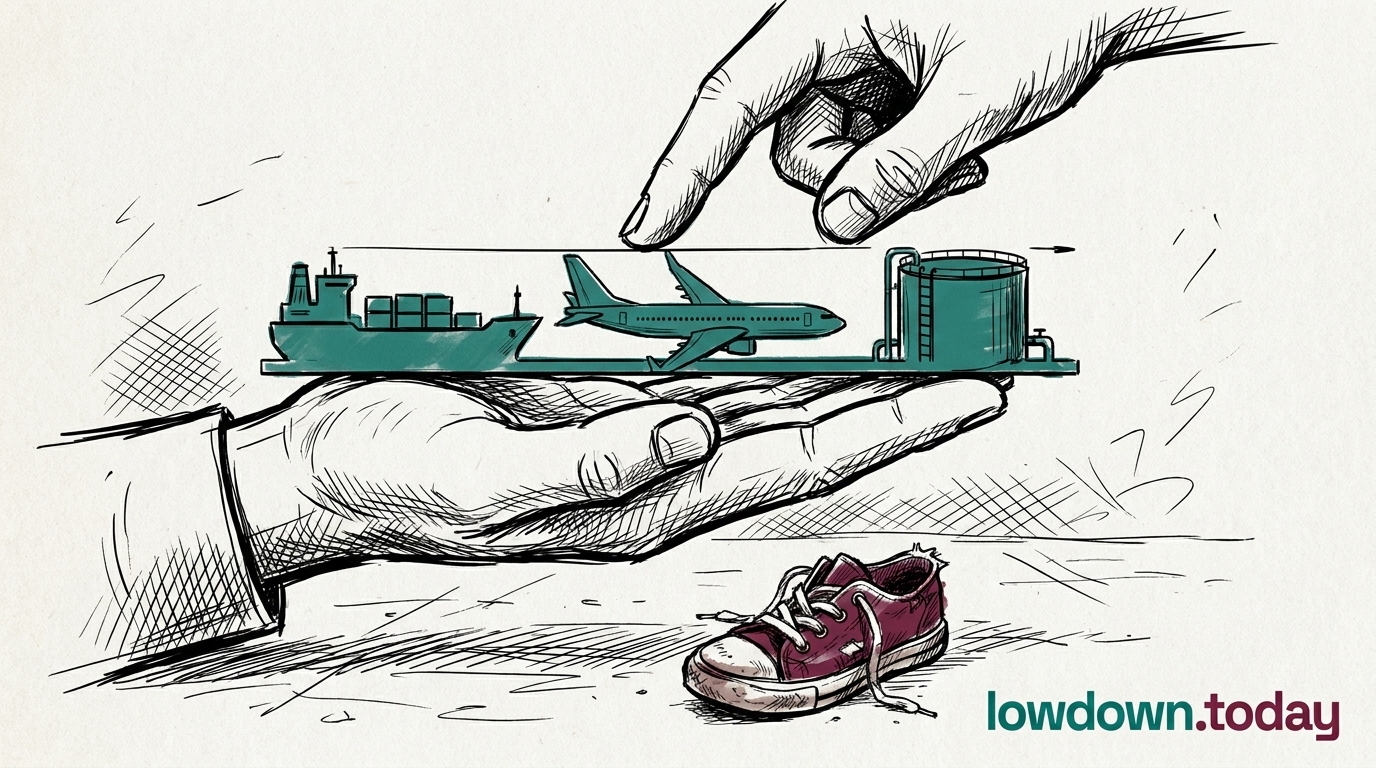
The fuel leg gave back a risk premium rather than repricing supply, which is why eight per cent was all it had to give.
Different Perspectives
Turkiye
Turkiye
Erdogan followed the Pakistani delegation to Jeddah for an instrument that has not been signed. Ankara's entry widens Saudi Arabia's defence architecture beyond the existing Pakistan pact, adding a second non-Gulf military partner mid-conflict.
Oman
Oman
Muscat is the corridor's broker but has published nothing about the arrangement Fars describes on its behalf. The account leaves Oman administering outbound traffic only, a narrower role than the shared route its mediation has rested on since 1979.
Pakistan
Pakistan
Islamabad sent Sharif, Munir and Dar to Jeddah to widen a defence commitment it has honoured in cheaper registers since March, when Dar invoked the Saudi mutual defence pact. Jeddah tests whether that hedge becomes a binding trilateral instrument with Turkiye.
United States
United States
Washington rejected the Majlis Hormuz bill outright while CENTCOM's own tally kept climbing to 49 vessels redirected since 14 July. Both instruments tightened in the same week Trump promised the strait would reopen soon.
Iran
Iran
Iran's foreign ministry is selling a phased Hormuz corridor through Oman and denying any percentage cargo tariff, while its own Majlis is legislating fines to 20% and a bar on Israeli-linked cargo. The two accounts, from the same government, do not agree with each other.
Saudi Arabia
Saudi Arabia
Riyadh published a target forecast, not an attribution, for the campaign it says the Najran strike previewed. That keeps an Article 51 case available while it formalises a trilateral defence architecture with Pakistan and Turkiye.




