Skip to content
You can now search across every topic, entity and event.What's new
Iran Conflict 2026
31JUL

The Iran war gets a new file name

2 min read
09:24UTC

Pentagon casualties are now logged under a category called Overseas Operations rather than Operation Epic Fury, three days after the Senate refused to bind the President by statute.

ConflictDeveloping
Key takeaway

A casualty-database label now carries the argument that a second Iran war began in July.

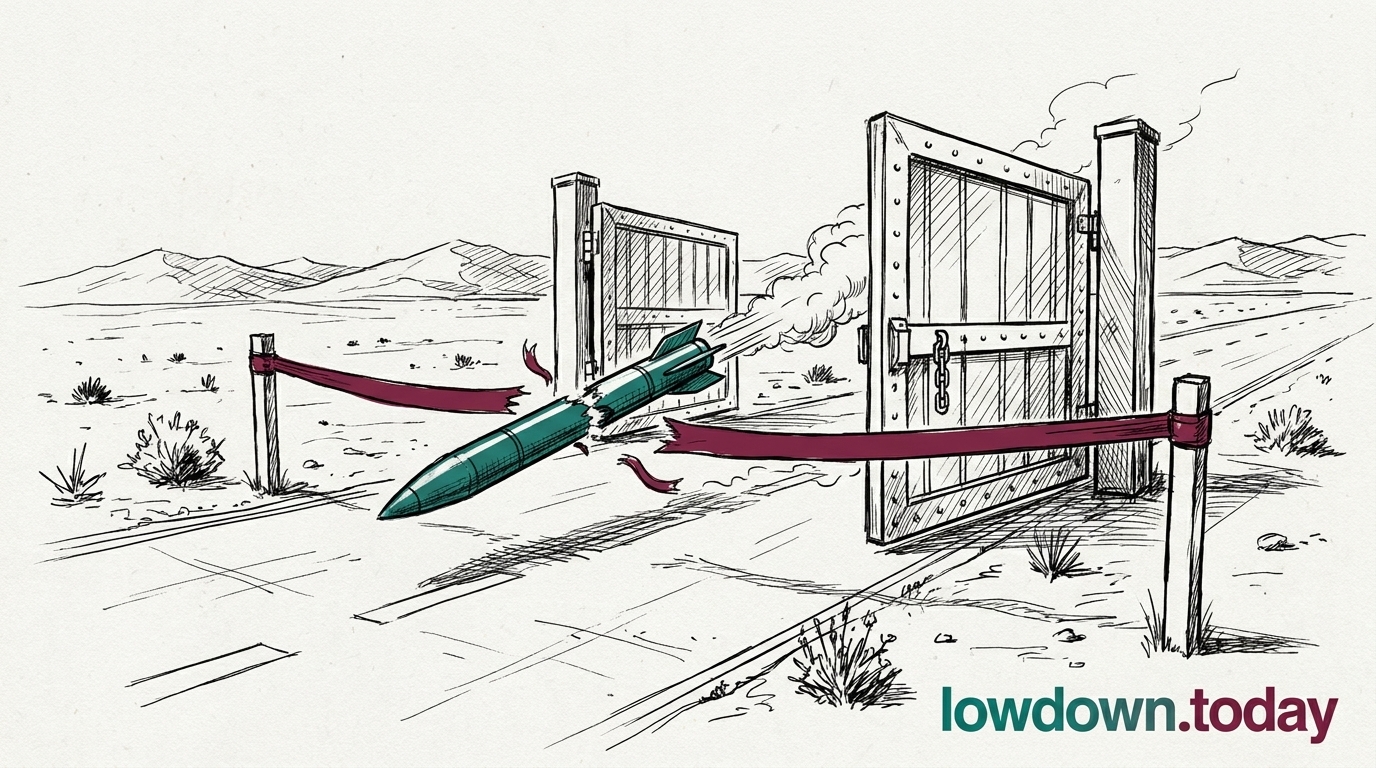
US casualties from the Iran war are now recorded under a category called Overseas Operations rather than under Operation EPIC FURY, the name the campaign has carried since February, a change the Defense Casualty Analysis System (DCAS), the Pentagon's casualty ledger, made on 26 July1. The administration's stated position holds that EPIC FURY ended in May. On that reading the daily fighting since counts as a second conflict rather than a continuation of the first.

The War Powers Resolution of 1973 gives a president 60 days of hostilities without congressional authorisation before he must withdraw forces. A clock that expired months ago and a clock that started in July are legally different objects, and only one of them requires a vote2.

Congress tried the direct route on Thursday 23 July and lost twice: the House passed its resolution 214-208, the Senate killed its own 47-49 . Rep. Thomas Massie, a Kentucky Republican who crossed the aisle in that vote, named the mechanism plainly: "Let me explain this absurd ruse: The Pentagon is pretending there have been two Iran wars separated by a brief cease-fire"3.

That charge is Massie's, not ours, and casualty systems genuinely break. The timing can be checked, though. The category changed three days after the Senate refused to bind the President, a coincidence of timing and direction we can verify rather than a motive we can prove. Anyone who wants to litigate the point now has to argue about the start date of an administrative label rather than about the legality of a campaign, which shifts the fight from the floor of the Senate into the departmental record, where discovery runs slower and the department controls the filing.


Deep Analysis

In plain English

The War Powers Resolution is a 1973 law meant to stop presidents fighting long wars without Congress's sign-off. It gives the president 60 days to get formal approval once troops are in combat, or start pulling them out. The Pentagon just filed the Iran war under a new administrative name. If officials later argue the old operation ended in May, that filing could be read as starting the 60-day countdown all over again on 26 July, even though nothing has changed for the troops involved.

Deep Analysis
Root Causes

The Resolution's 60-day clock is meant to start when the president reports the introduction of United States Armed Forces into hostilities, a factual and legal determination, not an administrative filing choice. No court has ruled on whether renaming a tracking category can reset that clock, so the manoeuvre exploits a genuine gap: the law names the trigger, but nothing names who gets to decide when an operation has legally ended and a new one has legally begun.

Congress's two attempts to force the issue this month both failed on the same day, 23 July: the House passed H.Con.Res.89 214-208 directing troop withdrawal, and the Senate killed the binding S.J.Res.180 47-49, showing the political branches split even before the accounting change added a fresh procedural question.

What could happen next?
  • Consequence

    A restarted 60-day clock would give Congress a fresh, unambiguous deadline to vote on withdrawal, unlike the contested May end date currently in dispute.

  • Precedent

    If the rename is later accepted as legally resetting the clock, it would give any future administration a low-cost tool to manage War Powers deadlines through bookkeeping rather than battlefield facts.

First Reported In

Update #163 · Pentagon puts four dead back, renames war

ABC News· 28 Jul 2026
Read original
Causes and effects
Different Perspectives
Shipping and insurance underwriters
Underwriters can price Houthi strikes because the group announces its targets, but an unclaimed drone at Damietta and a mandatory Iranian insurance scheme both deny them a pattern to price against. War-risk premiums are increasingly being set by the absence of a claimant, not the scale of the damage.
Jordan
Jordan
Azraq absorbed its fourth Iranian strike in seven weeks, again drawing no direct Jordanian retaliation, only an American one. Amman's exposure, hosting US basing without the Patriot density of Gulf allies, has not changed even as the war around it widens.
Houthi movement
Houthi movement
The Houthis' 20 July blockade of Saudi-linked shipping is the injury Riyadh's new 43-nation coalition directly answers, yet the group itself was never asked to join and remains outside every proposal on the table. Sanaa-aligned commentators call the coalition a paper reassurance for insurers rather than a deployable force.
Egypt's Cabinet
Egypt's Cabinet
Egypt confirmed the Damietta blaze was an attack, not an accident, on soil the war had never touched before. Cairo now faces an unclaimed threat to a facility supplying roughly 7% of its domestic gas, with no author to hold accountable and no pattern yet to defend against.
Oman
Oman
Muscat is running the only channel Iran will use, a voluntary Hormuz fee modelled on Malacca, but stayed out of Saudi Arabia's new naval coalition entirely. Oman's mediating leverage depends on treating Hormuz as shared and non-exclusive, the opposite of what Tehran is now demanding of it.
Iraq's Prime Minister
Al-Zaidi cancelled his first official Riyadh visit and convened the Coordination Framework, the coalition that keeps him in power and whose factions sit inside the PMF that Saudi jets just struck. He is caught between a five-year Saudi investment relationship and armed groups inside his own state he does not fully control.



