Skip to content
You can now search across every topic, entity and event.What's new
Iran Conflict 2026
21JUL

Budapest blocks two of Ukraine's clusters

2 min read
10:16UTC

Hungary refused to back opening EU accession Clusters 2 and 3 for Ukraine at a Brussels working party on 17 July, offering to open Cluster 3 for Moldova alone.

ConflictDeveloping
Key takeaway

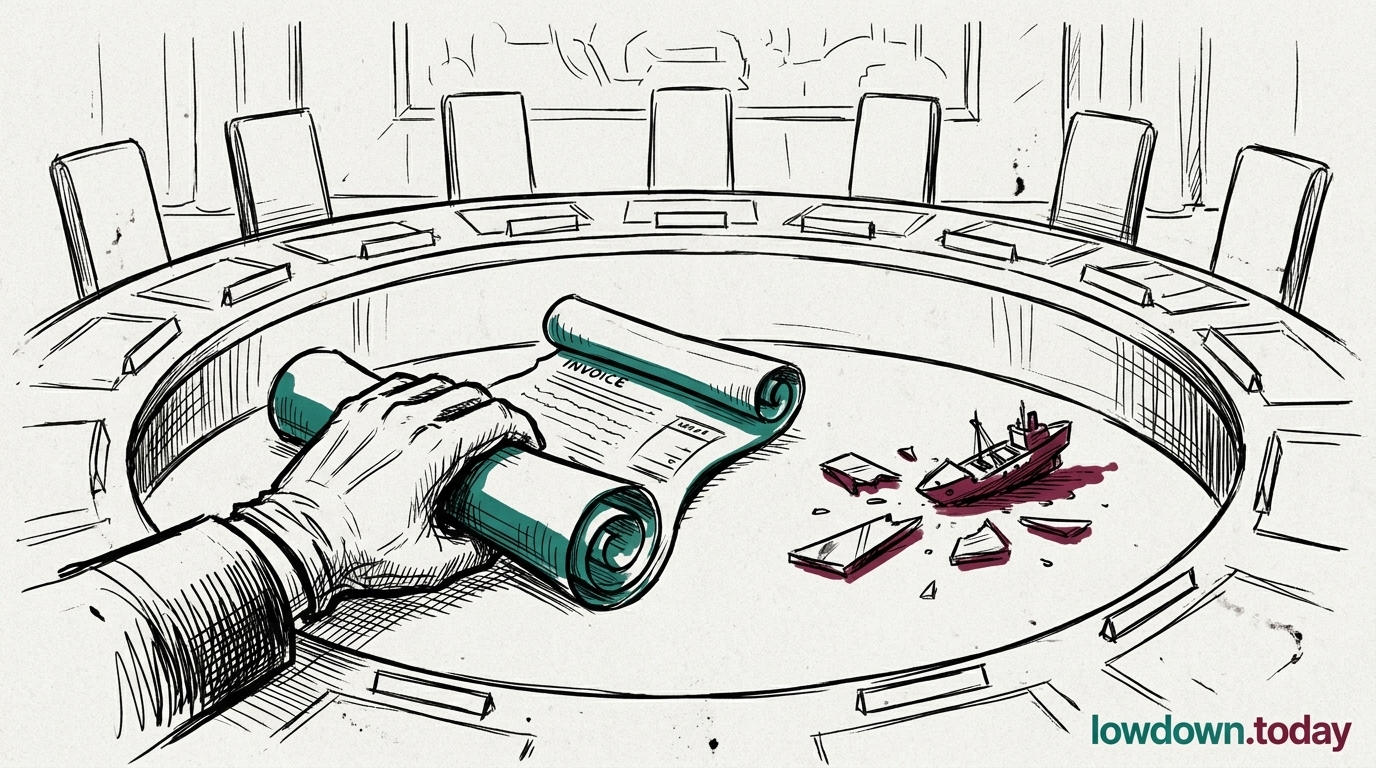
A working party that never votes in public can cost Kyiv a summer without anyone casting a veto.

Hungary refused to back the opening of EU accession negotiating Clusters 2 and 3 for Ukraine at COELA, the Council's enlargement working party, on 17 July, offering instead to open Cluster 3 for Moldova on its own 1. Most member states rejected decoupling the two candidates, so nothing was decided. The question returns to COELA on Wednesday 22 July, the last meeting before the summer recess.

Péter Magyar's Tisza government came to power partly by ending Viktor Orbán's blanket veto on the EUR 90bn loan to Ukraine, and Kyiv's accession conference opened in June on that basis . Budapest has released the money and kept the procedure, which is a narrower obstruction than Orbán's but sits at a more awkward point. Clusters 2 and 3 carry the rule-of-law and territorial chapters, and an EU-friendly Hungarian government's enthusiasm for Ukrainian accession runs into its own electorate precisely there.

Accession clusters open by unanimity in a working party most voters have never heard of, which is what makes the block durable. No summit vote is needed, no veto has to be announced, and a single delegation withholding agreement in a room in Brussels is enough to stop a candidate's file moving. Miss 22 July and nothing reconvenes until September, so a procedural hesitation lasting an afternoon costs Ukraine roughly two months.

Deep Analysis

In plain English

The European Union is negotiating Ukraine's membership in stages, called "clusters", each covering a group of policy areas Ukraine has to align with EU rules on before moving forward. Hungary refused to back opening two of these clusters, covering rule of law and territorial issues, for Ukraine at a meeting in Brussels on 17 July. It offered instead to open one of the two clusters for Moldova alone, but most other EU countries rejected splitting the two candidate countries apart. The issue will come back for another vote on 22 July, the last EU meeting before the summer break. This matters because Hungary's government changed earlier this year, and its new leader had promised to stop blocking Ukraine, which makes this block notable even though it is procedural rather than a return to Hungary's old blanket veto.

Deep Analysis
Root Causes

Clusters 2 and 3 carry the rule-of-law and territorial chapters, precisely where a Hungarian government campaigning on EU-friendliness runs into its own electorate's sensitivities on those issues. The constraint here is domestic political cost, not alignment with Moscow as under Orbán, a structurally different source of friction from the loan veto it replaced.

Hungary's offer to open Cluster 3 for Moldova alone, while withholding it from Ukraine, is a split-track manoeuvre most member states have already rejected; pairing the two countries' accession tracks was itself a prior EU decision Budapest is now trying to unpick procedurally rather than reopen as a formal proposal.

First Reported In

Update #24 · Fedorov sacked as the front stands still

Ukrainska Pravda· 19 Jul 2026
Read original
Causes and effects
This Event
Budapest blocks two of Ukraine's clusters
The veto moved from the money to the procedure, and the procedure is harder to see.
Different Perspectives
Jordan
Jordan
Jordan's armed forces downed three Iranian missiles on Tuesday with no casualties, a second successful interception since the 19 July strike on Muwaffaq Salti that killed three US service members. Amman has neither confirmed nor denied ISW's assessment that its intelligence sharing is a Russia-China cover story.
Operation Aspides
Operation Aspides
Operation Aspides has not needed to intervene against the Houthi Bab al-Mandab embargo: six vessels, including the Chinese VLCC Xin Long Yang, reversed course after radio hailing alone, with no vessel boarded, fired on or stopped by force.
Pete Hegseth, US Secretary of War
Hegseth told the Senate Appropriations Committee the campaign has cost $37.5 billion so far, without saying whether the figure is obligated, appropriated or incremental. It is the first cost Washington has put on the war, arriving as OMB seeks $87.6 billion for the wider supplemental.
Iran's IRGC and Artesh
Iran's IRGC and Artesh reported destroying radar and Patriot installations at four Gulf bases on Tuesday night, the fifth dated iteration of the same claim against the same sites since 13 July. Neither Kuwait nor Bahrain has named or confirmed a single base as destroyed.
Saudi Arabia
Saudi Arabia
Riyadh has pressed Washington to end the Hormuz blockade specifically to remove Tehran's incentive for the Houthis to escalate Bab al-Mandab beyond radio warnings. It treats the embargo as coordinated pressure on Saudi shipping tied to the Hormuz campaign, not an independent Yemeni action.
Kuwait's Ministry of Electricity, Water and Renewable Energy and defence ministry
Kuwait reported power and desalination stations struck for a fourth consecutive day and four cruise missiles plus 21 drones intercepted since dawn Wednesday, while its defence ministry statement used only the word interception, never destruction. Kuwait has confirmed no Iranian claim of a destroyed base.