Skip to content
You can now search across every topic, entity and event.What's new
European Oil Markets
18JUN

FR-DE power spread inverts, France on top

3 min read
12:45UTC

France cleared roughly EUR 1.6/MWh above Germany on 15 June, a full reversal of the EUR 96.20 record set on 8 June, after French July power jumped about 10% in two days on cooling-water risk.

EconomicDeveloping

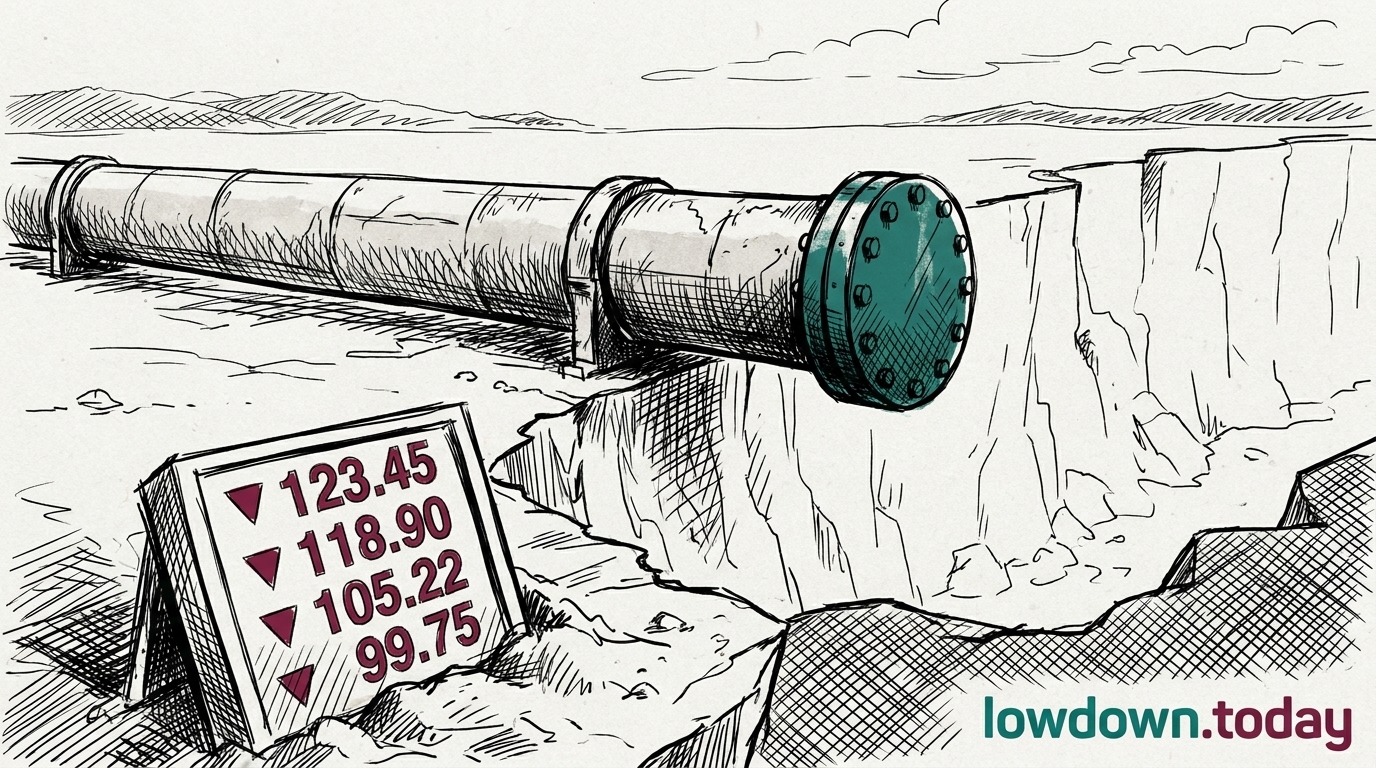
The France-Germany day-ahead power spread inverted to France roughly EUR 1.6/MWh above Germany on 15 June, with France near EUR 75.8/MWh, a reversal of the EUR 96.20 record set on 8 June when France sat far below 1. Seven days earlier France cleared EUR 96 under Germany; both legs have now converged into the mid-EUR 70s. The EUR 96.20 print and the heatwave-solar collapse that drove the EUR 93.68 spread on 3 June were aberrations, and both have fully corrected.

French July power jumped roughly 10% in two days, Bloomberg reported, on the risk that a hot summer forces cooling-water restrictions on the reactor fleet, while German costs eased as gas fell 2. EDF runs France's 56-reactor fleet, and curtailment risk is a recurring summer constraint when river temperatures climb. The inversion was bid by that nuclear-availability risk, not by any move in gas.

This is the most violent spread reversal of the cycle. A relative-value position long France against short Germany earned EUR 96 on 8 June and now sits on the wrong side of a EUR 1.6 inversion, a swing of close to EUR 98/MWh in a week. The durable level for the spread is the mid-EUR 70s when nuclear is available and solar is normal; the extreme prints in either direction have all been weather-driven and mean-reverted within days. A summer of cooling-water curtailment would push the inversion further the same way, which is the directional risk a cross-border power book carries into July.


Deep Analysis

In plain English

Most of the year, France's electricity is cheaper than Germany's. France runs nearly 75% of its power on nuclear reactors, which have very low running costs once built. Germany uses more gas, which has been expensive, so German electricity usually costs more. In early June 2026, that gap hit a record high of EUR 96 per megawatt-hour, with France much cheaper. Then, just seven days later on 15 June, the relationship flipped: French power became EUR 1.6 per megawatt-hour more expensive than German power for the first time in this cycle. Nuclear reactors use river water to cool down. France's environmental regulator limits the temperature of water EDF can discharge back into rivers in warm weather, forcing reactor output cuts when summer temperatures rise. Markets priced that curtailment risk into French July electricity contracts, pushing them up by about 10% in two days as June temperatures climbed.

What could happen next?
  • Consequence

    The EUR 97.7/MWh swing in the FR-DE spread between 8 and 15 June 2026 will crystallise losses for structured-product positions that paid the EUR 96 record spread long France versus short Germany, with potential margin calls on shorter-dated positions.

  • Risk

    EDF's September 2026 Flamanville-3 major overhaul removes approximately 1.6 GW from the French fleet at heating-season start, the same cooling-water-curtailment risk that drove the June inversion will be compounded by a scheduled capacity reduction in Q4.

First Reported In

Update #18 · TTF breaks the floor into the import ban

EU Energy Live· 15 Jun 2026
Read original
Different Perspectives
Gulf oil producer
Gulf oil producer
Secured OPEC's confirmed 188,000 b/d September increment with the next meeting set for 6 September, but the Secretariat's own 2 August release says nothing about the fourth quarter. Output guidance beyond September remains undisclosed even as delegate sourcing keeps filling that gap.
Money manager positioned in WTI
Added 21,402 lots to a 108,307 net long in NYMEX WTI in the week to 28 July, against just 1,485 added to Brent's 15,740, a roughly fourteen-to-one split. Conviction sits in the American benchmark even as the European diesel story sets the record.
Indian refiner buying Urals
Bought Russian crude at a discount that narrowed to $1-2 a barrel in the week to 29 July from over $10, as Hormuz risk pushed it toward Urals. If that risk eases with the strike now called off, the discount it is currently enjoying could re-widen just as fast.
Russian diesel exporter
Novak tied any lifting of the diesel export ban, due to lapse 31 July, to an unspecified market recovery with no date, and pushed the gasoline ban to end-2026. An open-ended constraint suits an exporter benefiting from the record European crack it feeds.
War-risk underwriter
Withdrew war-risk cover for Saudi-linked hulls on 24 July and has not reinstated it, holding Bab el-Mandeb tanker transits near 7.5 a day. A cancelled strike does not by itself trigger the committee review needed to re-accept the class.
Northwest European refiner
Sources only 17% of diesel imports from Saudi Red Sea ports against the Mediterranean's 24%, so the ARA crack at $85.86 trails the Med print by $5.81. Lower Red Sea exposure is cushioning it against the rerouting cost, not eliminating it.



