Skip to content
You can now search across every topic, entity and event.What's new
European Oil Markets
4JUN

HRANA: 1,097 Iranian civilians killed

3 min read
10:20UTC

HRANA counts 1,097 Iranian civilians dead — a number that surpasses the Iranian government's own total across all categories, military and civilian combined.

EconomicDeveloping
Key takeaway

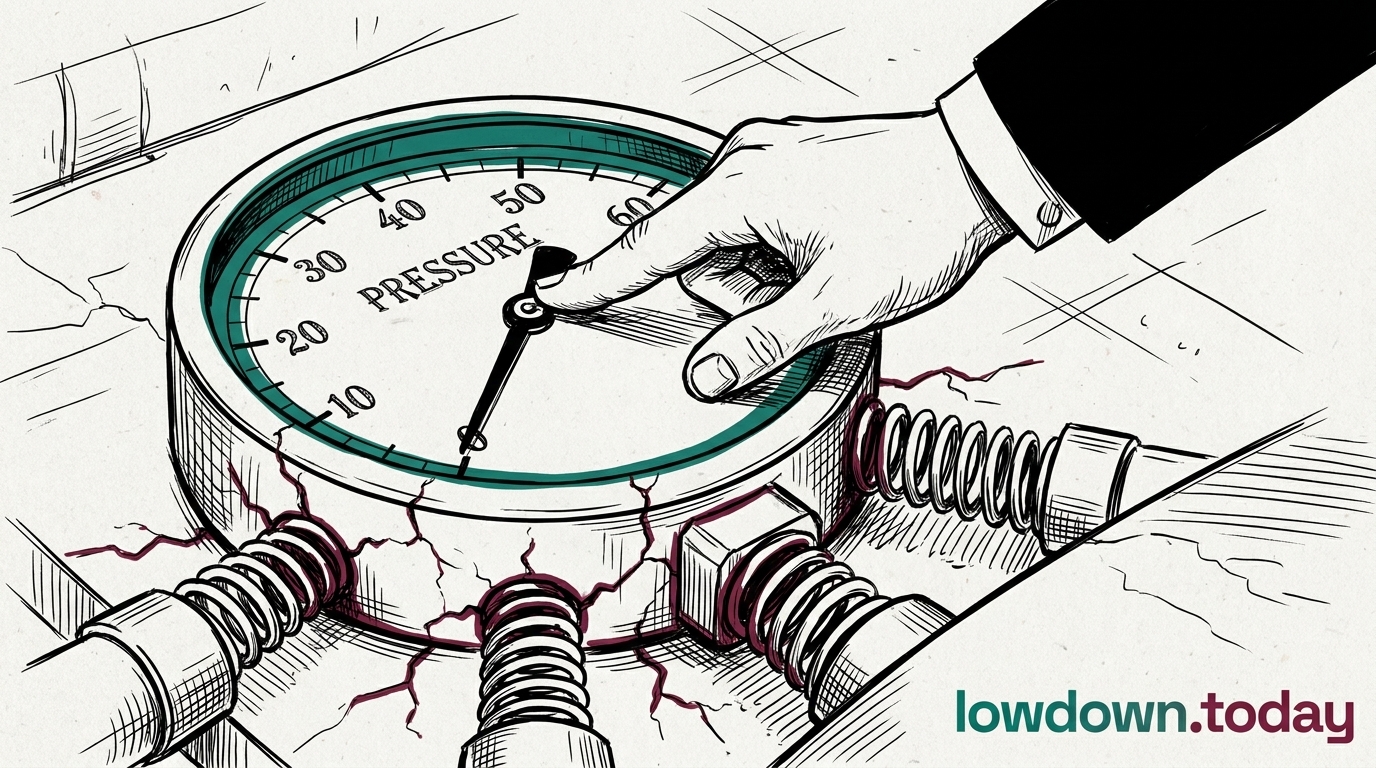
HRANA's 1,097 figure is a structural floor, not an estimate — its methodology guarantees undercounting, and the degree of undercounting is highest in precisely the areas most heavily struck.

HRANA — the Human Rights Activists News Agency — reported 1,097 Iranian civilians killed since US and Israeli strikes began on 28 February. HRANA is a diaspora-run organisation whose reporting network inside Iran was built during the country's cycles of domestic unrest: the 2009 Green Movement, the November 2019 fuel price protests in which authorities killed an estimated 1,500 people, and the 2022 Mahsa Amini uprising, where Amnesty International documented snipers firing into crowds . HRANA's methodology relies on person-to-person contacts — an approach that does not require functioning institutional infrastructure and that was designed, specifically, to operate when the Iranian state is trying to prevent information from getting out.

The figure exceeds the Iranian government's own total. The Foundation of Martyrs — the state body that provides benefits to families of the war dead — reported 1,045 killed across all categories, military and civilian combined . A civilian-only count surpassing the state's all-categories total is not paradoxical; it reflects the breakdown of administrative capacity under bombardment. The Foundation's process requires families to register deaths through government offices — a bureaucratic step that presupposes functioning local administration in provinces under active strikes. Strikes have hit 131 cities across 24 of Iran's 31 provinces . In areas where government offices have been destroyed or evacuated, deaths do not enter the state's ledger.

The Iranian Red Crescent's parallel count stood at 787 confirmed medical casualties , up from 555 a day earlier232 additional deaths passing through the medical system in a single 24-hour period. The Red Crescent captures only those who die within, or are brought to, its facilities. Where hospitals are damaged, overwhelmed, or inaccessible, casualties exit all institutional counting mechanisms entirely. Iran's internet has operated at 1% of normal capacity for six consecutive days — assessed by NetBlocks and Georgia Tech's IODA as the most severe communications shutdown in the country's recorded history. No external organisation can cross-reference, triangulate, or independently verify any of these figures. Three organisations using three different methods have produced three irreconcilable numbers, and the information environment ensures that irreconcilability cannot be resolved while the war continues.


Deep Analysis

In plain English

HRANA counts Iranian civilian deaths the way you might count car accidents only from police reports that were successfully filed. If the police station is destroyed, the roads are blocked, or the phone lines are down, accidents go uncounted — not because they did not happen but because no report reached anyone who could record it. With Iran's internet at 1% of normal capacity, HRANA can only tally deaths where someone managed to communicate outward through a near-dead network.

Deep Analysis
Synthesis

The near-convergence of HRANA's civilian-only count (1,097) with the Iranian state Foundation of Martyrs all-category count (1,045) is analytically anomalous — a human rights monitor's civilian-deaths figure should not approximately equal a state body's total-deaths figure unless one or both are capturing fundamentally different populations or both are suppressed by the same communications blackout. This convergence is a data-quality red flag that warrants explicit acknowledgement rather than treating either figure as independently credible.

Root Causes

The undercounting bias is non-random: it is most severe in the areas receiving the heaviest strikes, where local contacts are most likely to be casualties themselves, where communications infrastructure is most degraded, and where movement to report outward is most constrained. The true civilian toll skews highest precisely where figures are least verifiable.

What could happen next?
  • Risk

    International legal and diplomatic responses calibrated to the 1,097 figure will be based on a known undercount, potentially producing responses inadequate relative to the actual scale of civilian harm.

  • Consequence

    When communications are restored and more complete figures emerge, retrospective revision of civilian death tolls will trigger renewed international pressure at a point when the conflict's trajectory may already be set by decisions made on understated data.

First Reported In

Update #20 · Hormuz sealed; Senate war powers bill fails

HRANA· 5 Mar 2026
Read original
Causes and effects
This Event
HRANA: 1,097 Iranian civilians killed
HRANA's civilian-only death count of 1,097 exceeds the Iranian Foundation of Martyrs' total figure of 1,045 across all categories, exposing the fracture in Iran's own casualty-tracking infrastructure under sustained bombardment across 131 cities and a six-day communications blackout at 1% internet capacity.
Different Perspectives
Kuwait
Kuwait
Kuwait absorbed the Iranian strike that knocked generating units offline at a combined power-and-desalination plant on 17 July, the event that finally moved freight and insurance in lockstep with Brent. The strike hit essential civilian infrastructure, not a trading desk's benchmark.
Asian buyers (Singapore)
Singapore's middle distillates rose 12% month-to-date to 8.91m barrels and fuel oil passed 19m barrels on a 105% net-import surge, buyers retaining barrels as the East-West arbitrage window narrows. Cargoes are being stockpiled ahead of further Hormuz-driven freight repricing rather than released west.
Austria (Coreper holdout)
Vienna is blocking the same package over roughly EUR 2bn of frozen Russian assets earmarked for Raiffeisen, a domestic banking dispute with no connection to the oil cap racing toward its 23 July expiry. The linkage forces the whole package to wait on a bilateral compensation fight.
Greece (Coreper holdout)
Athens is holding the 21st sanctions package at the 22 July Coreper vote over Russian LNG re-export rights, a condition unrelated to the oil price cap itself, leaving the $44.10 freeze one day from expiry without a deal. Greece's own tanker registry gives it a direct stake in how any shadow-fleet measures are drafted.
Marine underwriters (Gulf war-risk)
Hull war-risk cover for Hormuz transits widened to a 3-10% band on 17 July with 5% the emerging norm, up from a 3-4% baseline set in late June, the first repricing in six weeks to track a flat-price move rather than lag it. Cover resets on actuarial evidence of loss, not on diplomatic or price signals.
Money managers (CFTC-tracked)
The CFTC's week-to-14-July snapshot, released 17 July, showed WTI managed-money net long collapsing 69% to 19,783 contracts and a standalone 60,141-contract net short on Brent Last Day (NYMEX). Both readings predate the Kuwait strike and the 20 July escalation, so any covering since is not yet visible in public data.