Skip to content
You can now search across every topic, entity and event.What's new
European Oil Markets
18MAY

Brussels stays silent on 20% chip goal

3 min read
17:30UTC

No DG CNECT or Commissioner Virkkunen communication since 13 April has restated the Chips Act's 20% global market share target by 2030. The figure is lapsing without a speech to retract it.

EconomicAssessed
Key takeaway

The 20% chip target is lapsing by procurement rather than by policy; no replacement benchmark has been published.

Since 13 April 2026, no European Commission communication has restated the Chips Act's 20% global semiconductor market share target by 2030 1. DG CNECT has issued none. Commissioner Virkkunen, the European Commissioner for Tech Sovereignty, Security and Democracy, has issued none. The silence extends a pattern running since the first Integrated Production Facility and Open EU Foundry designations dropped the number last October .

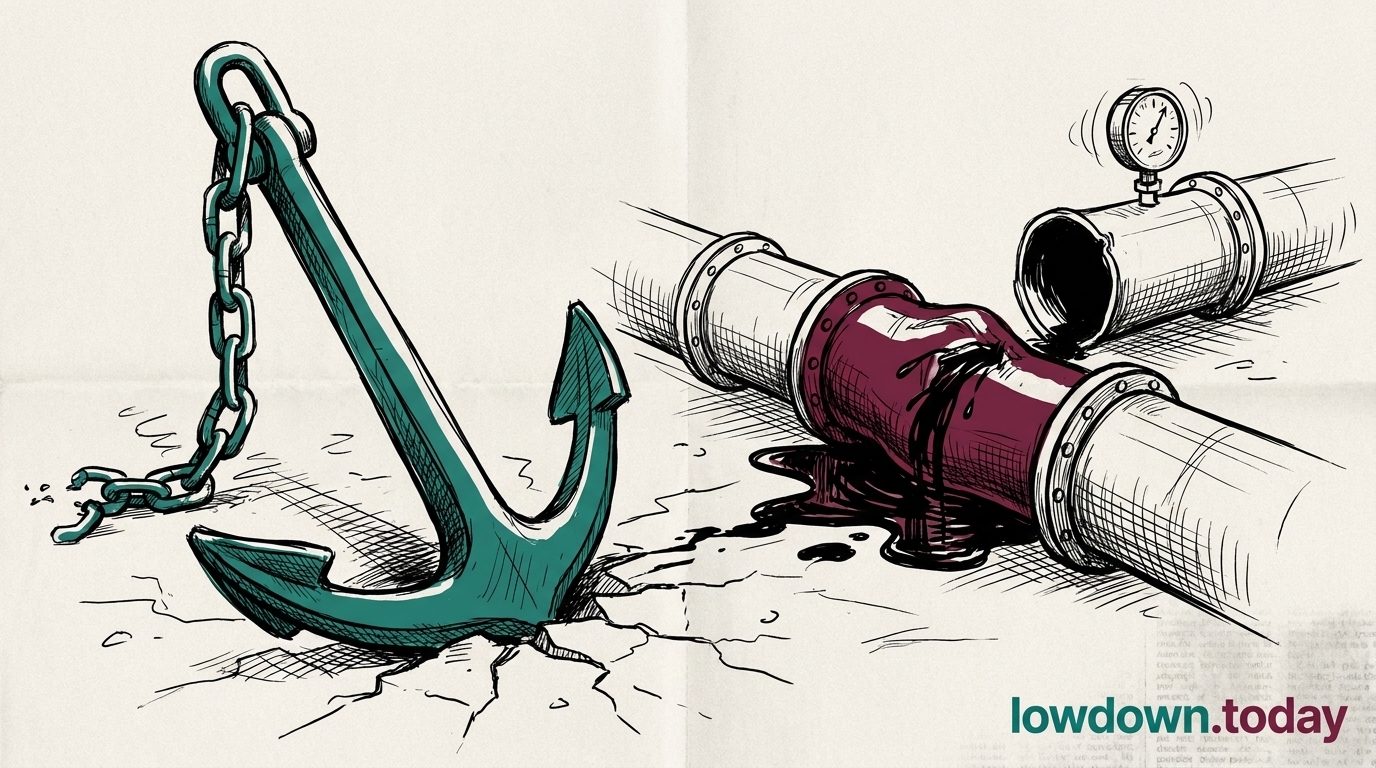
The Intel Magdeburg cancellation and GlobalFoundries Crolles suspension removed the mathematical basis for the target. Formally abandoning it would invite political embarrassment; repeating it would invite ridicule. The Commission has chosen neither. It is letting the figure lapse without acknowledgement, routing Chips Act execution into photonics and advanced packaging pilot lines while leaving the original ambition on the policy shop-front.

National capitals planning their own semiconductor strategies have nothing new to calibrate against. Without a replacement benchmark, member-state industry ministries cannot set their own 2030 production goals in any form that links back to a shared EU aggregate. The strategic retreat is happening through state-aid approvals and pilot-line awards, not through a speech, and the replacement metric has yet to appear in any public document.


Deep Analysis

In plain English

In 2022, the EU passed the Chips Act with an ambition to make Europe responsible for 20% of global semiconductor production by 2030. Europe currently makes about 10%. The two biggest factory projects meant to close that gap, Intel's €30bn German plant and a €7.5bn French factory, have both been cancelled or suspended. Since October 2025, no EU official has publicly repeated the 20% target. DG CNECT has continued approving photonics and packaging pilot lines without restating the headline goal. No replacement target has been published. This is a recurring pattern in EU industrial policy: set a bold numeric target, fail to achieve the conditions needed to reach it, and then quietly stop mentioning the number rather than formally admitting the goal was missed. The Lisbon Agenda did exactly this in the 2000s with its 2010 competitiveness target.

What could happen next?
  • Consequence

    Without a replacement benchmark, member states including Germany, France, and the Netherlands will design their own 2030 semiconductor strategies without a shared EU aggregate, fragmenting the single market's chip capacity planning along national lines.

    Short term · 0.75
  • Risk

    Asian and US chipmakers may interpret the absence of a restated 20% target as a signal that European state aid conditions will soften, reducing their incentive to accept the Open EU Foundry third-party access obligations that come with Chips Act designation status.

    Medium term · 0.65
  • Consequence

    A Chips Act 2.0 roadmap that replaces the 20% global market share target with niche sovereignty targets (automotive chips, photonics, advanced packaging) would represent a genuine strategic recalibration; its absence in 2026-27 would confirm the Lisbon Agenda failure pattern is repeating.

    Long term · 0.72
First Reported In

Update #2 · Brussels buys, Britain backs, Google unlocks

European Commission DG CNECT· 19 Apr 2026
Read original
Different Perspectives
Indian refiners
Indian refiners
Indian refiners kept lifting discounted Urals as the India/Baltic price split widened past $9-10 a barrel, a gap that only grows as GL X1's Iranian wind-down cuts an alternative discounted grade off the market by 17 July. Cheaper Russian feedstock is being locked in while it lasts.
Chinese refiners
Chinese refiners
Chinese refiners gain leverage as the Urals-Brent discount widens, since Beijing's state buyers already source discounted Russian barrels near the fiscal floor unaffected by Western insurance costs. A wider discount, if it holds past 23 July, lets them lock in cheaper term contracts regardless of the cap's outcome.
US money managers (CFTC-tracked)
Managed money trimmed WTI net length into the rally, positioning that reflects doubt the Hormuz premium survives without freight or war-risk confirmation. The Brent-WTI spread widening almost entirely on the Brent leg supports that scepticism about a broad-based repricing.
OPEC+ (Saudi-led subgroup)
Saudi Arabia is defending market share through a fourth straight 188kbd August hike even as OPEC's own July MOMR cut 2026 demand growth for the fourth consecutive month. At a $108-111 fiscal breakeven, every added barrel costs Riyadh revenue it cannot recoup, so the hike reads as a positioning signal, not a demand bet.
Greek shipping registries
Greece, backed by Cyprus and Malta, is pushing a three-month cap-freeze compromise against the Commission's freeze to January 2027 ahead of the 23 July vote. Athens' and Valletta's combined tanker registrations mean a shorter review gives their insurers more frequent chances to reprice risk on Russian cargoes.
Russia (Deputy PM Alexander Novak)
Novak extended the diesel export restriction to producers on 8 July, the first producer-binding curb of the war, protecting the domestic pump price ahead of any refinery repair timeline. Urals still trades below Russia's $59 budget floor even as Brent gained, so the ban trades export revenue for fiscal stability at home.