Skip to content
You can now search across every topic, entity and event.What's new
European Energy Markets
22JUN

Seven AI gigafactories go out to tender

3 min read
13:56UTC

EuroHPC opened the AI Gigafactories call on 30 July. Bids close 12 November, selection follows in early 2027, and the public money is framed as an anchor customer for private capital.

EconomicDeveloping
Key takeaway

Brussels is buying demand rather than capability, and November shows who turns up to sell it.

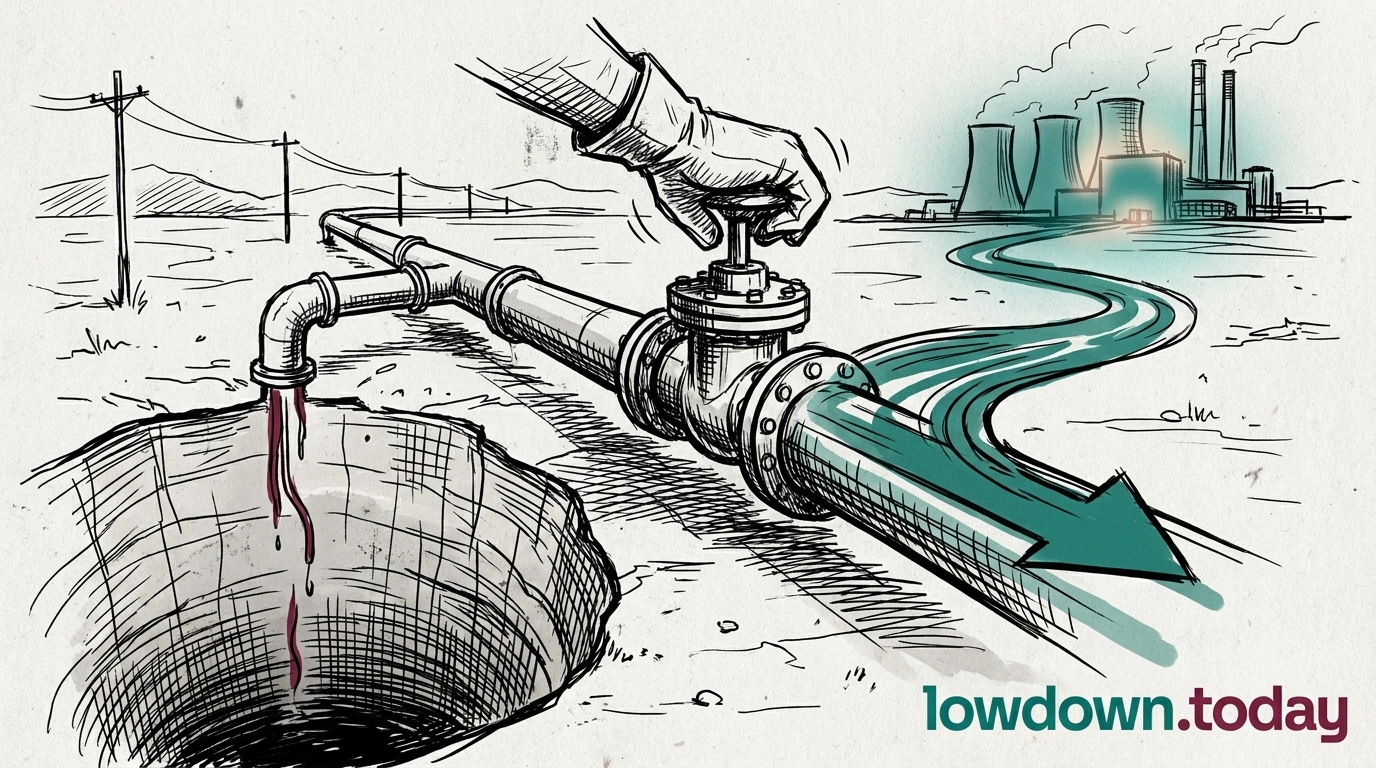
EuroHPC opened the AI Gigafactories call for tenders on 30 July, with submissions closing on 12 November 2026, selection expected in early 2027, and funding for up to seven sites spread across at least seven member states 1. No consortium and no location has been named. The call is explicit about what the public money buys: it "will act as an anchor customer, significantly de-risking the significant capital required and helping to unlock expected Total private investment of more than 20 billion euros across the EU" 2.

Anchor-customer procurement commits the state to buying output rather than to writing rules, so the public purse absorbs demand risk that a private investor would otherwise have to price into the build. Its known failure mode is that it rewards whatever can be delivered fastest, and the fastest route to seven very large AI sites runs through the same accelerator supplier the Luxembourg machine bought from nine days earlier. The published call does not say whether the evaluation weights European content at all.

When the EUR 4.12bn programme was confirmed in June, the Commission's executive vice-president Henna Virkkunen said majority owners of AI Gigafactories should come from Europe, and we wrote then that the call would be the first test of whether that standard survives contact with a market in which no European AI accelerator exists . That test has now opened with a date on it. Brussels is not pretending to be self-sufficient in the meantime, having committed in June to at least $40bn of American AI chips under the Pax Silica arrangement .

The useful measure on 12 November will not be the headline capital figure. It will be how many consortia bid, how many member states they cover against the floor of seven, and how much of the capital equipment those bids propose to procure inside the EU.


Deep Analysis

In plain English

AI Gigafactories are large EU-funded computing centres meant to give European researchers and companies the processing power to build and run advanced AI systems without depending entirely on American or Chinese infrastructure. On 30 July, the EU opened the formal bidding process. Companies and consortia have until 12 November 2026 to apply, with winners chosen in early 2027. At least seven sites must be spread across at least seven different EU countries. The EU's public money is meant to convince private investors it is safe to put in much larger sums alongside it.

Deep Analysis
Root Causes

The AI Gigafactories concept exists because private capital alone has not been building frontier-scale AI compute inside the EU at the pace Brussels wants, the same market gap that keeps Chips Act state aid flowing, roughly EUR 14.2bn cumulative as of mid-July .

The requirement for at least seven sites across seven member states is a political distribution constraint, not a technical one: it spreads capacity geographically rather than concentrating it at the single most efficient location, trading some efficiency for buy-in from smaller member states.

First Reported In

Update #14 · AI Act fines arrive, three states list no regulator

EuroHPC Joint Undertaking· 4 Aug 2026
Read original
Different Perspectives
Cross-border power traders
The France-Germany day-ahead spread flipped from a EUR 17.20 German premium on 1 August to a EUR 4.15 French premium on 3 August, the same day French curtailment peaked. They cannot yet attribute the flip to curtailment alone, since a like-for-like overnight comparison shows French nuclear output rising while wind fell and demand returned on the weekday step.
EDF
EDF
River-cooling limits took 7.6 GW, 12 per cent of its fleet, offline on 3 August, the highest curtailment since the heatwave began, with an easing forecast to 4.3 GW on 4 August and 3 GW after. It manages the cut as a recurring seasonal constraint, expecting it to lift with river temperature, not repair.
Gasunie
Gasunie
TTF, the Dutch hub it operates, drifted to roughly EUR 55 to 58 per MWh across the window, staying inside its recent range through both the German spark reversal and the French curtailment. It reads a flat hub price as evidence that neither event this window carried enough weight to move the fuel leg on its own.
German gas-fired generators
Record German solar of 18,761 MW on 2 August pushed the clean spark spread to minus 18.48 EUR/MWh, a loss-making day, before it returned to plus 16.20 on 3 August. They now price dispatch against post-solar residual load rather than wind alone, since the sign flipped inside 48 hours on unchanged fuel and carbon costs.
European Commission (DG Energy)
Its implementing-measures register logged transposition notices from only Portugal and Slovakia against Wednesday's Article 94 deadline for Directive (EU) 2024/1788, with 25 states silent. It expects the register to fill only gradually, since filing routinely lags legislating and any infringement track against non-notifying states runs on a slower clock than the deadline itself.
Spain's LNG terminal operators
Spain's 9,145 GWh terminal inventory is the largest single stock in the EU LNG network, an option value that can reroute cargoes wherever the winter strip pays best rather than a cavern gas obligation tied to a fixed date. That flexibility matters more as Germany's cavern shortfall pushes more of the winter security question onto import infrastructure.



