Skip to content
You can now search across every topic, entity and event.What's new
European Energy Markets
18JUN

The Iran war gets a new file name

2 min read
09:57UTC

Pentagon casualties are now logged under a category called Overseas Operations rather than Operation Epic Fury, three days after the Senate refused to bind the President by statute.

EconomicDeveloping
Key takeaway

A casualty-database label now carries the argument that a second Iran war began in July.

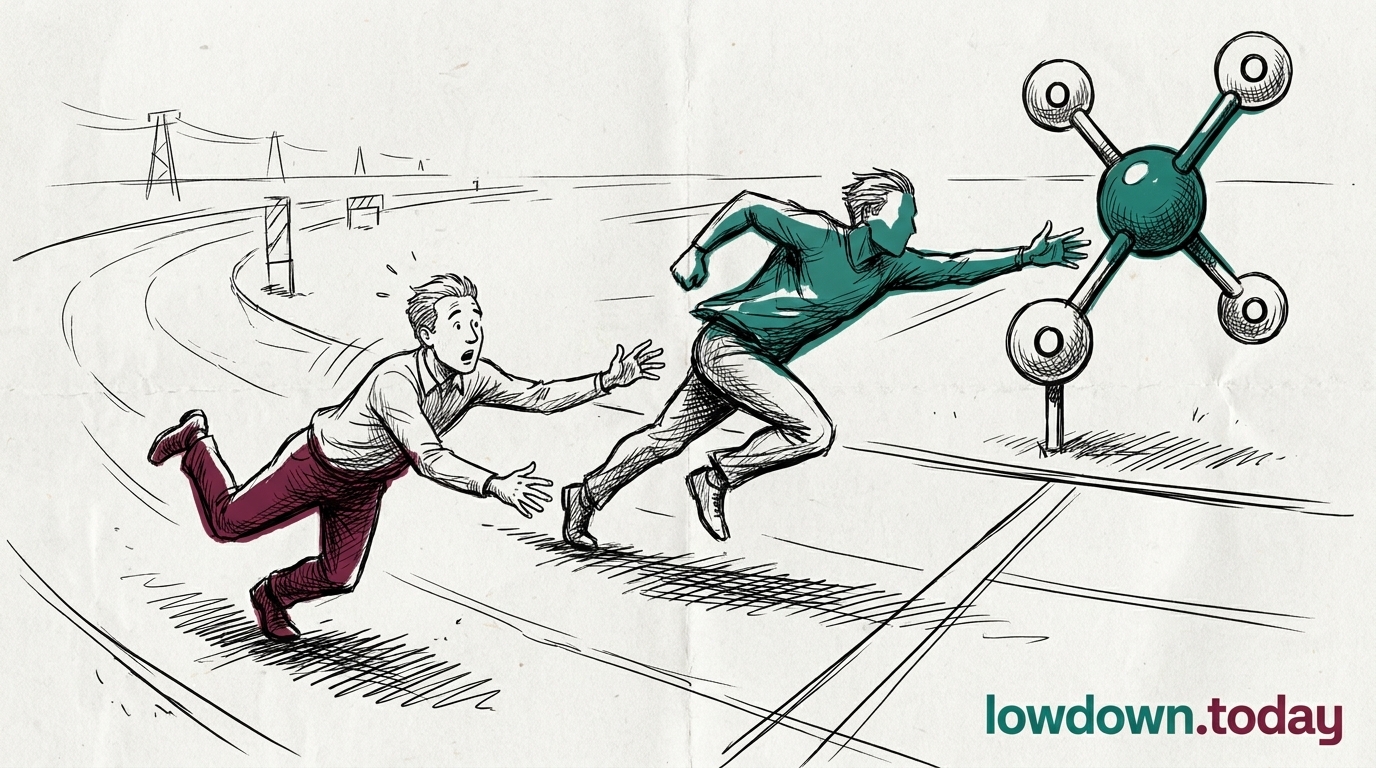
US casualties from the Iran war are now recorded under a category called Overseas Operations rather than under Operation EPIC FURY, the name the campaign has carried since February, a change the Defense Casualty Analysis System (DCAS), the Pentagon's casualty ledger, made on 26 July1. The administration's stated position holds that EPIC FURY ended in May. On that reading the daily fighting since counts as a second conflict rather than a continuation of the first.

The War Powers Resolution of 1973 gives a president 60 days of hostilities without congressional authorisation before he must withdraw forces. A clock that expired months ago and a clock that started in July are legally different objects, and only one of them requires a vote2.

Congress tried the direct route on Thursday 23 July and lost twice: the House passed its resolution 214-208, the Senate killed its own 47-49 . Rep. Thomas Massie, a Kentucky Republican who crossed the aisle in that vote, named the mechanism plainly: "Let me explain this absurd ruse: The Pentagon is pretending there have been two Iran wars separated by a brief cease-fire"3.

That charge is Massie's, not ours, and casualty systems genuinely break. The timing can be checked, though. The category changed three days after the Senate refused to bind the President, a coincidence of timing and direction we can verify rather than a motive we can prove. Anyone who wants to litigate the point now has to argue about the start date of an administrative label rather than about the legality of a campaign, which shifts the fight from the floor of the Senate into the departmental record, where discovery runs slower and the department controls the filing.


Deep Analysis

In plain English

The War Powers Resolution is a 1973 law meant to stop presidents fighting long wars without Congress's sign-off. It gives the president 60 days to get formal approval once troops are in combat, or start pulling them out. The Pentagon just filed the Iran war under a new administrative name. If officials later argue the old operation ended in May, that filing could be read as starting the 60-day countdown all over again on 26 July, even though nothing has changed for the troops involved.

Deep Analysis
Root Causes

The Resolution's 60-day clock is meant to start when the president reports the introduction of United States Armed Forces into hostilities, a factual and legal determination, not an administrative filing choice. No court has ruled on whether renaming a tracking category can reset that clock, so the manoeuvre exploits a genuine gap: the law names the trigger, but nothing names who gets to decide when an operation has legally ended and a new one has legally begun.

Congress's two attempts to force the issue this month both failed on the same day, 23 July: the House passed H.Con.Res.89 214-208 directing troop withdrawal, and the Senate killed the binding S.J.Res.180 47-49, showing the political branches split even before the accounting change added a fresh procedural question.

What could happen next?
  • Consequence

    A restarted 60-day clock would give Congress a fresh, unambiguous deadline to vote on withdrawal, unlike the contested May end date currently in dispute.

  • Precedent

    If the rename is later accepted as legally resetting the clock, it would give any future administration a low-cost tool to manage War Powers deadlines through bookkeeping rather than battlefield facts.

First Reported In

Update #163 · Pentagon puts four dead back, renames war

ABC News· 28 Jul 2026
Read original
Causes and effects
Different Perspectives
Cross-border power traders
The France-Germany day-ahead spread flipped from a EUR 17.20 German premium on 1 August to a EUR 4.15 French premium on 3 August, the same day French curtailment peaked. They cannot yet attribute the flip to curtailment alone, since a like-for-like overnight comparison shows French nuclear output rising while wind fell and demand returned on the weekday step.
EDF
EDF
River-cooling limits took 7.6 GW, 12 per cent of its fleet, offline on 3 August, the highest curtailment since the heatwave began, with an easing forecast to 4.3 GW on 4 August and 3 GW after. It manages the cut as a recurring seasonal constraint, expecting it to lift with river temperature, not repair.
Gasunie
Gasunie
TTF, the Dutch hub it operates, drifted to roughly EUR 55 to 58 per MWh across the window, staying inside its recent range through both the German spark reversal and the French curtailment. It reads a flat hub price as evidence that neither event this window carried enough weight to move the fuel leg on its own.
German gas-fired generators
Record German solar of 18,761 MW on 2 August pushed the clean spark spread to minus 18.48 EUR/MWh, a loss-making day, before it returned to plus 16.20 on 3 August. They now price dispatch against post-solar residual load rather than wind alone, since the sign flipped inside 48 hours on unchanged fuel and carbon costs.
European Commission (DG Energy)
Its implementing-measures register logged transposition notices from only Portugal and Slovakia against Wednesday's Article 94 deadline for Directive (EU) 2024/1788, with 25 states silent. It expects the register to fill only gradually, since filing routinely lags legislating and any infringement track against non-notifying states runs on a slower clock than the deadline itself.
Spain's LNG terminal operators
Spain's 9,145 GWh terminal inventory is the largest single stock in the EU LNG network, an option value that can reroute cargoes wherever the winter strip pays best rather than a cavern gas obligation tied to a fixed date. That flexibility matters more as Germany's cavern shortfall pushes more of the winter security question onto import infrastructure.



