Skip to content
You can now search across every topic, entity and event.What's new
Data Centres: Boom and Backlash
28JUN

UK Gate 2 grid offers begin issuing

4 min read
12:23UTC

NESO issued the first transmission connection offers under the reformed UK queue in mid-May, with AI Growth Zones drawing priority access, electricity discounts and the right to build their own high-voltage infrastructure.

IndustryDeveloping
Key takeaway

Gate 2 starts issuing; the electricity discount decides whether UK siting can compete with the Nordics again.

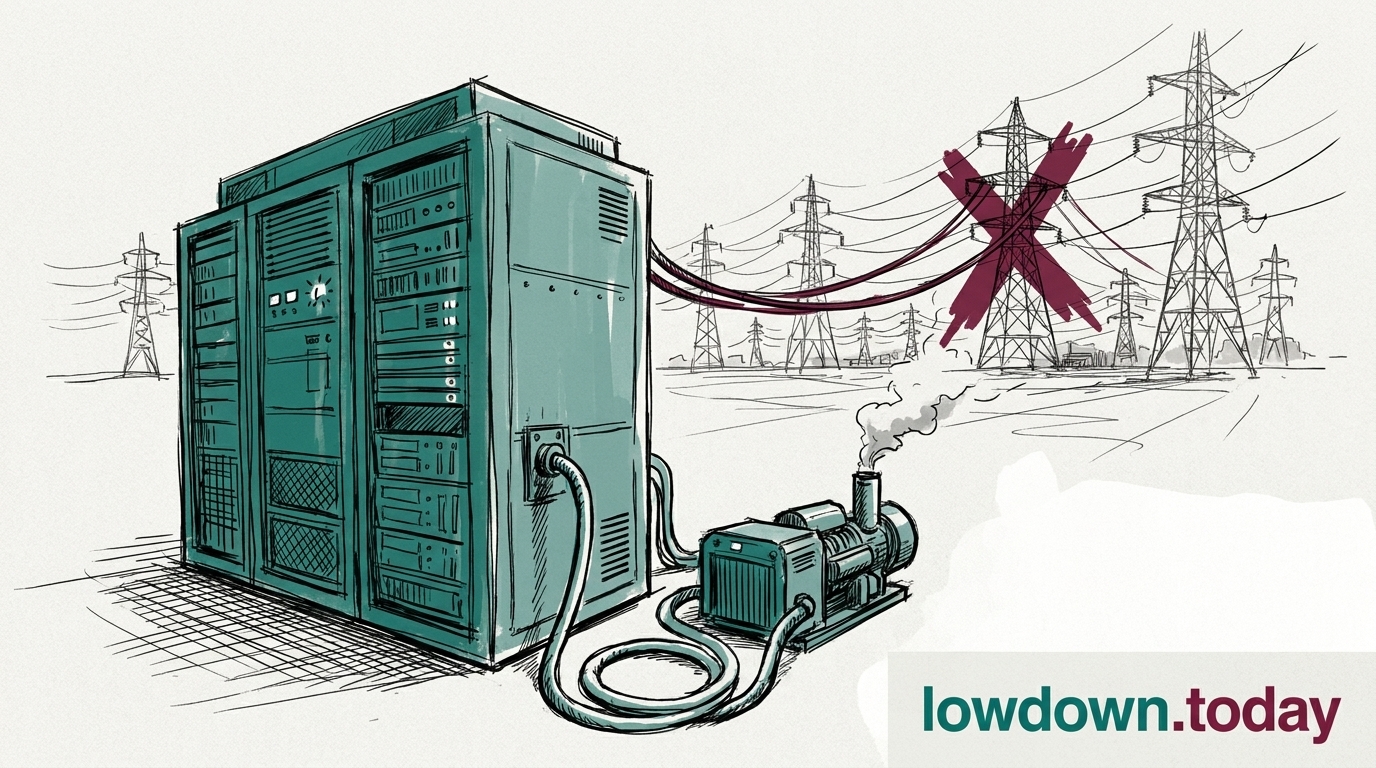
NESO (National Energy System Operator) began issuing the first transmission connection offers under the reformed UK queue this week, with Gate 2 Phase 1 opening against an applications book that exceeds Britain's 45 GW national peak . The framework was set on Wednesday 11 March, when energy minister Michael Shanks and AI minister Kanishka Narayan confirmed that AI Growth Zones would receive priority access, 'significant discounts on electricity bills' and the right for developers to build their own high-voltage lines and substations 1. The Gate 2 issuance turns those concessions from a policy paper into a queue place.

OpenAI's quantification of UK industrial electricity at four times US and Nordic rates sets the cost gap Gate 2 alone cannot close, and which has driven greenfield siting decisions to Texas and Finland since 2024. The new electricity discount is the concession that addresses it directly, and the self-build right for high-voltage lines is what makes the discount usable: an operator that can construct its own substation does not need to wait for NESO's distribution allocation to commission the load.

The demand-side application volume that produced the queue grew 460% in six months to June 2025, and the worst waits reached 15 years before the reforms 2. Gate 2 Phase 1 sets the test of whether the financial-deposit reforms cleared the speculative-application backlog NESO had identified as the structural cause. If the offers being issued this month match the pre-Gate 2 forward demand, the reform has worked at the procedural layer. The harder test is whether the AI Growth Zone discount has rebuilt the UK's economic case enough to claw back any of the Cobalt Park-style sites OpenAI has now paused . The earliest signal will come from the second tranche of offers and from which AI Growth Zone operators show up at NESO's connection desk in June.

Deep Analysis

In plain English

Britain has a huge backlog of companies waiting to connect to the electricity grid: more than 45 gigawatts of requests from data centres alone, which is more than the entire country uses at peak demand. This queue has caused waits of up to 15 years for a new connection. The government has introduced a reformed system called Gate 2, which started issuing connection offers in May 2026. Companies that have seriously committed to building will now get priority. Data centres in specially designated zones called AI Growth Zones also get a discount on their electricity bills and the right to build their own electricity lines and substations, bypassing some of the queue entirely.

Deep Analysis
Root Causes

The UK grid queue grew 460% in six months to June 2025, from roughly 10 GW to 50 GW, because the queue had no financial deposit requirement: speculative applicants could hold a position for three to five years at near-zero cost, crowding out committed developers.

The Gate 2 reform introduced financial deposits and active curation of the queue, removing the speculative applications that had inflated the backlog. The 460% growth figure itself is the root cause, not a symptom: it reflects that the pre-Gate 2 queue was not a demand signal but an option-holding exercise.

The AI Growth Zone self-build right for high-voltage lines and substations addresses the deeper structural constraint: NESO's distribution allocation is the bottleneck below the transmission level.

An operator that can construct its own substation and HV lines does not need to wait for NESO's distribution capacity to be available; it bypasses that layer entirely and connects directly to the transmission network. This is the more consequential concession for operators already planning 100 MW-plus campuses with the capital to self-fund substation construction.

What could happen next?
  • Opportunity

    UK AI Growth Zone operators with confirmed Gate 2 positions and the capital to self-build HV infrastructure face a 2-3 year payback advantage over a comparable Finnish build, making the UK competitive for the first time since 2024.

    Medium term · 0.65
  • Risk

    The 460% queue growth figure confirms that most pre-Gate 2 applicants were speculative; if the post-deposit queue is significantly smaller than 50 GW, the reform may reveal that committed UK data-centre demand is far below the headline backlog.

    Short term · 0.7
  • Consequence

    NESO's Gate 2 offers are the first test of whether the UK's queue reform can close the 15-year wait that drove OpenAI to pause Cobalt Park (ID:2785); the second tranche of offers in June-September will be the cleaner signal.

    Short term · 0.8
First Reported In

Update #3 · OpenAI cuts $800bn; rivals double down

GOV.UK / DESNZ· 16 May 2026
Read original
Different Perspectives
Global hyperscale operators
Operators are still filing gigawatt-scale campuses and Meta is proceeding with its $10bn Lebanon, Indiana site despite the county-level bans nearby, betting Q2 capex outruns the patchwork of restrictions. Industry framing casts New York's freeze, Oregon's surcharge and Indiana's bans as taxes and levies that push build-out toward faster-permitting jurisdictions such as India and the Gulf.
EirGrid
EirGrid
EirGrid set a 900 MW instantaneous demand-loss ceiling because a single voltage dip can trip many data centres onto backup power at once, risking imbalance above 1,150 MW. It wrote the limit into a standing procedure rather than waiting for an emergency to force one.
US host communities and ratepayers
Prince William residents backed the 8-0 denial of Dulles South over the Occoquan watershed, drinking water for eight million people, while Oregon's approved tariff cuts residential bills 1.3% by charging large loads 29% more. Their position: consent and cost-attribution belong in law, not left to a developer's or a utility's discretion.
Hassan Allam Digital Infrastructure
Hassan Allam Digital Infrastructure, an Egyptian conglomerate rather than a foreign hyperscaler, reportedly secured a domestic hyperscale licence with a $400m first phase, per single-source reporting still to be verified. It reads as home-grown sovereign compute ambition, building national capacity rather than importing a US or Gulf operator's campus.
Damac Digital
Damac Digital
Damac Digital keeps building toward roughly 6,000 megawatts of hyperscale capacity across 13 countries while Virginia taxes power and New York weighs a freeze. Every dollar or month of delay a US state adds is capacity a Gulf developer can site somewhere with faster permitting and no equivalent levy.
Acequia communities, Santa Fe County
Santa Fe County commissioners voted unanimously on 2 July to freeze any data centre over one megawatt, citing the acequia irrigation commons that has shared scarce water since Spanish colonial rule. They expect the low threshold to draw the same Fifth Amendment challenge RCM Hill brought against Hill County, Texas.

