Skip to content
You can now search across every topic, entity and event.What's new
AI: Jobs, Power & Money
15MAY

UK projects 3.9 million AI jobs by 2035

1 min read
15:55UTC

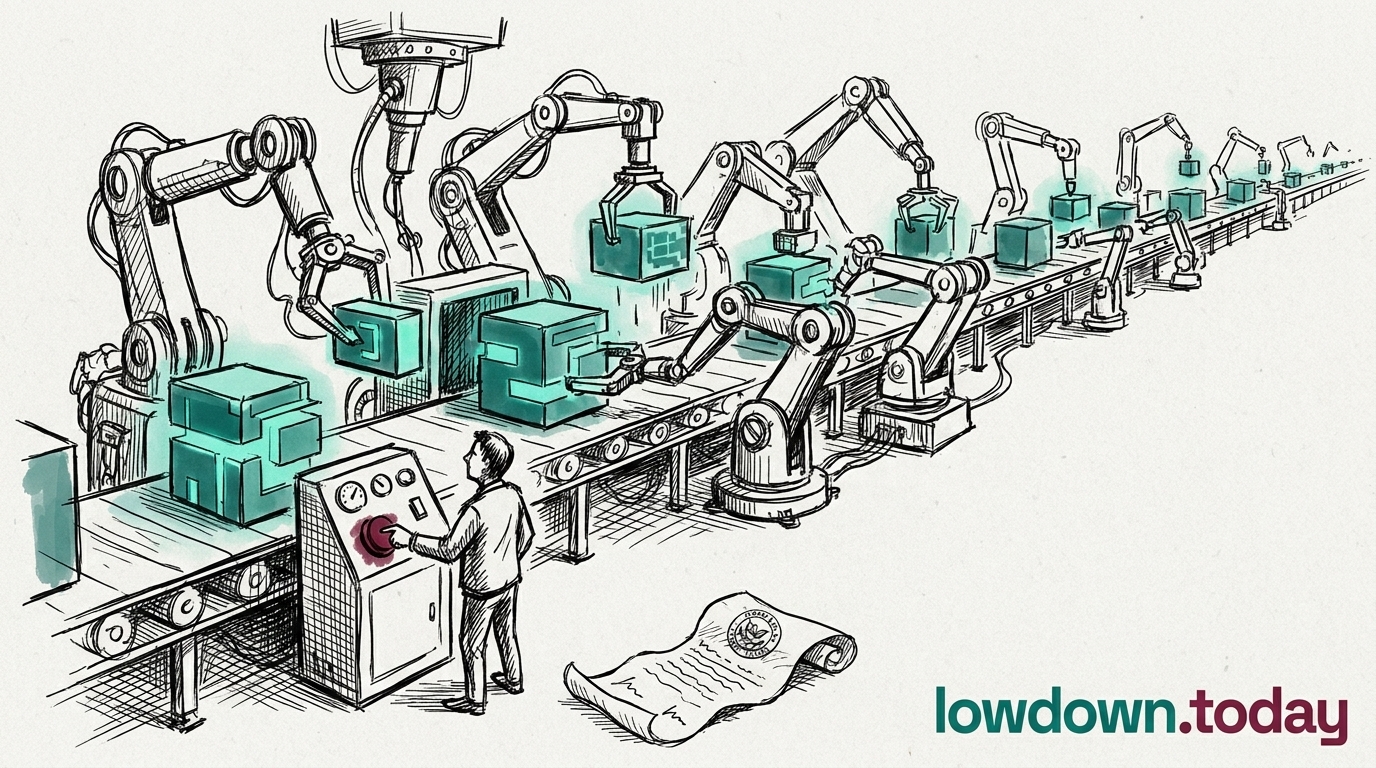
The government's own figures show 90% of net new jobs will be professional-tier. The workers being displaced will not fill them.

EconomicDeveloping
Key takeaway

Ninety per cent of projected UK AI jobs require professional-tier qualifications.

In January, the UK Government published projections showing AI-direct employment rising from 158,000 jobs in 2024 to 3.9 million by 2035, with up to 9.7 million in AI-related occupations. 1 Ninety per cent of net employment growth falls in professional and associate professional roles. Declines concentrate in administrative, secretarial, and skilled trades.

AI roles are growing, but the workers being displaced from clerical and administrative positions are not the ones who will fill them. The government's own data amounts to an admission that displacement will fall disproportionately on mid- and lower-tier workers, while new opportunities cluster among those who least need them.

Deep Analysis

In plain English

The UK Government projects that jobs specifically related to AI will grow from 158,000 today to 3.9 million by 2035. That sounds like good news. The catch is that nine in ten of those new jobs will require professional or higher-level qualifications. The workers being displaced from clerical and administrative roles by AI are not typically those who will be hired for professional AI roles. The government's own figures confirm that the gains and losses will fall on different people.

What could happen next?
  • Meaning

    Official UK projections confirm that AI job creation and AI job displacement affect different segments of the workforce, making aggregate employment growth statistics misleading as a welfare measure.

First Reported In

Update #3 · The AI jobs data contradicts itself

UK Government· 28 Mar 2026
Read original
Causes and effects
This Event
UK projects 3.9 million AI jobs by 2035
Official UK projections confirm that AI job creation concentrates at the top, leaving displaced workers without a path.
Different Perspectives
India IT services and global capability centre workforce
India's in-house GCCs added roughly 200,000 net staff in fiscal 2026, nearly double the 110,000 added by the IT services firms feeding the same companies. The shift moves work toward captive centres while squeezing entry-level hiring at the outsourcing firms, reshaping where Indian tech careers begin as US clients cut staff at home.
EU workers and European labour institutions
The 93-4 committee vote locked the diluted Omnibus literacy clause before plenary: EU workers in AI-augmented but non-high-risk workplaces have no statutory right to demand an explanation until December 2027. The European Trade Union Confederation called the shift from 'ensure' to 'support' a legal threshold collapse, not a drafting compromise.
UK workforce and labour market
UK 16-to-24 unemployment reached 16.2% in the latest ONS reading, above the 15.2% pandemic peak and the highest since 2015. Britain is among the most AI-exposed labour markets this desk tracks, yet the Office for National Statistics still publishes no AI-attribution layer, so young workers face the displacement without official data naming its cause.
Anthropic and frontier AI labs subject to US jurisdiction
Anthropic complied with the directive but publicly disputed its application, citing that OpenAI's GPT-5.5 carried the identical jailbreak vulnerability and remained on sale. For any US-domiciled frontier lab, the action demonstrates that regulatory compliance and political alignment are now distinct variables: Anthropic backed the pro-regulation PAC and was the first lab Washington reached.
US national-security and export-control apparatus
The Lutnick directive treats runtime inference access by a foreign national as legally equivalent to exporting Claude Fable 5 and Mythos 5 to that person's home country. It established that a deployed consumer AI product can be withdrawn globally by regulatory letter, with no appeal period and no customer notice.
European workers and regulators
NBER working paper w34995 found European workers use generative AI at 32% versus 43% of US workers, a gap driven by management practice rather than regulation. The EU AI Act's high-risk employment deadline stays at December 2027, leaving European workers facing the same displacement curve two to four years behind the US.
