Skip to content
Welcome, thoughtbot's Giant Robots listeners!Start here
AI: Jobs, Power & Money
2MAY

Kenya drafts a pay floor for AI labour

1 min read
15:17UTC

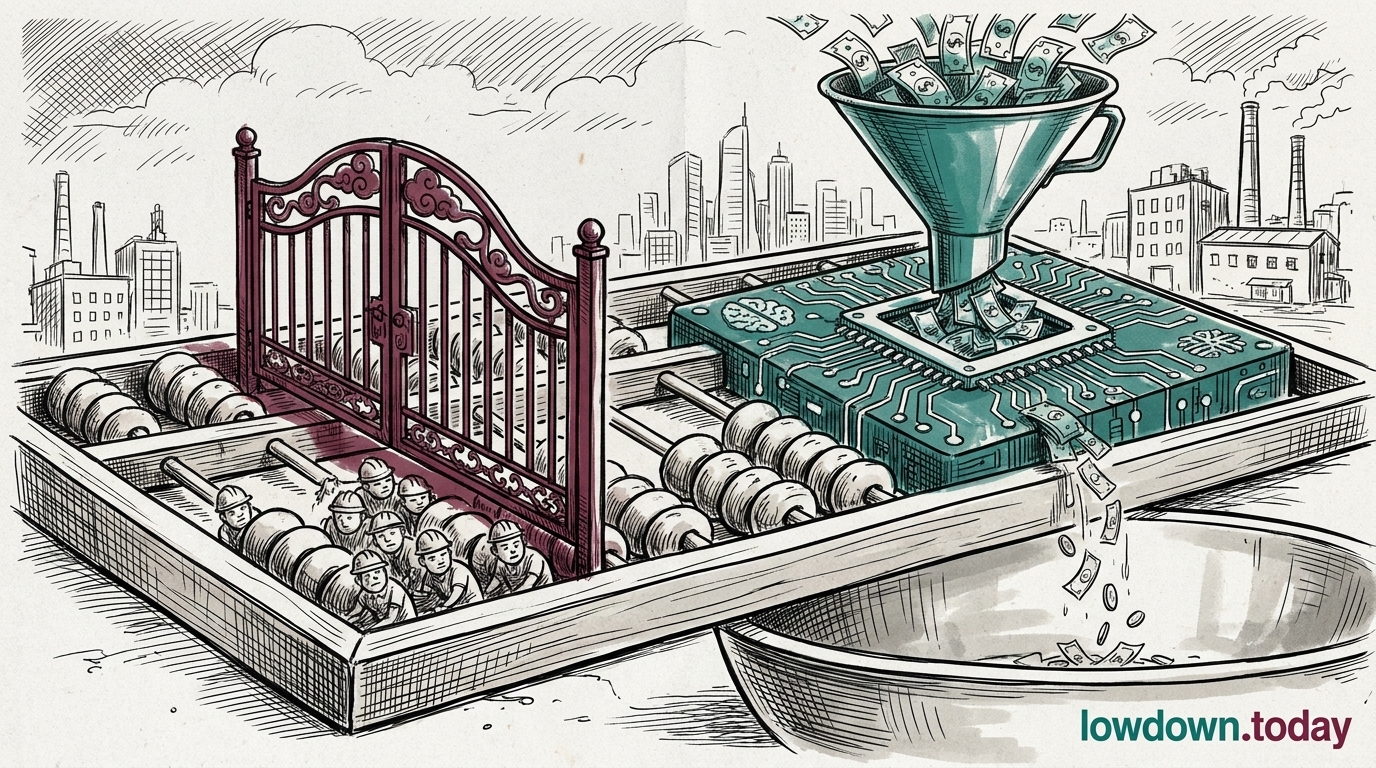
Kenya's draft national AI policy commits the government to a statutory Fair Pay Reference Framework for the data annotators and content moderators who train and police the models.

EconomicDeveloping
Key takeaway

Kenya proposes a statutory pay standard for the annotators who train and moderate AI systems.

Kenya's State Department for ICT and the Digital Economy published a draft national artificial intelligence policy on 24 July, open to consultation until 4 August, committing the government to publish a statutory Fair Pay Reference Framework for data-annotation and content-moderation workers, alongside duty-of-care standards covering exposure to harmful content, mental health support and contracting terms.⁠1

The draft describes Kenya's place in AI supply chains as concentrated in lower-value segments such as data annotation and content moderation, with limited structured pathways for progression into higher-value roles. Governments rarely write down that their comparative advantage is being cheap, and the sentence is doing policy work: a pay framework needs a stated problem before a ministry can defend the price it sets.

Kenyan annotators earn between $1.46 and $3.74 an hour on figures relayed by the trade outlet WeeTracker, against $21 to $27 for comparable American work.⁠2 Annotation is the labour that produces the training data and the safety filtering behind consumer AI products, which makes it the one segment of this industry where wage regulation would touch the cost base of the model developers directly.

A statutory floor sets a price that a buyer must meet or leave; a reference benchmark publishes a figure and hopes procurement Teams read it. Nothing in the draft yet settles which of the two Kenya intends. India's outsourcers spent the same quarter arguing over graduate intake instead, with Wipro adding 888 net staff while setting no fresher target, and no high-income government proposed a price floor for the human labour that trains the models at all.


Deep Analysis

In plain English

Kenya's ICT ministry has proposed a Fair Pay Reference Framework, a set of minimum-pay rules specifically for data-annotation and content-moderation workers, the people who label training data and review flagged content for AI systems, often for very low pay. It targets the workers who build AI from underneath, rather than the ones AI may replace.

Deep Analysis
Root Causes

Kenya has become a hub for outsourced data-annotation and content-moderation work for major AI and social-media firms, because labour costs are low and English-language skills are widespread.

The proposed pay floor responds directly to reporting and litigation over conditions in that specific sector, rather than to job losses from AI adoption.

What could happen next?
  • Precedent

    A statutory pay floor for the AI supply chain's lowest-paid workers, annotators and moderators, is a distinct regulatory target from the job-loss and displacement debates dominating the rest of this update.

First Reported In

Update #19 · Four methods, one answer on AI and jobs

Kenya State Department for ICT and the Digital Economy· 24 Aug 2026
Read original →
Different Perspectives
Competition and Consumer Commission of Singapore
The regulator found on 27 November that businesses can still choose and switch between cloud providers and AI models. It named dominant firms blocking rival AI agents as a risk, but answered with eight voluntary principles rather than rules.
La Poste
La Poste
France's state-owned postal group signed its first AI accord with four union confederations on 19 November, setting up a joint committee to oversee AI use. The announcement gives the unions a say, but no job security and no training hours for its 227,000 staff.
Nascent Information Technology Employees Senate (NITES)
The IT workers' union asked India's central government on 26 November for a mandatory national policy on AI layoffs, with every automated job cut logged in public. It expects to meet Labour Ministry officials; no government response has been reported.
China State Council
China State Council
Beijing's cabinet told local governments to pace AI in labour-intensive industries and to screen large AI projects for job losses. It keeps backing AI but wants the replacement of workers slowed, and it set no numeric targets.
SAP
SAP
SAP answered Bloomberg's report of at least 10,000 planned job cuts by telling CNBC that nothing is settled. In Germany a cut on that scale goes through works councils, and its 2024 round of about 10,000 ended mostly in voluntary departures.
Nvidia's board of directors
The board reinstated Jensen Huang on 22 November after input from senior levels of the US government, while its committee of independent directors keeps investigating. Its confidence rests, by its own account, on Washington's input, and the company says it will keep cooperating with government inquiries.

Written with AI from Lowdown's published reporting. Not individually reviewed by an editor. Editorial standards.
