Skip to content
You can now search across every topic, entity and event.What's new
AI: Jobs, Power & Money
4APR

55% of firms regret their AI layoffs

4 min read
20:44UTC

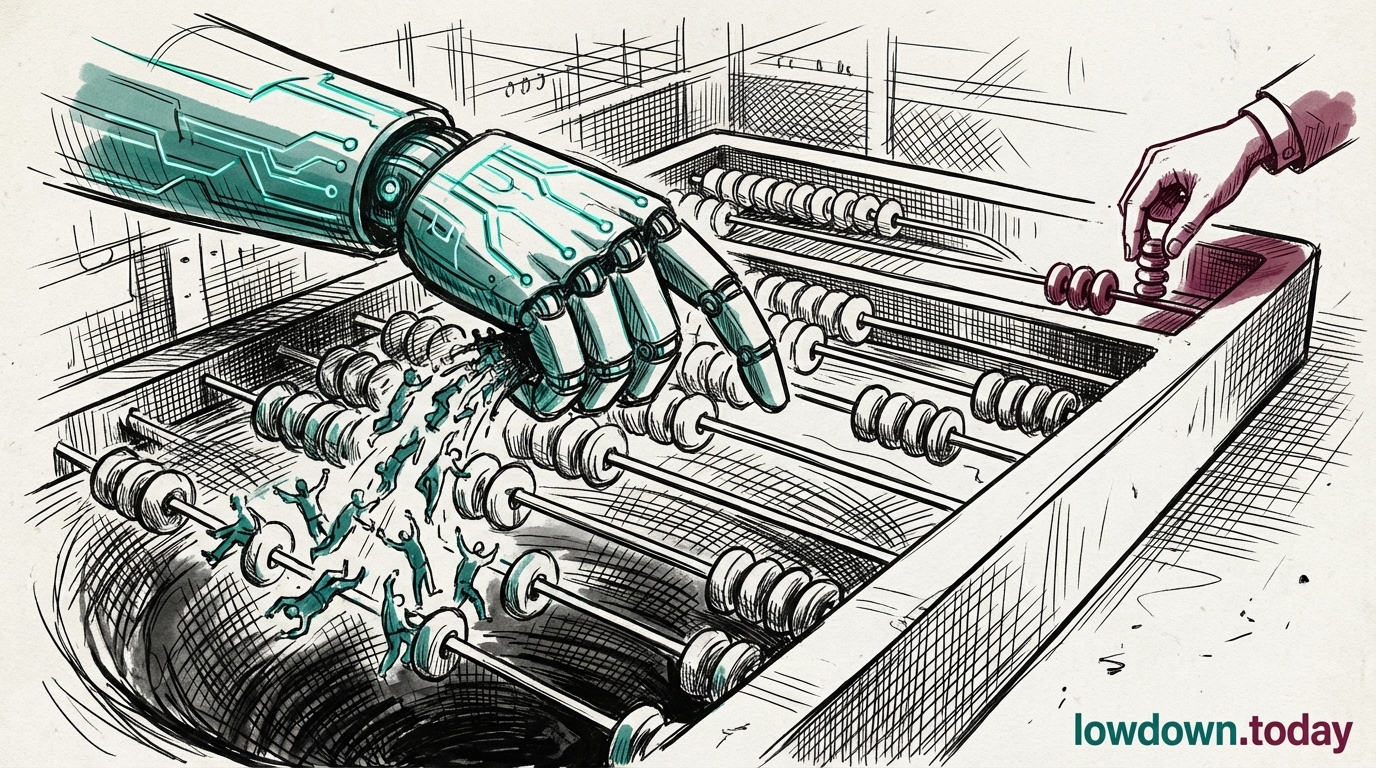
More than half of business leaders say they made the wrong call on AI-driven layoffs, and a third spent more on rehiring than they saved by cutting.

EconomicAssessed
Key takeaway

AI-driven layoff regret has reached majority experience, with one in three firms losing money on the reversal.

Orgvue surveyed 300 HR managers and found 55% of business leaders admit they made wrong decisions about AI-driven layoffs 1. A third had already rehired 25–50% of the roles they eliminated. One in three employers spent more on restaffing than they saved 2. Forrester, working from separate data, arrived at the same 55% regret rate and predicts half the cuts will be quietly reversed — though often offshore or at lower pay 3.

The numbers give empirical weight to what individual reversals made anecdotal. The Yale Budget Lab had already identified a pattern it called "AI washing" — companies attributing restructuring to AI when the underlying causes are conventional cost pressure and slowing growth . Oxford Economics reached a parallel conclusion in January, finding firms are not replacing workers with AI on a significant scale . The Orgvue data quantifies the cost of that mismatch between narrative and reality: recruitment fees, onboarding delays, lost institutional knowledge, and the wage premium required to attract workers who watched the first round of cuts.

Block's 40% headcount reduction sent shares up 22–25% . Meta's planned 20% cut lifted shares approximately 3% . If a third of firms end up spending more to rehire than they saved by cutting, those equity gains rest on cost reductions that do not materialise. The market has rewarded the announcements. It has not yet priced the reversals.

Forrester's prediction that rehiring often happens offshore or at lower pay adds a distributional edge. The pattern forming is not "cut and regret." It is: announce AI-driven restructuring, collect a share price increase, quietly rebuild the function in a cheaper labour market, and present the net result as efficiency. For younger workers already facing collapsed job-finding rates — the Dallas Fed found AI-exposed employment declines concentrated among workers under 25 — the rehiring wave may pass them by entirely.

Deep Analysis

In plain English

Two independent research firms — Orgvue, which surveyed 300 HR managers, and Forrester, a major technology analyst firm — both found that roughly 55% of companies that laid off workers to deploy AI now admit the decision was wrong. One in three of those companies has already spent more money bringing people back than it saved by letting them go. This is not a story about isolated corporate errors. It is a pattern documented across multiple methodologies, suggesting that AI capability was systematically overstated — or due diligence was systematically inadequate — at the moment layoff decisions were made. The Forrester caveat that many reversals happen 'offshore or at lower pay' means the aggregate rehiring figure may obscure real wage deterioration for the workers affected.

Deep Analysis
Synthesis

The convergence of Orgvue survey data and Forrester modelling at the identical 55% figure, using different methodologies, reduces the probability this is a sampling artefact and elevates it toward a structural finding. The Forrester caveat — reversals occurring 'offshore or at lower pay' — introduces a distributional dimension the headline figure conceals: regret may restore headcount without restoring worker welfare, producing an employment-rate recovery that masks real labour market deterioration in affected occupations.

Root Causes

The structural cause of mass AI-layoff regret is a principal-agent failure compounded by incentive misalignment. Executives announcing AI-driven headcount reductions receive immediate share price rewards — as documented in the Block and Meta cases elsewhere in this update — while operational degradation surfaces 12–24 months later, when those executives may have already monetised equity. The asymmetry between announcement-day gains and reversal-day costs creates a rational but socially destructive incentive to cut first and evaluate later.

Escalation

The regret dynamic is accelerating rather than stabilising. The share of layoff announcements explicitly citing AI rose from under 8% in 2025 to over 20% in Q1 2026, rapidly expanding the base of firms exposed to potential reversal. Regret rates will likely worsen as 2026-cohort cuts encounter their first annual operational review cycles and service degradation becomes measurable in revenue data.

What could happen next?
  • Meaning

    A 55% regret rate confirmed across two independent methodologies signals that AI capability was systematically overstated — or due diligence was systematically inadequate — at the point layoff decisions were made.

    Immediate · Assessed
  • Risk

    The 'offshore or at lower pay' reversal pattern risks producing a hidden wage-quality decline in affected occupations that aggregate employment statistics will not detect, obscuring real labour market deterioration.

    Medium term · Suggested
  • Consequence

    Board-level AI accountability frameworks are likely to tighten as regret data enters shareholder governance reviews and, potentially, litigation over fiduciary duty in restructuring decisions.

    Medium term · Suggested
  • Precedent

    The 55% regret rate is establishing a due-diligence standard: future AI restructuring proposals will face greater board scrutiny and demand for phased implementation evidence before full deployment.

    Short term · Assessed
First Reported In

Update #2 · 45,000 tech layoffs, half may be reversed

Orgvue· 22 Mar 2026
Read original
Causes and effects
This Event
55% of firms regret their AI layoffs
First large-scale quantitative evidence that AI-driven layoffs produce net negative returns for the majority of firms making them, directly challenging the equity gains currently rewarding headcount reductions across the tech sector.
Different Perspectives
Barclays
Barclays
Barclays economist Pooja Sriram flagged a 28,000-a-month bleed in finance and information roles the same week Microsoft disputed that AI drove its own 4,800 cuts. The bank treats Challenger's AI-attribution share as a lagging indicator against faster erosion visible in raw labour-market data.
European Commission
European Commission
Brussels deferred the Digital Omnibus's Annex III employment-compliance deadline from 2 August 2026 to December 2027, even as California advanced three binding AI-hiring bills the same week. The 17-month delay leaves EU workers without the algorithmic-hiring safeguards the regulation already promises.
OpenAI
OpenAI
OpenAI proposed a 5% US government equity stake worth $42.6bn, structured as a public wealth fund modelled on the Alaska Permanent Fund, with Sam Altman pitching it directly to Trump, Bessent and Lutnick. The offer pre-empts Sanders' rival one-time 50% AI-stock tax, which has not yet reached committee.
India's IT and outsourcing sector
BAT's transfer of 3,500 roles to Accenture on 29 June fits a delivery model Indian IT firms increasingly run: consultancies win Western contracts, then execute through offshore centres. The sector expects more Fit2Win-style transfers, not straight redundancies, as employers absorb AI without cutting outsourced headcount.
European Trade Union Confederation
ETUC says the Council's shift from 'ensure' to 'support' in the AI-literacy duty, confirmed in the Digital Omnibus's final adoption on 29 June, is a collapse of the legal threshold, not a drafting tidy-up. It expects EU workers to face AI-driven hiring and monitoring decisions with a statutory right to explanation that exists in name only.
British American Tobacco's Fit2Win workforce
BAT is cutting 9,000 roles under Fit2Win, transferring 3,500 to Accenture rather than making them redundant, to reach roughly £500m in AI-driven savings by 2027. For affected staff, that distinction decides whether they keep a job at all, just not at BAT.
