Skip to content
AI: Jobs, Power & Money
22MAR

'We went too far': Klarna rehires staff

4 min read
12:34UTC

The company that became the technology industry's proof of concept for replacing workers with AI is hiring humans again — and its CEO is publicly admitting the experiment failed.

PoliticsAssessed
Key takeaway

Klarna's reversal follows a documented pattern: wholesale automation of complex human interaction reliably fails.

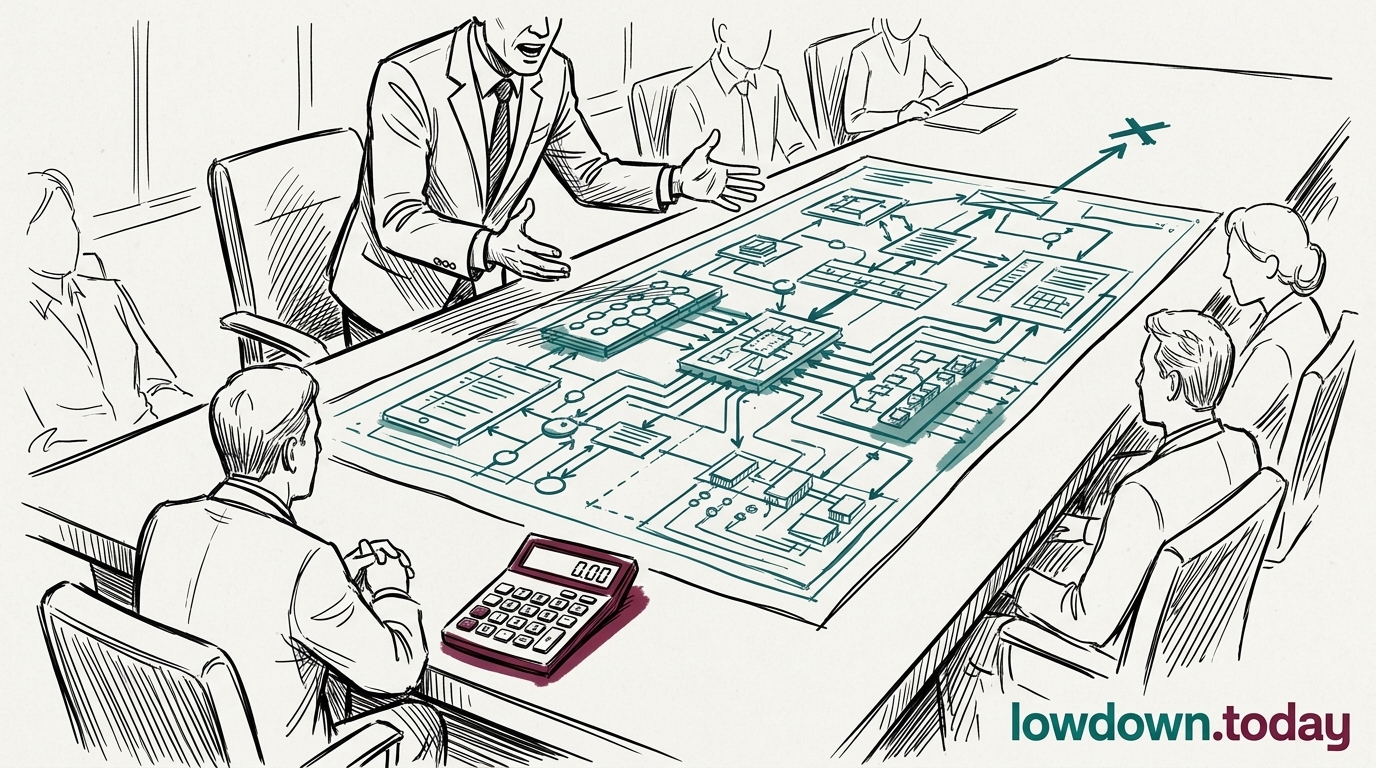
Klarna CEO Sebastian Siemiatkowski replaced 700 customer service agents with AI. Customers reported "robotic responses" and "Kafkaesque loops" when attempting to resolve issues 1. Satisfaction dropped. Siemiatkowski conceded publicly: "We went too far" 2. The company is NOW rehiring human agents.

Siemiatkowski had staked his public credibility on AI as a direct labour substitute. In early 2024, he announced Klarna's AI assistant was handling the equivalent of 700 agents' workload within weeks of deployment, and presented the savings as proof the model worked. Klarna became the technology industry's go-to example of successful AI replacement — cited in earnings calls, investor decks, and boardroom presentations across sectors. That the reversal comes from this company — the most aggressive adopter, not a cautious incumbent — strips away the defence that failures elsewhere result from poor implementation. Customer service is text-based, repetitive, and high-volume: if AI cannot hold this ground reliably, the case for substitution in more complex service environments is weaker than the market has priced.

The failure fits a pattern NOW backed by accumulating data. An Orgvue survey of 300 HR managers found 55% of business leaders admitted wrong decisions on AI-driven layoffs; a third had already rehired 25–50% of the roles they cut, and one in three spent more on restaffing than they saved 3. Forrester independently placed the regret rate at 55%, predicting half the cuts would be quietly reversed — often offshore or at lower pay 4. Harvard Business Review research by Thomas H. Davenport and Laks Srinivasan found only approximately 2% of organisations reported layoffs tied to actual AI implementation 5. The other 98% cut based on projected capability.

The equity market has rewarded these cuts without pricing the reversal risk. Block's 40% headcount reduction sent shares up 22–25% in after-hours trading . Meta's planned 20% cut lifted shares approximately 3% . If Klarna's trajectory generalises — and the Orgvue, Forrester, and Gartner data suggest it will — those share-price gains rest on savings that partially evaporate once rehiring, retraining, and institutional-knowledge recovery costs arrive. The market has priced the cut but not the boomerang.


Deep Analysis

In plain English

Klarna, a major buy-now-pay-later company, replaced its entire customer service team with AI chatbots to cut costs. Customers hated it — they got stuck in loops, received robotic answers, and couldn't resolve real problems. The CEO publicly admitted the experiment failed, and the company is now rehiring human agents. This is not simply an embarrassing story about one company. Research firms across three separate methodologies predict that half of all businesses making similar cuts will quietly reverse them by 2027. The savings promised by AI vendors and projected in board presentations did not materialise as expected.

Deep Analysis
Synthesis

Klarna's case reveals an 'automation residual' problem absent from vendor capability assessments. As routine queries are absorbed, the remaining human-or-AI workload skews toward complexity and customer distress. This creates a compounding dynamic: each percentage point of automation increases the average difficulty of the remaining queue, accelerating satisfaction decline beyond what headcount ratios would predict.

Root Causes

Customer service automation failures follow a structural adverse-selection pattern that standard productivity models miss. AI handles high-volume, low-complexity queries effectively, leaving the residual queue disproportionately composed of the most difficult, emotionally charged, and non-standard cases. The AI then faces precisely the interactions it is least equipped to resolve. Satisfaction metrics therefore fall faster than raw automation percentages imply — a non-linear relationship that cost-benefit models built on task-substitution rates systematically underestimate.

Escalation

The reversal dynamic is entering a second phase. As Klarna's admission becomes a publicised case study, other firms face reputational risk from persisting with visibly failing AI deployments. This reputational pressure could accelerate reversals beyond Gartner's 50% forecast and compress the typical 2–3 year failure recognition cycle.

What could happen next?
  • Precedent

    Klarna's public admission establishes a reputational permission structure for other CEOs to reverse AI staffing decisions without career penalty — reducing the psychological cost of reversal across the industry.

    Short term · Assessed
  • Risk

    Companies that have not yet reversed failing AI customer service deployments face compounding customer lifetime value erosion the longer they delay acknowledgement.

    Medium term · Suggested
  • Consequence

    AI customer service vendors face heightened contractual scrutiny of satisfaction guarantees as Klarna becomes a standard due-diligence reference point in procurement decisions.

    Short term · Assessed
  • Opportunity

    Hybrid human-AI customer service models — AI triage with mandatory human escalation paths — are positioned to gain market share as pure-AI deployments visibly and publicly fail.

    Medium term · Assessed
First Reported In

Update #2 · 45,000 tech layoffs, half may be reversed

Fast Company· 22 Mar 2026
Read original
Different Perspectives
Oxford Economics
Oxford Economics
Concluded AI's role in recent layoffs is 'overstated,' finding companies are not replacing workers with AI at scale. Identified slowing growth, weak demand, and cost pressure as the actual drivers.
Ambrish Shah, Systematix Group
Warned AI coding tools will erode Indian IT firms' labour-arbitrage growth model by reducing enterprise dependency on large vendor teams.
South Korean government
Enacted the world's second comprehensive AI law, choosing an innovation-first framework over prescriptive employment protections — a deliberate contrast to the EU's regulatory approach.
Corporate executives executing AI-driven cuts
Frame workforce reductions as existential necessity. Crypto.com CEO Kris Marszalek and Block CEO Jack Dorsey both described AI adoption as a survival imperative, with equity markets reinforcing the message through immediate share-price gains.
Chinese government (Wang Xiaoping)
Positions AI as a job-creation engine to absorb 12.7 million annual graduates and offset 300 million retirements, directly contradicting domestic economist Cai Fang's warning that AI job destruction precedes creation.
Klarna and companies reversing AI cuts
Klarna's public reversal — rehiring the human agents it replaced with AI after customer satisfaction collapsed — validates Gartner's prediction that half of AI-driven service cuts will be undone by 2027.