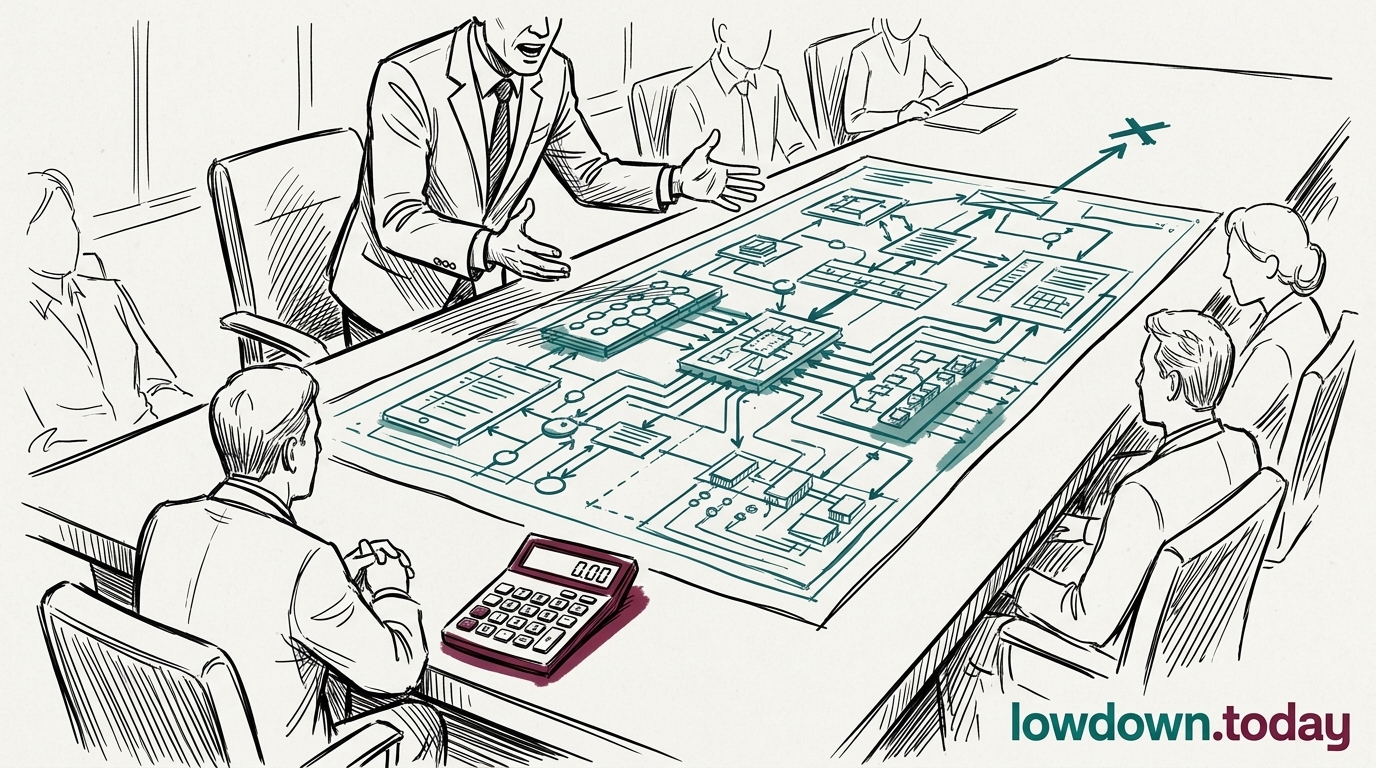
Gartner predicts 50% of companies that cut customer service staff for AI will rehire by 20271. The forecast, published in February 2026, assigns a timeline and a scale to a reversal pattern previously visible only in scattered corporate admissions.
The prediction carries weight because of who acts on it. Gartner's research directly informs purchasing and staffing decisions at thousands of enterprises; its Magic Quadrant reports shape billions in annual technology procurement. When Gartner tells CIOs and CFOs that half of AI-driven customer service cuts will unwind within eighteen months, it changes the internal calculus for executives considering similar reductions. The incentive to cut shifts materially if the likely outcome is a costly rehiring cycle. Orgvue's survey data already shows one in three employers spent more on restaffing than they saved from the original cuts2. The Gartner forecast turns that finding from an after-the-fact embarrassment into a forward-looking business risk.
The forecast aligns with independent estimates from Forrester, which placed the regret rate at 55%3, and with the gap between cutting and capability. RationalFX data shows 9,238 of 45,363 confirmed Q1 2026 tech layoffs — 20.4% — cited AI and automation explicitly, up from under 8% in 2025 announcements. Yet Harvard Business Review research by Thomas H. Davenport and Laks Srinivasan found only approximately 2% of organisations reported layoffs tied to actual AI implementation4. The distance between the rate at which companies are cutting and the rate at which AI is functionally deployed to replace those roles suggests the correction Gartner forecasts is already baked into the cycle. The Yale Budget Lab's identification of "AI washing" — companies attributing conventional restructuring to AI — compounds the picture: some of these roles were never truly replaced by AI in the first place.
For displaced workers, the Gartner timeline offers limited reassurance. Forrester notes the reversed roles frequently return offshore or at lower pay5. A worker cut in 2025 and rehired in 2027 does not return to the same position, the same salary, or the same employer. The jobs may reappear on corporate headcount figures; the terms, institutional knowledge, and career continuity lost in the interim do not.





