Skip to content
You can now search across every topic, entity and event.What's new
AI: Jobs, Power & Money
27JUL

Two thirds of CEOs freeze hiring

1 min read
10:02UTC

The executives who control $19 trillion in assets are not planning to hire.

EconomicAssessed
Key takeaway

Two thirds of major CEOs plan to freeze or cut hiring for the rest of 2026.

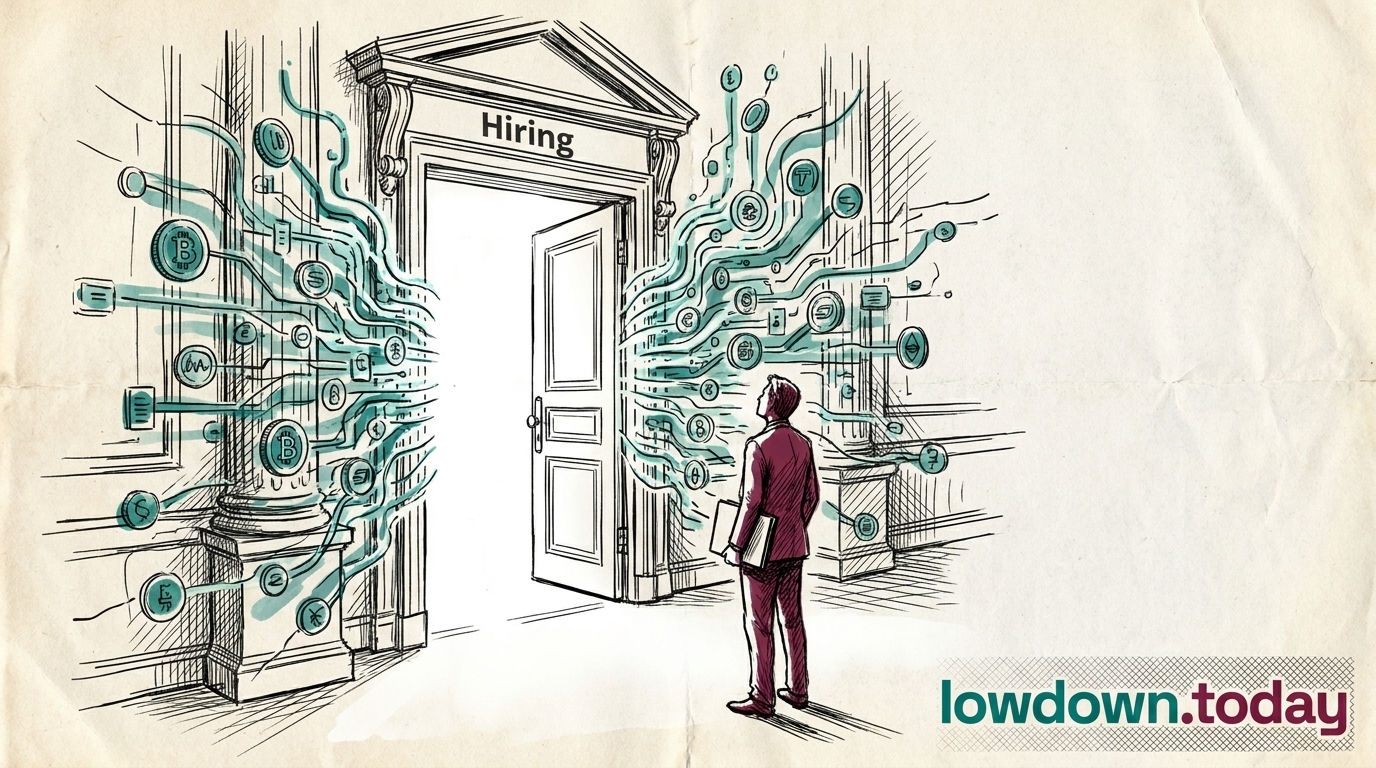
A Fortune survey of more than 350 public-company CEOs managing $19 trillion in combined assets found that 66% plan to freeze or cut hiring through the rest of 2026 1. The figure aligns with the Atlanta Fed projection of 502,000 AI-attributed cuts , translating executive intention into corporate consensus.

Some 53% of investors expect AI returns within six months. Yet 84% of CEOs acknowledge meaningful returns require multiple years. Firms are cutting the HR and middle-management roles needed to define future jobs and redesign workflows, stripping out the supervisory capacity that managed previous technology transitions.

Deep Analysis

In plain English

Fortune magazine surveyed more than 350 of the largest listed company bosses in the US, representing $19 trillion in total company value. Two thirds of them said they planned to freeze or cut hiring for the rest of 2026. The survey also found a contradiction: investors expect AI to pay back its costs within six months, but the chief executives themselves know that meaningful returns take several years. Companies are cutting jobs now based on AI promises that most of them acknowledge will not materialise for years. They are also cutting the HR and management roles that would normally plan what jobs look like after the transition. That capacity is gone, making it harder to redesign work when the AI tools eventually deliver.

What could happen next?
  • The 66% hiring freeze, if sustained through Q4 2026, will reduce the absolute number of job openings in the US by a material amount, extending reemployment timelines and compressing wage growth across white-collar sectors.

First Reported In

Update #4 · AI leads US layoffs as cuts go uncounted

Fox News / Axios / Al Jazeera· 4 Apr 2026
Read original
Different Perspectives
European Commission
European Commission
The European Commission's draft Annex III guidelines, closed for comment on 23 July, treat algorithmic scoring in recruitment, pay and termination as high-risk regardless of whether a human signs off, echoing Spain's Audiencia Nacional ruling 101/2026 on concealed scheduling algorithms. Brussels is shifting the fight from counting AI job losses to assigning legal liability for the tools themselves.
Office for National Statistics
The Office for National Statistics recorded UK vacancies rising to 712,000 on 21 July, the first quarterly increase this beat has tracked, with payrolled employment down 85,000 on the year against May's 210,000 fall. The bulletin names no AI cause anywhere, and that is the point: nothing in the release confirms the displacement story it gets cited to support.
Christian Klein, SAP
Christian Klein told investors on 23 July that SAP's research headcount will not grow for twelve months because AI agents and their token costs are absorbing the work, not because SAP is cutting jobs. He frames it as commercial arithmetic: the cost of AI-assisted coding tokens plus the salaries specialist AI hires command, not people being replaced by machines.
Betsey Stevenson, University of Michigan
Betsey Stevenson argued that the 187,000 jobless-claims reading describes a market that hires little and fires little, not one AI is emptying. She said the real damage hides in eligibility rules and suppressed job postings, not in the headline layoff counts employers keep denying.
Comisiones Obreras, UGT and Concentrix's A Coruña works committee
Comisiones Obreras, UGT and Concentrix's A Coruña works committee blamed Microsoft's push toward AI self-service for the 80 redundancies unions signed off on 22 July, not unavoidable business cause. A second Coruña procedure covering 80 more jobs runs to a 31 August deadline, and the unions want the state, not the employer, setting the pace of AI-driven cuts.
Stanford's 'We Must Act Now' signatories
More than 200 academics, including 16 Nobel laureates, published a 13 July letter warning of AI-driven labour disruption, citing Daron Acemoglu's NBER estimate that AI's total factor productivity gain stays under 0.66% over ten years. The letter's own cited economics sit well below Goldman Sachs Research's 1.5-percentage-point estimate published the same week.