Skip to content
You can now search across every topic, entity and event.What's new
AI: Jobs, Power & Money
20JUN

ServiceNow cuts hundreds, files no notice

1 min read
17:09UTC

ServiceNow cut hundreds of staff on 11 June citing 'real AI efficiencies', and no WARN Act notice appeared in any state register.

EconomicDeveloping
Key takeaway

ServiceNow cut hundreds citing AI while filing no WARN notice, inflating attribution and evading disclosure at once.

ServiceNow cut hundreds of employees on 11 June, citing "real AI efficiencies" while pledging to hire for AI skills 1. ServiceNow sells workflow-automation tools to large organisations, increasingly marketed as AI agents. No WARN Act filing appeared. The WARN Act is the US federal law requiring employers of 100 or more to give 60 days' notice of mass layoffs at a single site, with the filings entered into public state registers.

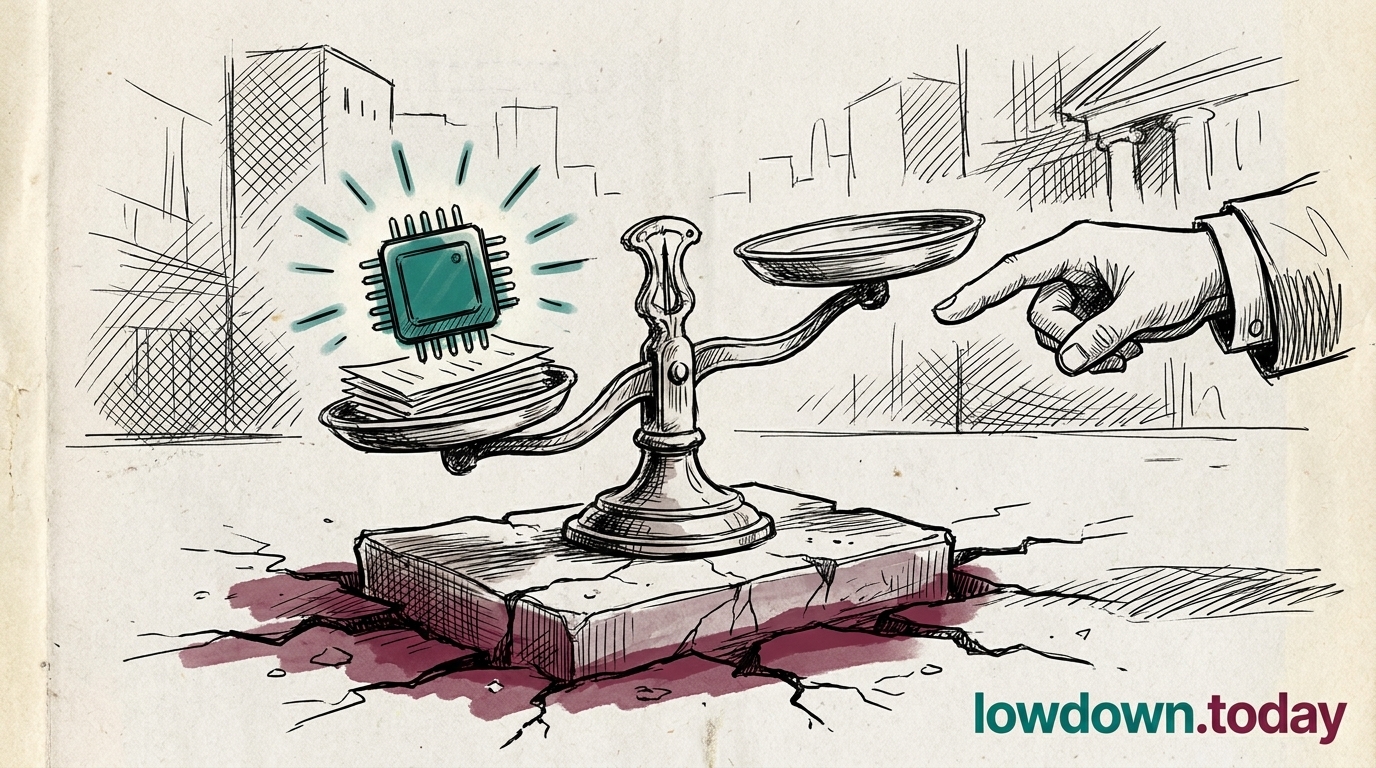
ServiceNow's June round captures the pattern the wider measurement debate turns on. A company that broadcasts an AI rationale to investors but leaves no paper trail in the disclosure system both inflates the visible AI-attribution count and dodges the instrument meant to record the cut. Four major employers were already documented navigating the WARN Act through AI-era restructuring with no enforcement action ; ServiceNow's June round follows the same route.


Deep Analysis

In plain English

ServiceNow, which makes software that helps large companies manage IT and business processes, cut hundreds of employees on 11 June. The company said the cuts were driven by 'real AI efficiencies'; meaning its own AI tools are now doing work that people used to do. The company simultaneously pledged to hire workers with AI skills. No formal mass-layoff notice was filed with US authorities. Companies are required to file such notices when cutting large numbers in one place at once; the absence suggests the cuts may have been spread across locations to avoid that requirement.

Deep Analysis
Root Causes

ServiceNow's cuts reflect two dynamics specific to enterprise software companies in 2026.

First, ServiceNow's AI platform (Now Assist) directly automates tasks previously performed by its own professional services and customer support divisions; creating an internal cannibalisation dynamic where the company's product competes with its own labour.

Second, the lack of a WARN Act filing suggests the cuts were either structured to fall below the statutory threshold or are classified as individual performance separations rather than a mass layoff. The latter classification avoids the 60-day notice obligation but does not change the economic impact on affected workers.

First Reported In

Update #14 · The AI layoffs nobody is counting

NowBen· 20 Jun 2026
Read original
Different Perspectives
European Commission
European Commission
The European Commission's draft Annex III guidelines, closed for comment on 23 July, treat algorithmic scoring in recruitment, pay and termination as high-risk regardless of whether a human signs off, echoing Spain's Audiencia Nacional ruling 101/2026 on concealed scheduling algorithms. Brussels is shifting the fight from counting AI job losses to assigning legal liability for the tools themselves.
Office for National Statistics
The Office for National Statistics recorded UK vacancies rising to 712,000 on 21 July, the first quarterly increase this beat has tracked, with payrolled employment down 85,000 on the year against May's 210,000 fall. The bulletin names no AI cause anywhere, and that is the point: nothing in the release confirms the displacement story it gets cited to support.
Christian Klein, SAP
Christian Klein told investors on 23 July that SAP's research headcount will not grow for twelve months because AI agents and their token costs are absorbing the work, not because SAP is cutting jobs. He frames it as commercial arithmetic: the cost of AI-assisted coding tokens plus the salaries specialist AI hires command, not people being replaced by machines.
Betsey Stevenson, University of Michigan
Betsey Stevenson argued that the 187,000 jobless-claims reading describes a market that hires little and fires little, not one AI is emptying. She said the real damage hides in eligibility rules and suppressed job postings, not in the headline layoff counts employers keep denying.
Comisiones Obreras, UGT and Concentrix's A Coruña works committee
Comisiones Obreras, UGT and Concentrix's A Coruña works committee blamed Microsoft's push toward AI self-service for the 80 redundancies unions signed off on 22 July, not unavoidable business cause. A second Coruña procedure covering 80 more jobs runs to a 31 August deadline, and the unions want the state, not the employer, setting the pace of AI-driven cuts.
Stanford's 'We Must Act Now' signatories
More than 200 academics, including 16 Nobel laureates, published a 13 July letter warning of AI-driven labour disruption, citing Daron Acemoglu's NBER estimate that AI's total factor productivity gain stays under 0.66% over ten years. The letter's own cited economics sit well below Goldman Sachs Research's 1.5-percentage-point estimate published the same week.