Skip to content
You can now search across every topic, entity and event.What's new
2026 FIFA World Cup
25JUL

Kalshi's $1.89bn is turnover, not money staked

2 min read
11:57UTC

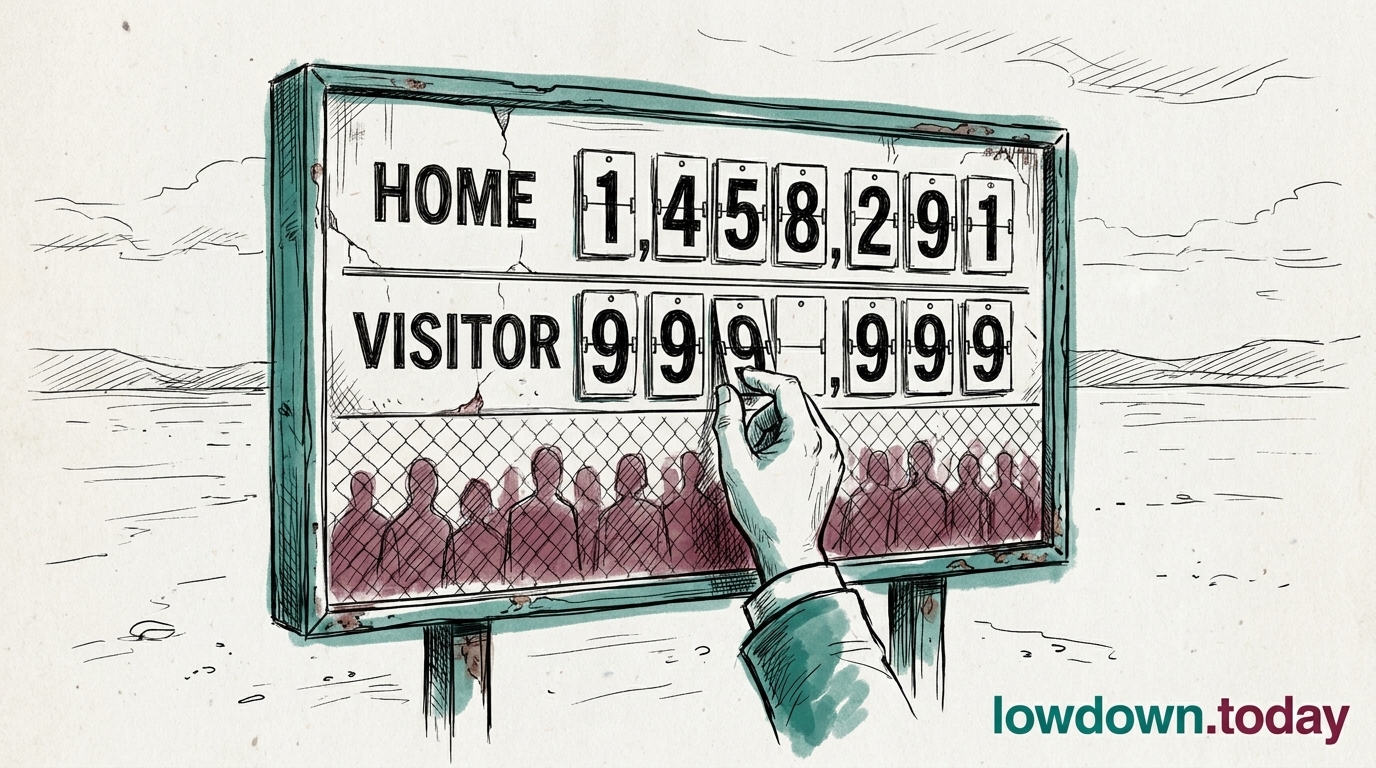
The prediction market logged 1.89 billion dollars of notional volume on the final. The metric counts both sides of every trade, so it is not a measure of money at risk.

SportDeveloping
Key takeaway

Kalshi's volume metric counts both sides of every trade at full settlement value.

Kalshi, the American regulated prediction market, logged $1.89bn of notional turnover on the World Cup final, the match Spain won 1-0 in extra time 1. The platform lets users trade binary contracts on real-world outcomes, each settling at one dollar if the event happens and nothing if it does not.

That contract design is what makes the headline figure slippery. Notional volume values every contract at its one-dollar settlement ceiling and counts both the buyer and the seller, so a single market where one user pays 60 cents for a Spain contract and another takes the opposite side registers a full dollar of notional volume against 60 cents actually committed. The number describes how much churned through the order book, not how much anybody put at risk. It is a real measure of activity, and readers who see it quoted as the amount wagered on the final are seeing a different claim than the one Kalshi's own metric supports.


Deep Analysis

In plain English

Kalshi is a US prediction market where people trade contracts betting on outcomes like who wins a football match. It reported $1.89bn in trading on the World Cup final, but that is not $1.89bn of actual money changing hands. Kalshi's own counting method adds up both sides of every trade, so the real amount of money at risk is much smaller. It should not be compared to the $871m FIFA paid out to competing countries; the two numbers measure completely different things.

Deep Analysis
Root Causes

Kalshi and similar exchanges post turnover figures this large because prediction-market accounting, unlike a sportsbook's handle, records every matched trade twice, once for the buyer and once for the seller, which mechanically inflates any headline volume number regardless of how much capital actually changed hands.

The underlying growth, from roughly $1.27bn by 18 July to $1.89bn at settlement, reflects a legalised US prediction-market sector that, by Kalshi and Polymarket's own self-reported figures, processed close to $50bn combined across the tournament in June alone, a market structure that did not exist at this scale during the 2022 World Cup.

What could happen next?
  • Risk

    Treating Kalshi's $1.89bn as comparable to FIFA's $871m prize pool would be a category error, since one is notional trading turnover and the other is real cash paid to federations.

First Reported In

Update #45 · A prosecutor for the brawl, an outlet for the goals

Covers.com· 21 Jul 2026
Read original
Causes and effects
This Event
Kalshi's $1.89bn is turnover, not money staked
A widely shared betting-volume figure describes contract turnover rather than staked money, and the distinction changes its size by definition.
Different Perspectives
Real Madrid
Real Madrid
Operating internally on the basis Rodri joins, according to David Ornstein's reporting, despite no talks having taken place with Manchester City. The gap between internal planning and actual negotiation is itself notable.
Manchester City
Manchester City
Unwilling to sell Rodri, with manager Enzo Maresca stating he returns to the club after back surgery. No club-to-club talks with Real Madrid are taking place, contradicting the framing of a deal in motion.
CONMEBOL
CONMEBOL
Backs the move to a 64-team 2030 tournament co-hosted across South America. Has not engaged publicly with FIFPRO's workload or heat-threshold objections drawn from this tournament's data.
FIFA
FIFA
Points to its 30 June technical and officiating reviews as the authoritative account of the tournament's football, including Collina's rejection of bias claims. Has not publicly responded to the renewed compensation call or disputed FIFPRO's heat-threshold figures.
FIFPRO
FIFPRO
Measures a four-degree gap between its own 28C postponement threshold and FIFA's 32C cooling-break trigger, breached in 19% of matches played. Cites a 70-83 match workload projection to oppose the 64-team 2030 format.
Human Rights Watch
Human Rights Watch
Documents 54 immigration-custody deaths before kickoff and two since, and revives the compensation duty FIFA's own advisers identified after Qatar 2022 and never acted on. Treats the pattern as unresolved FIFA liability, not a closed file.


