Skip to content
You can now search across every topic, entity and event.What's new
2026 FIFA World Cup
19JUL

Zwane ban upheld, FIFA stays silent

3 min read
14:25UTC

FIFA upheld Themba Zwane's three-match ban on 26 June and published no reasons, ruling South Africa's captain out of the nation's first World Cup knockout tie against Canada.

SportDeveloping
Key takeaway

FIFA's silence means the banned federation, not FIFA, will write the only public record of an inconsistent ruling.

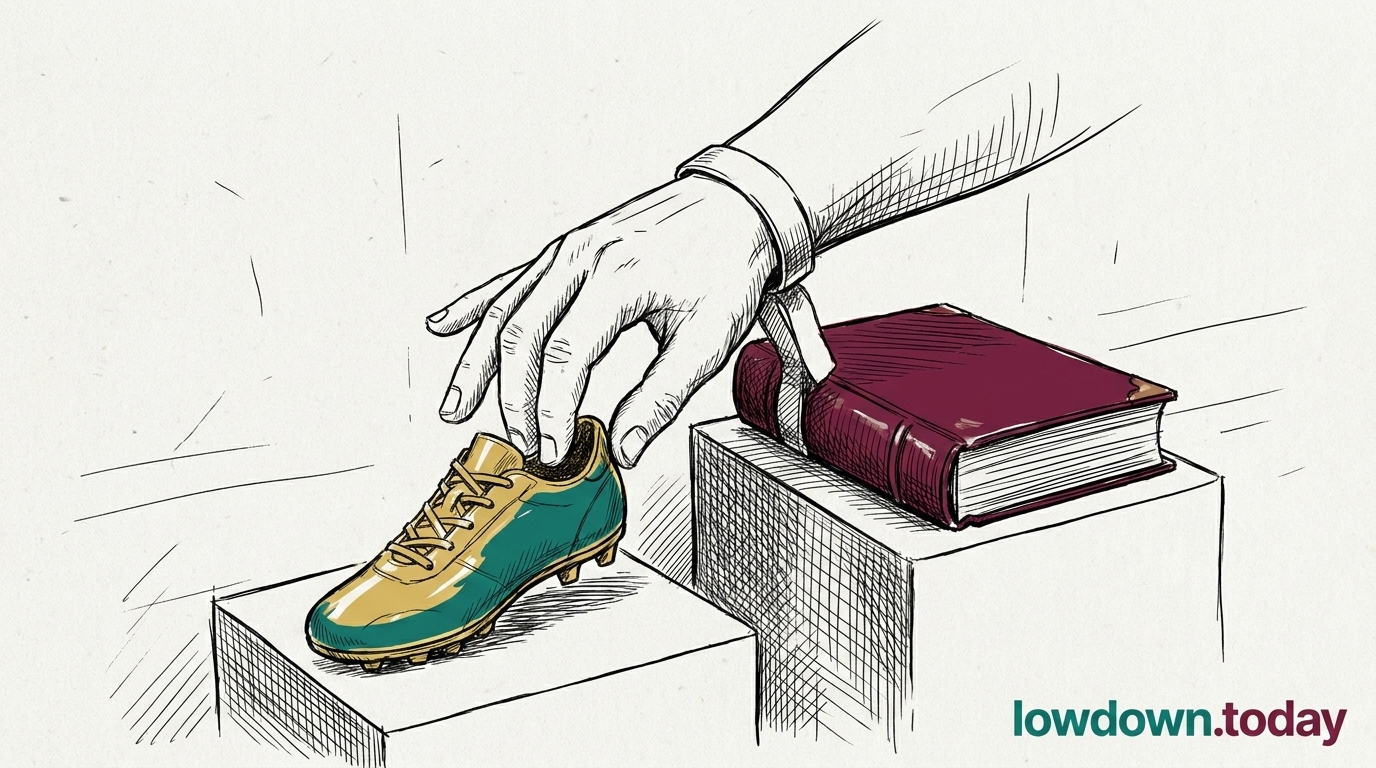
FIFA, football's world governing body, rejected South Africa's appeal on 26 June and upheld the three-match ban on captain Themba Zwane, publishing no reasoning for the decision . South Africa had built its case on Lionel Messi's unpunished stamp on an Algeria player, arguing the two incidents exposed an inconsistent disciplinary standard . The Appeal Committee dismissed that argument without explaining what separates the two.

Zwane is Bafana Bafana's captain and chief creator, and the ban rules him out of South Africa's first World Cup knockout match in the nation's history, against Canada on 28 June in Los Angeles . South Africa had reached the round of 32 after three previous group-stage exits. The original Disciplinary Committee treated a raised arm on Mexico's Roberto Alvarado as serious foul play, a red-card category for reckless or violent contact, and added two matches to the automatic one-game suspension.

The Appeal Committee left that upgrade intact and issued no written reasons, which matters because FIFA's judicial bodies publish reasoned decisions on a roughly four-month archive cycle, last updated on 1 June 1. The only on-record account of why Zwane was banned and Messi was not will come from SAFA, the South African Football Association and the aggrieved party, not from the committee that decided both. SAFA said it was "disappointed with the outcome of our appeal because we strongly believe that the punishment is far harsher than the offence" 2.

Without published reasoning, no federation can know what turns a one-match suspension into three, or contest a sanction against a consistent benchmark. Two incidents in one tournament now carry two outcomes, and the body that produced both has put nothing on the record to reconcile them.


Deep Analysis

In plain English

FIFA runs its own judicial system for on-pitch misconduct, similar to a sporting court. When a player commits a foul serious enough to warrant a red card, they can face an automatic one-match ban. FIFA's disciplinary committee can extend that ban to three matches if they judge the offence particularly dangerous. Themba Zwane, South Africa's captain, received that tripled ban for a foul against Mexico. His country appealed, pointing out that Lionel Messi appeared to stamp on an Algerian player in an earlier match and received no ban at all. FIFA's appeals committee rejected the appeal but gave no written reason for the decision. The controversy is about whether FIFA applies the same rules to all players, regardless of who they are.

Deep Analysis
Root Causes

FIFA's Disciplinary Code gives the Disciplinary Committee discretion to upgrade sanctions for 'serious foul play' by a multiplier of up to three times the standard suspension.

The referral trigger, however, is left to the Match Disciplinary Report compiled by the match commissioner, whose judgement on which incidents to flag for committee review is not subject to appeal. Messi's stamp on Aissa Mandi was not flagged in the Match Disciplinary Report for Argentina v Algeria, meaning the committee never had jurisdiction to consider it.

The structural gap is that IFAB's VAR protocol permits retrospective red-card review for cases of mistaken identity or serious foul play missed by on-field officials, but only within the match itself; it does not extend to post-match upgrading of yellow cards not referred during play.

Zwane's card was upgraded during the match via VAR; Messi's foul occurred outside a live VAR review window. The two incidents entered disciplinary review under different procedural tracks, which FIFA has not publicly reconciled.

What could happen next?
  • Precedent

    The absence of published reasoning sets no binding precedent but strengthens SAFA's grounds for a CAS appeal, where the standard de-novo hearing would require FIFA to articulate the referral threshold it applied.

  • Risk

    FIFPRO's involvement signals the players' union may use the Zwane case to press for a codified, publicly documented referral standard in its next collective bargaining dialogue with FIFA.

First Reported In

Update #30 · FIFA upholds Zwane ban, won't say why

Leadership Nigeria· 27 Jun 2026
Read original
Different Perspectives
Manchester City
Manchester City
Manchester City holds Golden Ball winner Rodri under contract to summer 2027 while journalists report a divided Real Madrid board weighing an approach, with no source at either club confirming direct talks. Any move stays speculation rather than business until City's asking price is actually tested.
Argentine Football Association
Claudio Tapia has set the Scaloni conversation for the 21 September to 6 October international window rather than force an answer now, the same approach that kept Scaloni through two prior cycles. Otamendi's on-record retirement and Messi's unstated future leave the federation managing a squad transition in public while its own head coach's contract runs only to December.
Barcelona
Barcelona
Barcelona will bank 2,893,533 euros from FIFA's 2026 Club Benefits cycle, down roughly a third from the 4.43 million euros it received after Qatar, despite the tournament reporting record revenue. Under LaLiga's squad-cost limits every euro is accounted for, and the shortfall removes a line the club had counted on after a deep run by its internationals.
FIFA
FIFA
FIFA restructured its Club Benefits Programme to split $350m across qualifying as well as the finals, the published mechanism it cites when a club's tournament payment falls even as the overall pool grows on record revenue. The reallocation reaches clubs that supply qualifiers but never a finalist, the constituency FIFA needs behind any 2030 expansion vote.
Fox Sports
Fox Sports
Fox is calling its Nielsen average of 38,937,000 for Sunday's final the most-watched soccer telecast in US history, a claim built on its own linear number rather than the 66.4 million combined total a ratings site produced from both networks' releases. The distinction matters because advertisers transact against the narrower figure, not the one a headline will carry.
Sky Sports
Sky Sports
Sky Sports put its own name on the tournament's first goal total, 308 across 104 matches, published 20 July because FIFA's technical report was not ready to. An independent tally from SoccerAnalytics.net reconciled to the same number, but the figure entering wider circulation carries a broadcaster's byline, not FIFA's.


