Skip to content
You can now search across every topic, entity and event.What's new
2026 FIFA World Cup
16JUL

Schlotterbeck out of the World Cup

2 min read
10:33UTC

Germany lost first-choice centre-back Nico Schlotterbeck to a torn ankle ligament, confirmed by scan, just as the knockouts begin.

SportDeveloping
Key takeaway

Germany lose a first-choice centre-back to injury just as the knockout rounds begin.

Nico Schlotterbeck was ruled out of the World Cup on Tuesday 23 June after a magnetic resonance imaging (MRI) scan confirmed a torn ligament in his left ankle, an injury expected to keep him out for months 1. Schlotterbeck is a first-choice centre-back for Germany, the four-time world champions, and one half of a defensive partnership drilled across a two-year qualifying campaign.

He was hurt in Germany's 2-1 win over Cote d'Ivoire on 20 June , the result that confirmed Germany's place in the round of 32 . Germany are through, but lose a defender at the exact point the tournament turns knockout, and whoever steps in will partner an unfamiliar colleague against a side they cannot afford to lose to.

The injury sits inside an attrition thread running through the oldest World Cup field on record, alongside the calf strains that have troubled Neymar and Christian Pulisic. An expanded 104-match schedule lengthens the exposure, and a centre-back lost to a single tackle is the kind of casualty no amount of squad depth fully covers when continuity is the asset that breaks.


Deep Analysis

In plain English

Nico Schlotterbeck, aged 25, is one of Germany's two starting centre-backs, the defenders who stand in the middle of the back four and protect the goalkeeper. He tore a ligament in his ankle during Germany's last match and has now been confirmed as out of the tournament entirely. A centre-back partnership takes months of training together to build the communication and positioning understanding that makes a back line function well. Losing Schlotterbeck three matches into a World Cup means Germany must reconstruct that partnership with whatever combination they have left, without the weeks of preparation they had before the tournament.

Deep Analysis
Root Causes

Two structural factors converge in Schlotterbeck's injury. First, the 2026 World Cup's expanded 48-team format added a third group match for every team, raising the cumulative physical load in a tournament that already follows a full club season. Germany's players arrived with 38-game Bundesliga campaigns plus a domestic cup run before flying to North America; Schlotterbeck's ankle ligament gave way in the third match of a 10-week schedule with minimal rest.

Second, Germany's preparatory fixture schedule under Nagelsmann was concentrated in November 2025 and March 2026, with no meaningful warm-up tournament. The combination of a long club season and abbreviated international preparation left less time to build physical conditioning specifically for Schlotterbeck's defensive partnerships, meaning his injury response options were already compressed before 20 June.

What could happen next?
  • Risk

    Germany enter the knockout bracket with a centre-back pairing that has limited competitive minutes together under Nagelsmann's system, increasing their defensive vulnerability against fast counter-attacking opponents.

  • Meaning

    Schlotterbeck's injury is the third instance of a Germany first-choice centre-back losing a major tournament to injury since 2018, raising questions about Germany's depth management in a physically demanding expanded format.

First Reported In

Update #28 · Ronaldo answers Messi at the era's far end

Bundesliga.com· 24 Jun 2026
Read original
Different Perspectives
FIFA
FIFA
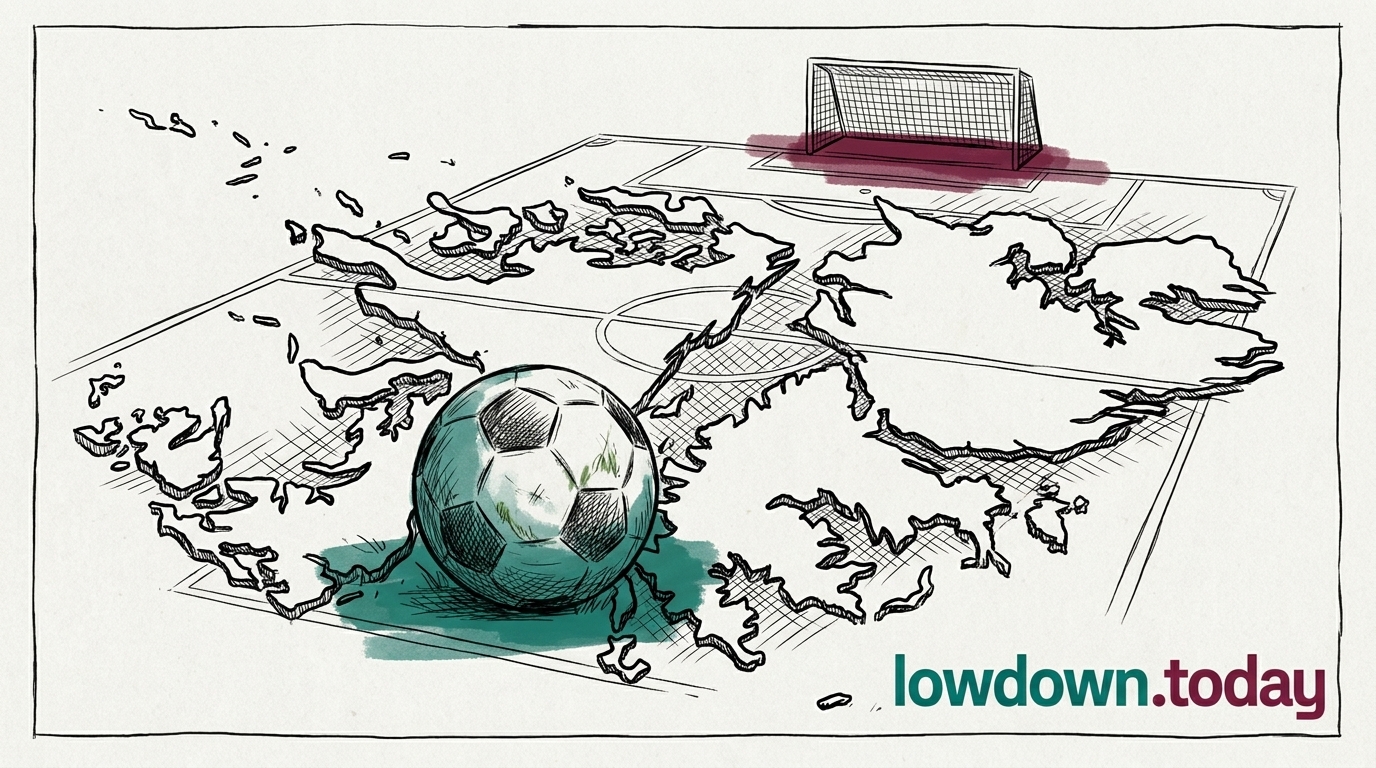
FIFA had not opened disciplinary proceedings over the Malvinas banner as of 16 July, continuing a pattern set by its fast reversal of Folarin Balogun's ban while South Africa's appeal over Themba Zwane's ban remained outstanding. The nearest tariff, a CHF 30,000 fine from 2014, remains only a precedent, not a decision.
France
France
France's tournament ended at the semi-final stage for the first time since 2010, beaten 2-0 by Spain in Arlington, and Kylian Mbappe's Golden Boot chances are reduced to Saturday's third-place game alone. The 2022 runners-up now play for bronze rather than a second straight final.
Spain
Spain
Spain reached their first World Cup final since winning the trophy in 2010, beating France 2-0 through goals from Mikel Oyarzabal and Pedro Porro. Sixteen years after their only title, this squad returns to the same stage without the sovereignty politics attached to the other semi-final.
Downing Street (UK Government)
Downing Street said on the record that the Falkland Islanders 'are British with the right to determine their own future,' answering Argentina's vice-president and foreign minister. London rests its case on the islanders' 2013 referendum, not on the fixture, and lodged no formal protest despite the semi-final framing.
Argentina
Argentina
Vice-President Victoria Villarruel called England 'the usurping pirates' before kickoff; midfielder Leandro Paredes said after the 2-1 win that the Falklands 'will always be Argentine'. Argentina's 1994 constitution commits every office-holder to press the Malvinas claim, so a World Cup semi-final was never going to pass without it.
Switzerland
Switzerland
Switzerland reached their first World Cup quarter-final since 1954 and led Argentina before Breel Embolo's second yellow card left them a man down for the last half-hour. They expect the run to raise expectations for the next cycle rather than close a chapter.


