Skip to content
Welcome, thoughtbot's Giant Robots listeners!Start here
2026 FIFA World Cup
29MAY

Late injury swaps hit four squads

2 min read
15:10UTC

Netherlands, Brazil and Germany confirmed injury replacements before the deadline, while the USA's Chris Richards returned to training on 8 June.

SportDeveloping
Key takeaway

Netherlands, Brazil and Germany confirmed injury swaps as squads were finalised hours before the registration deadline.

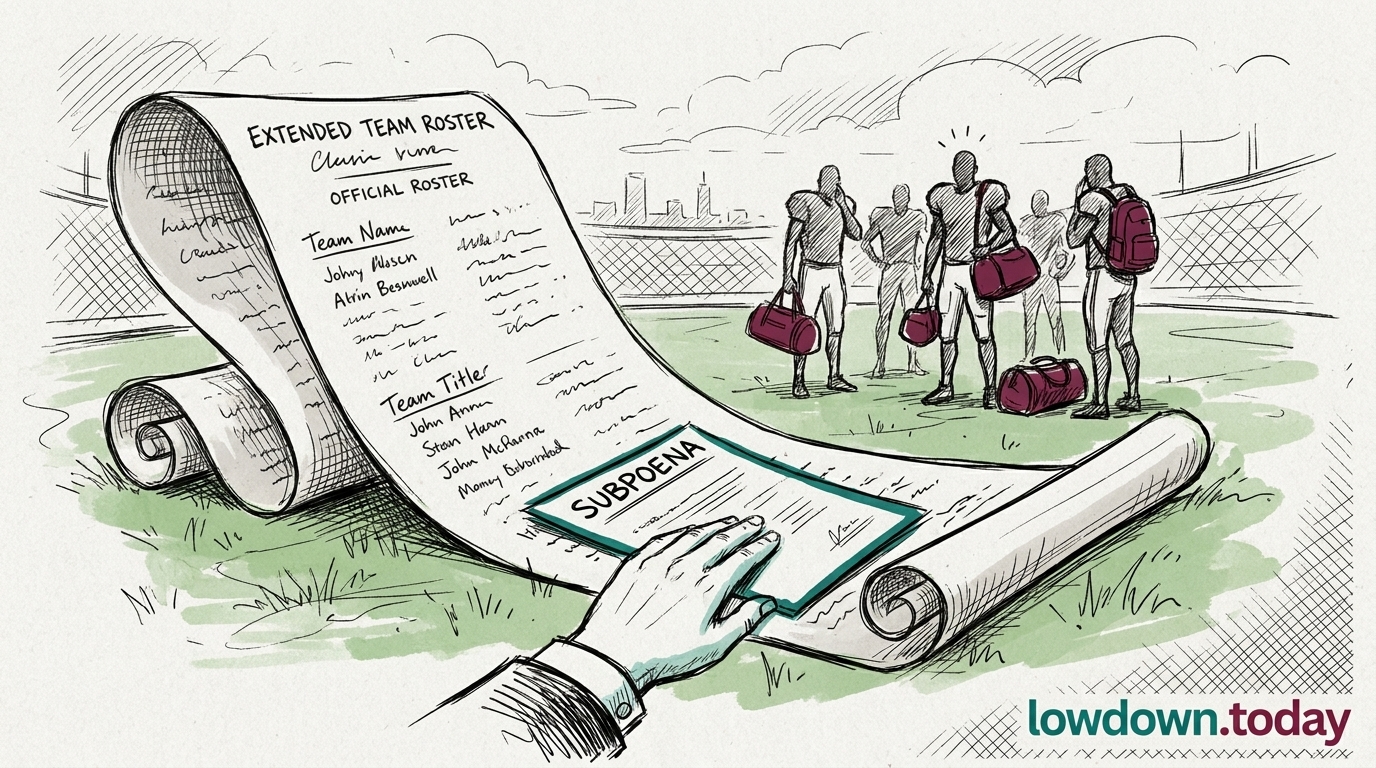
Four nations confirmed late squad changes before the 11 June FIFA deadline. Netherlands lost Jurrien Timber to a groin injury and called up Lutsharel Geertruida. Brazil replaced Wesley, who tore an adductor muscle in a friendly against Egypt on 7 June, with Atalanta midfielder Ederson. Germany swapped the injured Lennart Karl for Assan Ouédraogo of RB Leipzig⁠1.

The United States, by contrast, gained a player rather than losing one. Defender Chris Richards returned to full training on 8 June after two torn ankle ligaments but had not been confirmed as a starter. His original injury ruling, made before the USA's friendly with Germany, set the 11 June swap context that the whole field was working against.

Unlike Canada, where two slots stayed open into the final hours, these were clean substitutions of one named player for another. The pattern across them is timing: a replacement called up days before the opener arrives with no friendly to play into and a coaching staff that must integrate a new face on the training pitch alone. The expanded 48-team tournament magnifies the volume of these last-minute calls, each settled against the same hard registration cutoff.


Deep Analysis

In plain English

In the final week before the World Cup, four major nations had to swap players out of their squads because of injuries. The Netherlands lost Jurrien Timber, a defender, to a groin problem. Brazil lost Wesley, a forward, after he tore a muscle in his leg during a warm-up friendly against Egypt. Germany lost Lennart Karl, a defender, to a thigh injury. Each team called in a replacement from their extended squad list before the 11 June deadline. For the United States, the situation was less clear: centre-back Chris Richards had been ruled out of the Germany warm-up match in early June with two torn ankle ligaments, but by 8 June he had returned to training. The US had to decide by 11 June whether to keep him in the squad or replace him; his status had not been confirmed as fit when this update was written.

Deep Analysis
Root Causes

All three confirmed injuries occurred during late-season club matches or warm-up friendlies. Wesley's adductor tear happened in Brazil's 7 June Egypt friendly, a game played when the club season in England's Premier League and Italy's Serie A had already finished but Brazil's preparation schedule ran to the edge of the replacement window.

Groin and thigh muscle injuries in this phase of a season reflect accumulated soft-tissue fatigue; players competing at Champions League or Europa League level through May carry load profiles that make a pre-tournament friendly a genuine injury risk, not a safe run-out.

FIFA's replacement rules create a perverse incentive: teams hold injury-risk players in the squad until the last possible moment to avoid showing tactical weakness to opponents. A squad announcement with a fit player who then withdraws protects information for longer than an early replacement, but it compresses the replacement's integration time to near zero.

What could happen next?
  • Consequence

    Assan Ouedraogo joins Germany's squad with minimal tournament preparation time; a player integrating a new tactical system in days rather than weeks carries a higher performance variance in early group matches.

  • Precedent

    Five confirmed injury replacements across four squads in a single week, all soft-tissue, supports FIFPro's data-backed lobbying for a mandatory recovery window between domestic season end and World Cup squad camps.

First Reported In

Update #17 · Host turns back a World Cup referee

ESPN· 9 Jun 2026
Read original →
Different Perspectives
Council on Foreign Relations
CFR's analysis identified 18.75% of the 48-team field facing access barriers — the only available quantification after the State Department admitted it has none. The explicit contrast with South Africa 2010's visa waiver for all ticket holders positions the US as a regressive host by historical standards.
New York commuters / Assemblyman Bhalla
Bhalla framed Penn Station's closures as a class issue: 'For the 99 percent that can't afford to attend the games, it would be nice to at least know how you're going to get home from work.' Eight closures lock 650,000 daily commuters out for tournament traffic, with one on a Monday rush hour.
French Football Federation
The FFF called an 11:00 CEST press conference for 28 July, at its Paris headquarters, following an extraordinary executive committee meeting, at which Zinedine Zidane is expected to be presented as head coach succeeding Didier Deschamps. As of this writing no communique confirms the appointment, contract length or start date.
Morocco
Morocco
Morocco is pushing for the 2030 final at its Grand Stade Hassan II in Casablanca, a planned 115,000-seat venue that would be the world's largest football stadium on completion. The venue is contested by a Spanish petition for the Santiago Bernabeu, and FIFA has fixed neither the venue nor the tournament's proposed 64-team format.
FIFA
FIFA
FIFA's first tournament report, published 27 July, itemises nearly 300,000 accredited personnel, 73,700 security staff and 300,000 square metres of custom-grown turf, with no revenue or cost figure attached. As a Swiss association answering to its own Congress rather than a treasury, FIFA has followed the same operational-before-financial sequence it used after Qatar 2022.
Javier Tebas / La Liga
La Liga president Javier Tebas said on 21 July that FIFA's system is rotten from the root and that Gianni Infantino's time as president has, in his words, concluded. Tebas has no vote in FIFA's process, so days after the IOC declined jurisdiction over a separate ethics complaint, he used the only instrument he has.


