Skip to content
You can now search across every topic, entity and event.What's new
2026 FIFA World Cup
21MAY

Tuchel cuts Foden, Palmer and TAA

3 min read
11:59UTC

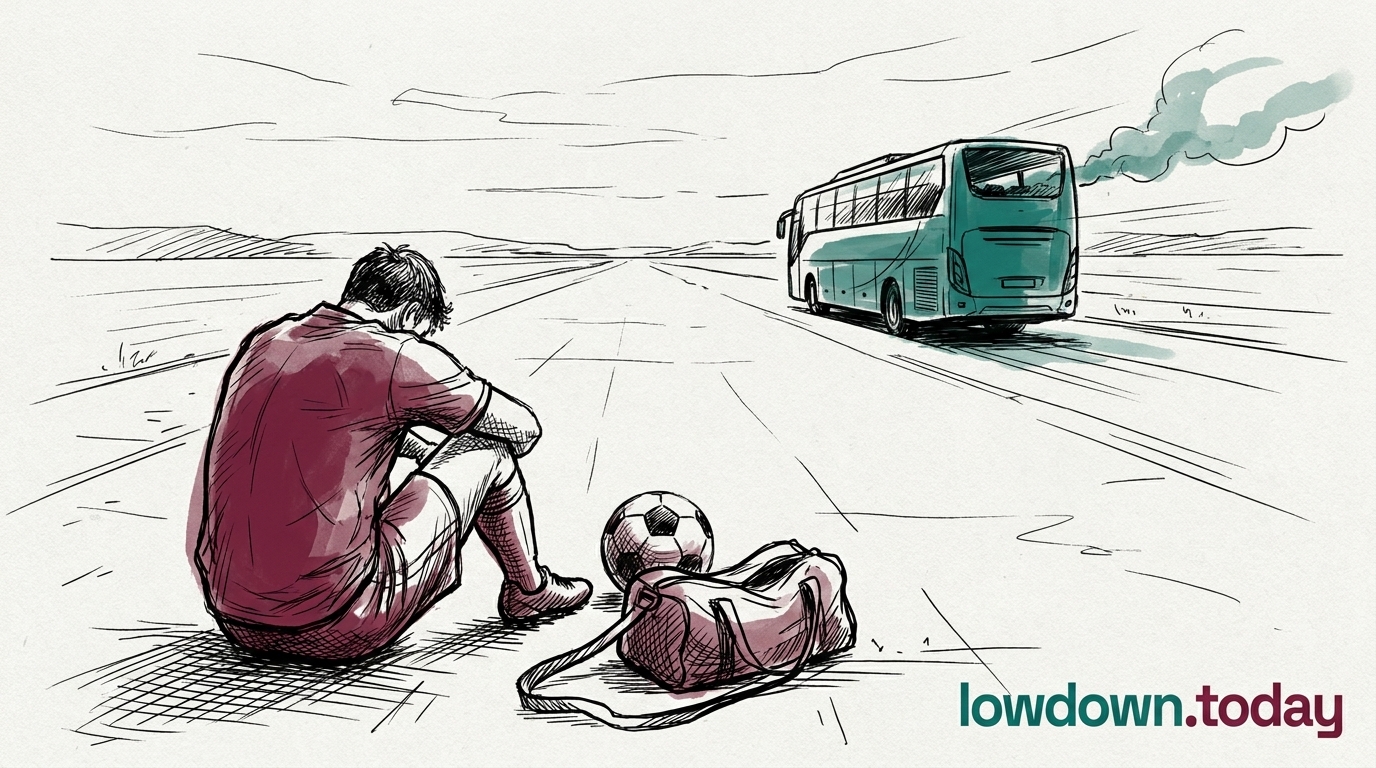
Thomas Tuchel left Trent Alexander-Arnold, Phil Foden and Cole Palmer out of England's final 26 on Friday 22 May, three high-profile attackers and a right-back sent home in form.

SportDeveloping
Key takeaway

England's gamble is positional balance over Alexander-Arnold's range against teams that defend deep.

Thomas Tuchel, the German head coach of England, cut Trent Alexander-Arnold from his final 26 on Friday 22 May, weeks after recalling the Liverpool right-back to a provisional 55-man list 1. Phil Foden of Manchester City and Cole Palmer of Chelsea also missed out, two of the Premier League's sharpest attackers omitted while playing well. England therefore go to the tournament without three players their domestic press had treated as near-certainties.

The Alexander-Arnold omission carries a tactical cost the headline hides. He is England's most precise long passer from deep, the player who can break a packed defence with a diagonal before it sets. Leaving him out narrows how England can build against a low block, the shape most group opponents will adopt against a side carrying that much attacking talent. Tuchel has chosen positional balance over a single elite skill, and that trade only reveals itself once England meet a team content to defend its box.

Tuchel's other calls run steadier. Jude Bellingham made it after a hamstring doubt cleared. Jordan Henderson travels to a fourth World Cup, equalling Sir Bobby Charlton's record, and Harry Kane to a third, matching Billy Wright. The instinct shared across this week's squads, fit and trust ahead of recent club output, is one England applied to bigger names than anyone else.


Deep Analysis

In plain English

Every World Cup squad has 26 places, and coaches always have to leave out some very good players. On 22 May, England manager Thomas Tuchel announced his final 26, and three famous names were missing: Trent Alexander-Arnold (a right-back and midfielder who plays for Real Madrid), Phil Foden (a midfielder who won England's top individual player award recently), and Cole Palmer (a Chelsea attacking midfielder in outstanding form). All three are at the top of their games right now. Tuchel left them out on tactical grounds: he wants players who work in a specific way without the ball, and he judged others a better fit for that system. England's results in June will show whether that call was right. Jude Bellingham, arguably England's best player, did make the squad after recovering from a hamstring injury that had worried staff.

Deep Analysis
Root Causes

Alexander-Arnold's Real Madrid transfer in summer 2025 introduced a positional ambiguity that never resolved under Tuchel. At Liverpool he played right-back with licence to invert centrally; at Real Madrid the system demanded a more orthodox defensive role. Tuchel, whose own defensive structure requires right-back discipline, lost confidence that Alexander-Arnold would replicate Madrid's restraint in an England shirt rather than revert to Liverpool instincts.

Foden and Palmer's omissions reflect a surplus problem this England generation has carried for years: more elite attacking midfielders than a balanced 26 can hold, with Bellingham first-choice and Rashford and Saka filling the wide creative roles. Tuchel was not choosing between strong and weak players; he was choosing among several of similar quality, and somebody outstanding was always going to miss out.

What could happen next?
  • Risk

    England's open-play chance creation drops significantly without Palmer and Foden, increasing reliance on set-pieces and Bellingham's individual brilliance.

    Immediate · Assessed
  • Consequence

    The Alexander-Arnold omission ends his England World Cup career at 27, barring a recall in 2030.

    Long term · Assessed
  • Precedent

    Tuchel's willingness to cut three of England's five most commercial players signals that The Football Association has genuinely ceded selection authority to the coaching staff, a structural shift from the Southgate era.

    Medium term · Assessed
First Reported In

Update #12 · Squads land, subpoenas follow

The Football Association· 29 May 2026
Read original
Different Perspectives
Spain
Spain
Spain face France on Tuesday for the second semi-final place, the last unresolved tie in the bracket.
France
France
France already through to the other semi-final, await Tuesday's result against Spain to know who plays the England-Argentina winner in the final.
Switzerland
Switzerland
Switzerland reached their first World Cup quarter-final since 1954 and led Argentina before Breel Embolo's second yellow card left them a man down for the last half-hour. They expect the run to raise expectations for the next cycle rather than close a chapter.
Norway
Norway
Norway leaned on Erling Haaland to reach a first modern-era quarter-final, and he nearly took them further before a disallowed goal and England's late double ended the run. Their tournament closes as the best World Cup performance in the country's history.
Argentina national team
Argentina broke down a 10-man Switzerland late, extending Scaloni's run of reaching every semi-final he has managed since 2019. Messi will make his first World Cup appearance against England, a fixture Argentine coverage framed around that unbroken run rather than the personal narrative.
England
England
England needed a 93rd-minute Bellingham winner to see off Norway, the third straight knockout tie settled in its closing stages rather than controlled. They travel to Atlanta as favourites but with Declan Rice a fitness doubt and Jarell Quansah suspended.


