Zocalo
Mexico City's central square; declared saldo blanco after its first big World Cup crowd.
Last refreshed: 6 July 2026 · Appears in 1 active topic
Why did striking teachers seize Mexico City's fan zone on World Cup opening day?
Timeline for Zocalo
Mexico City declares a safe Azteca night
2026 FIFA World CupHeld 3,300 officers as the third security zone
2026 FIFA World Cup: Mexico City doubles police after crushMentioned in: Teachers and the missing take the Zocalo
2026 FIFA World CupBackground
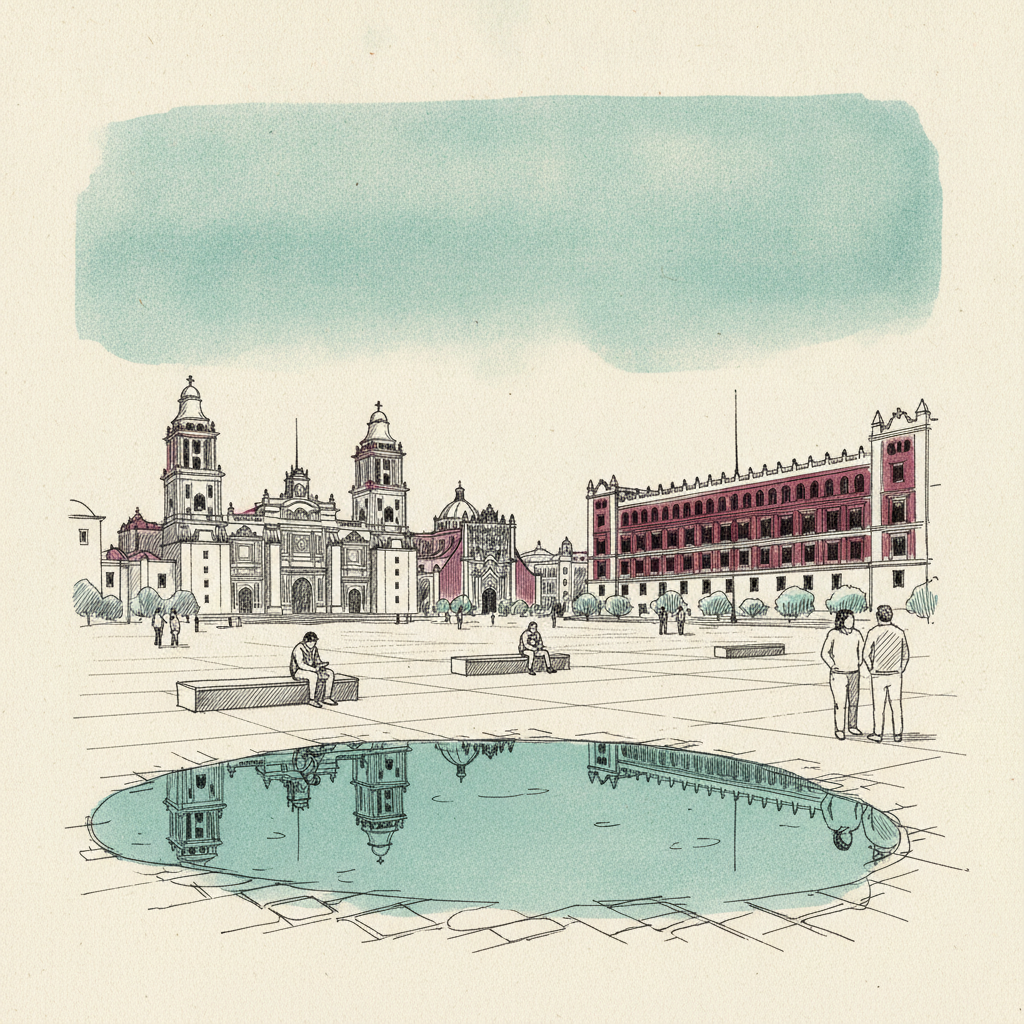
The Zocalo, formally the Plaza de la Constitución, is the main square of Mexico City and one of the largest public squares in the world, measuring roughly 240 metres by 240 metres. It occupies the heart of the Historic Centre, adjacent to the Metropolitan Cathedral and the National Palace. The site has been a ceremonial and political focal point since the Aztec capital of Tenochtitlan, and today serves as Mexico City's primary venue for civic events, protests, and national celebrations.
FIFA designated the Zocalo as the official fan zone for Mexico City during the 2026 World Cup, capitalising on its capacity to hold hundreds of thousands of spectators. On the morning of the tournament's opening match on 11 June, members of the CNTE (Mexico's dissident teachers' union) erected a tent encampment at the site, demanding pension restoration and higher wages. Families of Mexico's more than 130,000 disappeared also hung flyers at the Zocalo, converting the planned fan zone into a protest space.
President Claudia Sheinbaum offered 18 alternative free-viewing venues across the city. The occupation underlined the tension between the government's use of the World Cup as a platform for national celebration and unresolved social crises that organisers had not anticipated disrupting opening day.
Mexico City's government declared 'saldo blanco', no incidents, at the Zocalo fan zone alongside the Estadio Azteca and Angel de la Independencia on 5 July, the tournament's first big crowd there since the fatal 30 June Reforma crush.
What happened at the Zocalo on the 2026 World Cup opening day?
Where is the Zocalo in Mexico City?
Why was the Zocalo chosen as a World Cup fan zone?
Was the Zocalo fan zone safe during the World Cup?
Written with AI from Lowdown's published reporting. Not individually reviewed by an editor. Updated 6 July 2026. Editorial standards.