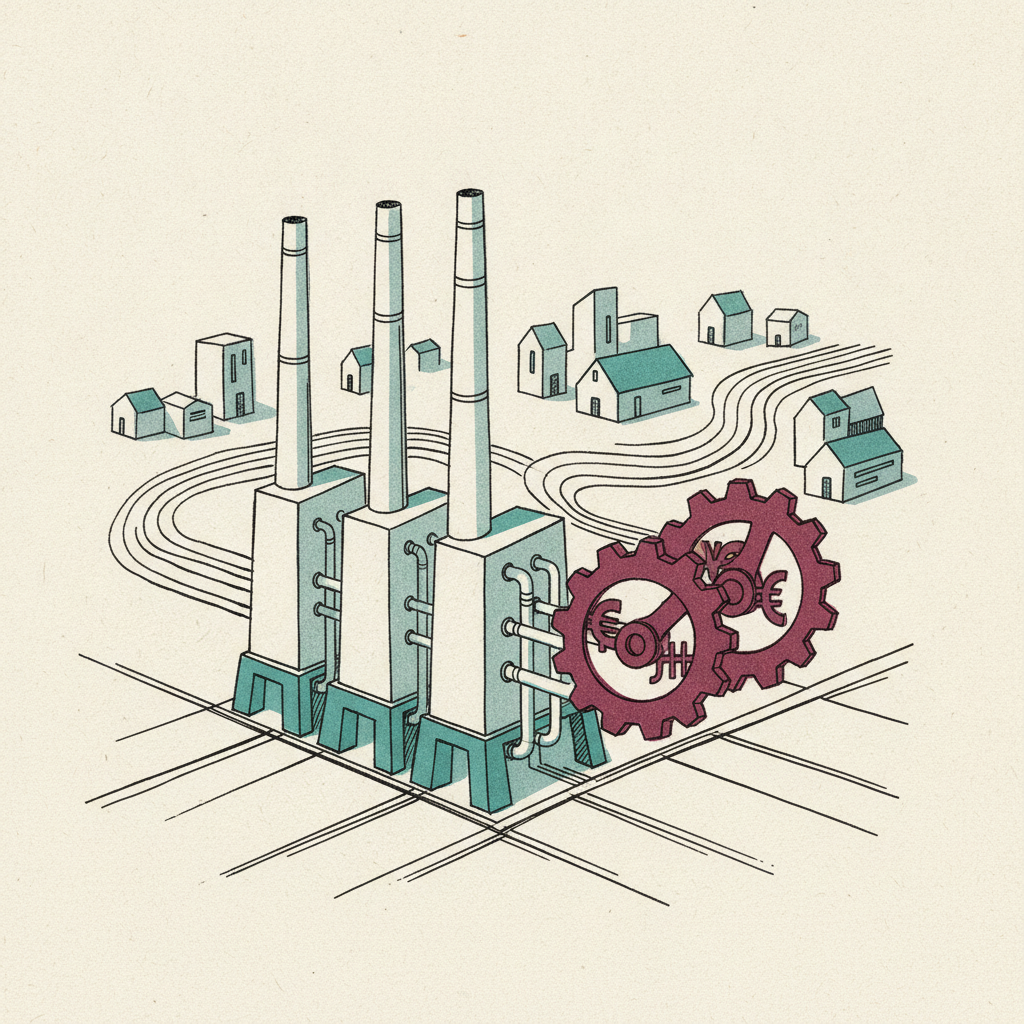
StromVKG
Germany's capacity-payment law funding dispatchable gas plants via competitive Bundesnetzagentur-run auctions.
StromVKG's first 4.5 GW capacity auction opened on 21 July 2026 with bids due 8 September, proceeding without the European Commission state-aid clearance Bundesnetzagentur still listed as outstanding.
Last refreshed: 31 July 2026 · Appears in 1 active topic
Will the Südbonus survive the 9 July Bundestag plenary, or does StromVKG pass clean?
Timeline for StromVKG
Mentioned in: ACER issues first EU-wide cost dataset
European Energy MarketsMentioned in: CRE lets grids buy local flexibility
European Energy MarketsMentioned in: German spark spread hits cycle worst
European Energy MarketsGermany bids capacity into a legal gap
European Energy MarketsBerlin's 9 GW auctions await Brussels
European Energy MarketsBackground
The Stromversorgungskostensenkungsgesetz (StromVKG) is Germany's statutory framework for capacity payments to gas-fired power plants. It creates a revenue floor for operators that keep dispatchable generation on standby even when wholesale prices make running uneconomical, aiming to prevent stranded-asset closures of the gas fleet ahead of sufficient firm-capacity alternatives.
The law funds 9 GW of dispatchable gas capacity across two 4.5 GW auction tranches within its 2026 programme, at a cost approaching €3bn a year from 2031. Bundesnetzagentur administers the auction process; European Commission state-aid clearance for the scheme is a precondition industry and regulators track separately from the domestic legislative timetable. StromVKG is a distinct measure from the older Kraftwerksstrategie, Germany's separate 10 GW hydrogen-capable plant programme targeted at 2032.
Its passage exposed a live domestic fault line: a south-Germany siting premium, the Suedbonus, was contested by trade unions as structurally unjustified toward eastern operators, while The Greens pushed unsuccessfully for binding hydrogen-conversion conditions on winning bidders.
Auction opens without state-aid clearance
StromVKG passed its second and third Bundestag readings on 9 July, having cleared Cabinet on 8 June and committee stage on 24 June with the 1 September first-auction date intact. The final text set its own bid ceiling at €244,000/MW, a 41% lift written in during committee to keep the tranche from under-clearing, and split bidding one-third north and two-thirds south.
Bundesnetzagentur, which runs the auctions, still listed European Commission state-aid approval for the two 4.5 GW tranches of the 9 GW 2026 programme as outstanding on its own StromVKG page, last revised 10 July. It opened bidding on the first 4.5 GW tranche on 21 July regardless, with bids due 8 September, ahead of a clearance the scheme still needs.
Law passes final legislative vote
What is the Südbonus in the German capacity market?
When is the Bundestag voting on StromVKG?
When will Germany's gas-plant capacity auctions start?
Law passes final legislative vote
What is the StromVKG and what does it pay gas plants for?
Why does Germany need capacity payments for gas plants?
Does StromVKG require EU state-aid clearance?
Did Brussels approve Germany's gas-plant capacity auctions before they opened?

Written with AI from Lowdown's published reporting. Not individually reviewed by an editor. Updated 31 July 2026. Editorial standards.