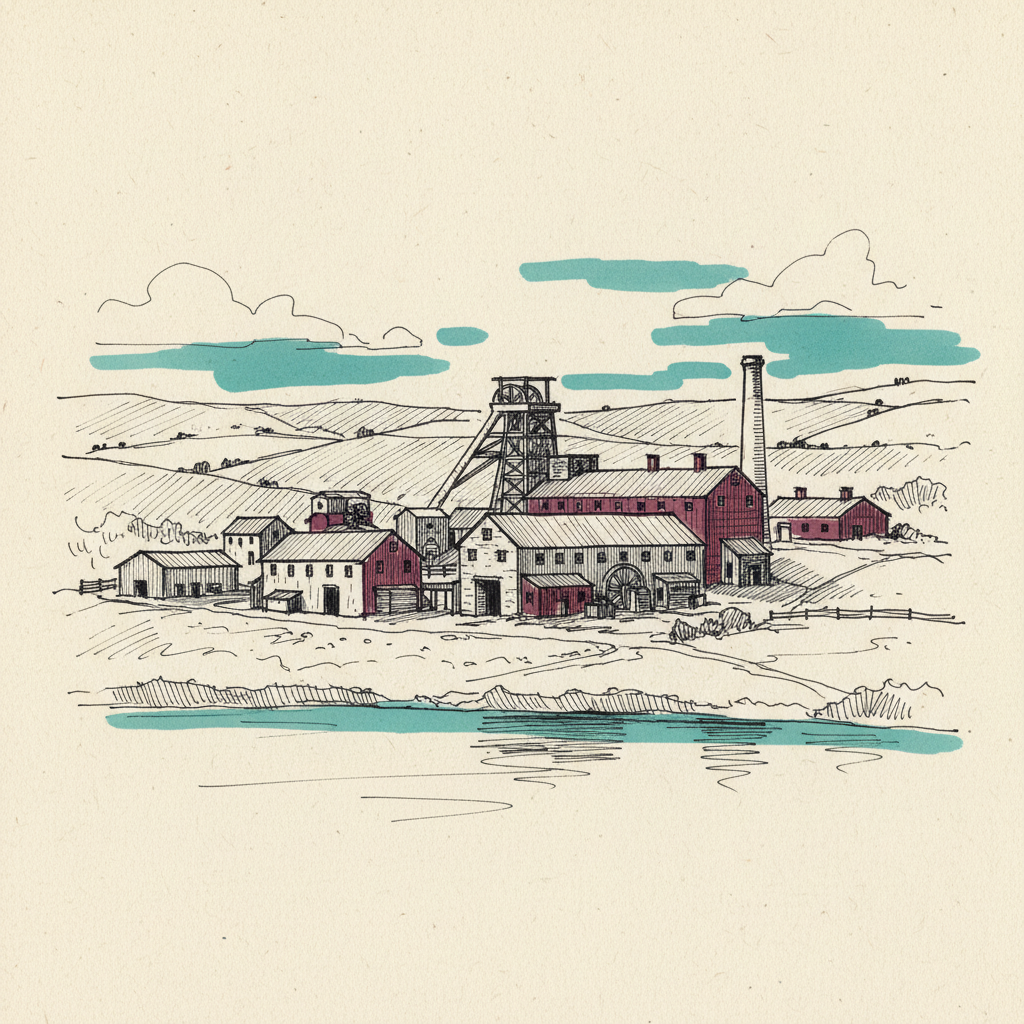
South Crofty
Cornwall's historic tin mine, closed 1998, now being restarted as the UK's only domestic tin source.
Last refreshed: 21 May 2026 · Appears in 1 active topic
Why does a long-closed Cornish tin mine matter for semiconductors and the green transition?
Timeline for South Crofty
NWF deploys up to £115.6m across supply-chain trio
UK Startups and InnovationBackground
South Crofty tin mine, located near Camborne in Cornwall, moved closer to production restart in May 2026 when Cornish Metals secured a £52m financing package including a £28.6m National Wealth Fund shareholder loan, targeting a final investment decision in summer 2026 and first production in 2028. If the restart succeeds, South Crofty becomes the only operating tin mine in western Europe and the UK's sole domestic source of mined tin.
South Crofty has a mining history dating back to the sixteenth century and was once the richest tin mine in Cornwall. Consolidated Tin closed it in 1998 after tin prices collapsed to economically non-viable levels. The site covers approximately 30 hectares of surface infrastructure and extends several kilometres underground; Cornish Metals has spent years on underground dewatering and environmental permitting since acquiring the project in 2016. The mine sits within a UNESCO World Heritage Site (Cornwall and West Devon Mining Landscape), adding planning complexity to the restart. Five previous restart windows were missed between 1998 and 2025.
South Crofty's strategic significance goes beyond its own production volumes. The UK imports 100% of refined tin, which is essential for semiconductor solder, EV battery contacts, and renewable-energy components. South Crofty sits on the UK Critical Minerals list precisely because no market mechanism prices The National-security cost of total import dependency. The NWF's decision to write a subordinated shareholder loan, the riskiest instrument in its toolkit, signals that the government treats South Crofty as sovereign infrastructure rather than a commercial mining investment. Production by 2028 would position the UK ahead of the EU Critical Raw Materials Act's 2030 domestic-sourcing targets for tin.