Slough
Berkshire town; UK's densest data-centre cluster, grid exhausted as of 2026.
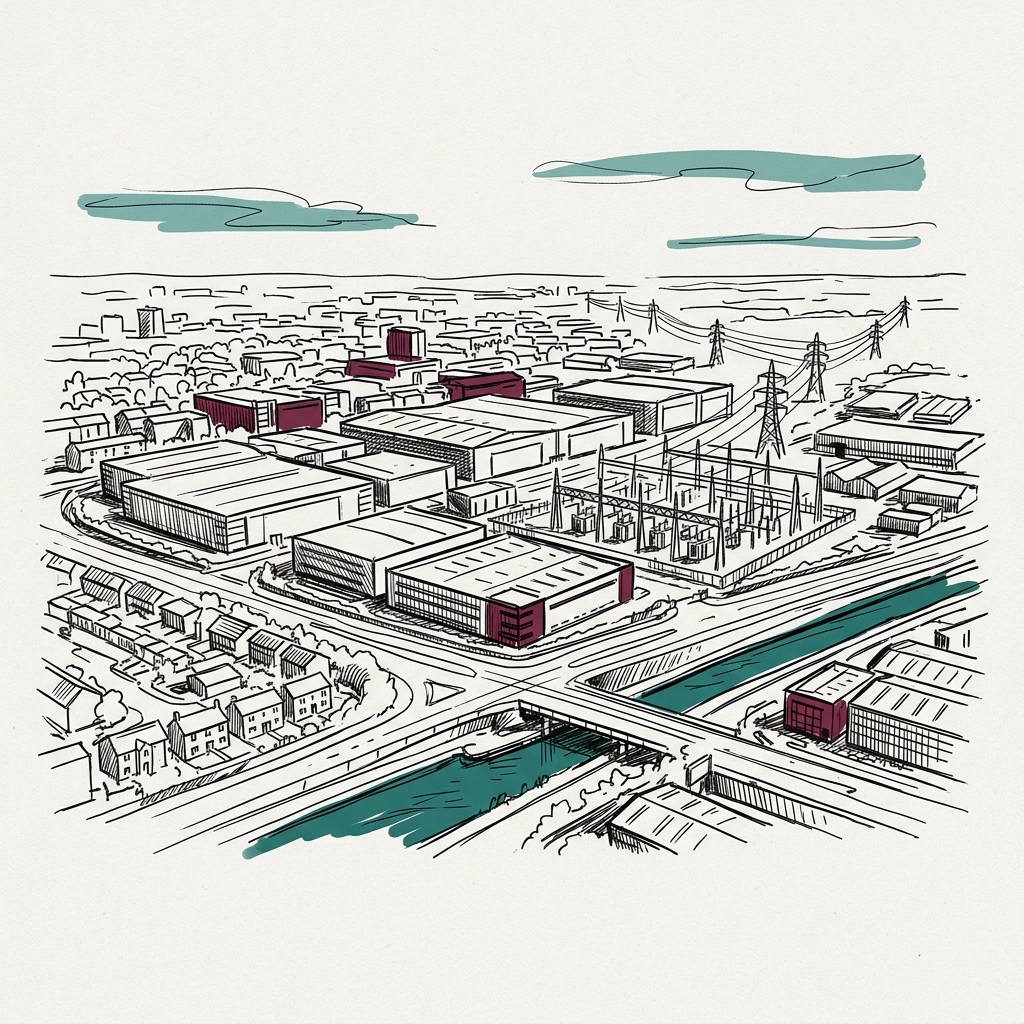
Slough sits where the M4 corridor meets Heathrow's low-latency fibre, a location that made it Britain's densest data-centre cluster, a concentration that by April 2026 had used up every spare megawatt on the local grid.
Last refreshed: 22 July 2026
With 35 data centres and no grid headroom left, where does Britain's AI infrastructure grow next?
Timeline for Slough
Mentioned in: Narayan and Harms split on sovereignty
UK Startups and InnovationMentioned in: TechFirst brings AI skills to 30,000 North East pupils
UK Startups and InnovationMentioned in: Slough saturates, AI datacentres head north
UK Startups and InnovationBackground
The Berkshire town lies twenty miles west of central London, close enough to the capital's financial and media industries to have become the default site for UK data-centre investment from the late 1990s Onward, once operators recognised the value of its motorway and fibre links. It now carries a share of Britain's digital infrastructure FAR out of proportion to its size.
That density reached its limit in April 2026, when a report found the town's 35 data centres had used up all spare capacity on the local grid, leaving hyperscalers and colocation operators unable to expand on site and pushing the search for room elsewhere.
Slough's exhausted grid became the reference point for a broader row over whether Britain's AI infrastructure strategy adds up: the government's AI Growth Zones scheme aims to steer new capacity toward Scotland and the north of England, where wind power runs cheaper, a redirection ministers and industry were still contesting in July 2026.