SCHUBERT
National Grid research project on sensing subsea-cable health and security using backscatter and repeaters.
National Grid Electricity Transmission awarded the SCHUBERT research contract on 6 October 2026, to study monitoring subsea-cable health and security with backscatter and repeater technology; the contractor and value are unpublished.
Last refreshed: 7 October 2026 · Appears in 1 active topic
Can a subsea power cable report its own damage without a ship?
Background
SCHUBERT is a research project commissioned by National Grid Electricity Transmission, which awarded the contract on 6 October 2026. Neither the contractor nor the value has been published.
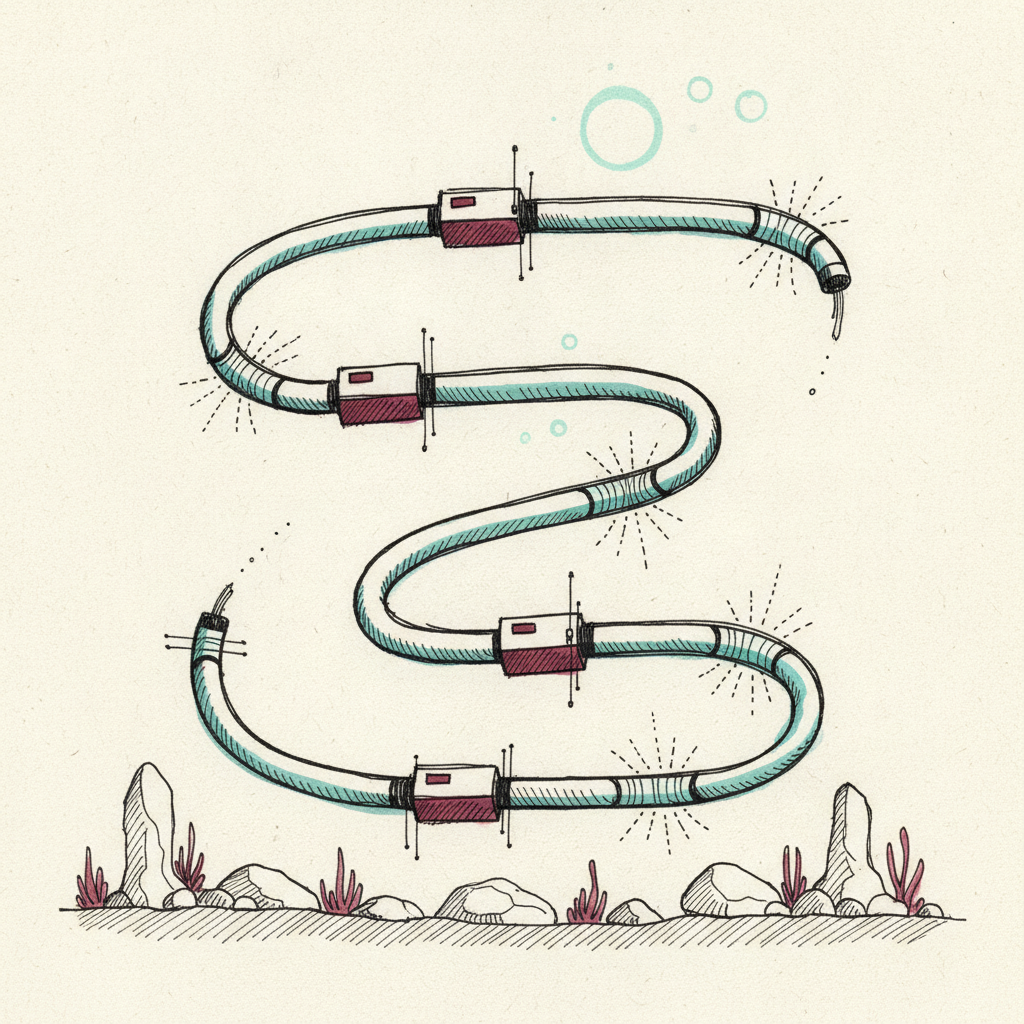
The project's full title is "subsea cable health/security via backscatter and repeater technologies". It covers monitoring a subsea power cable's physical condition and its security, using backscatter, in which a signal sent along a cable is reflected back to reveal faults or disturbance, together with repeater technology along the line.
National Grid published a second research award the same day, SABRES, on seabed ecology. Subsea cables carry a growing share of Britain's electricity, from offshore wind and interconnectors, and SCHUBERT addresses how an operator can tell when one is damaged or tampered with.

