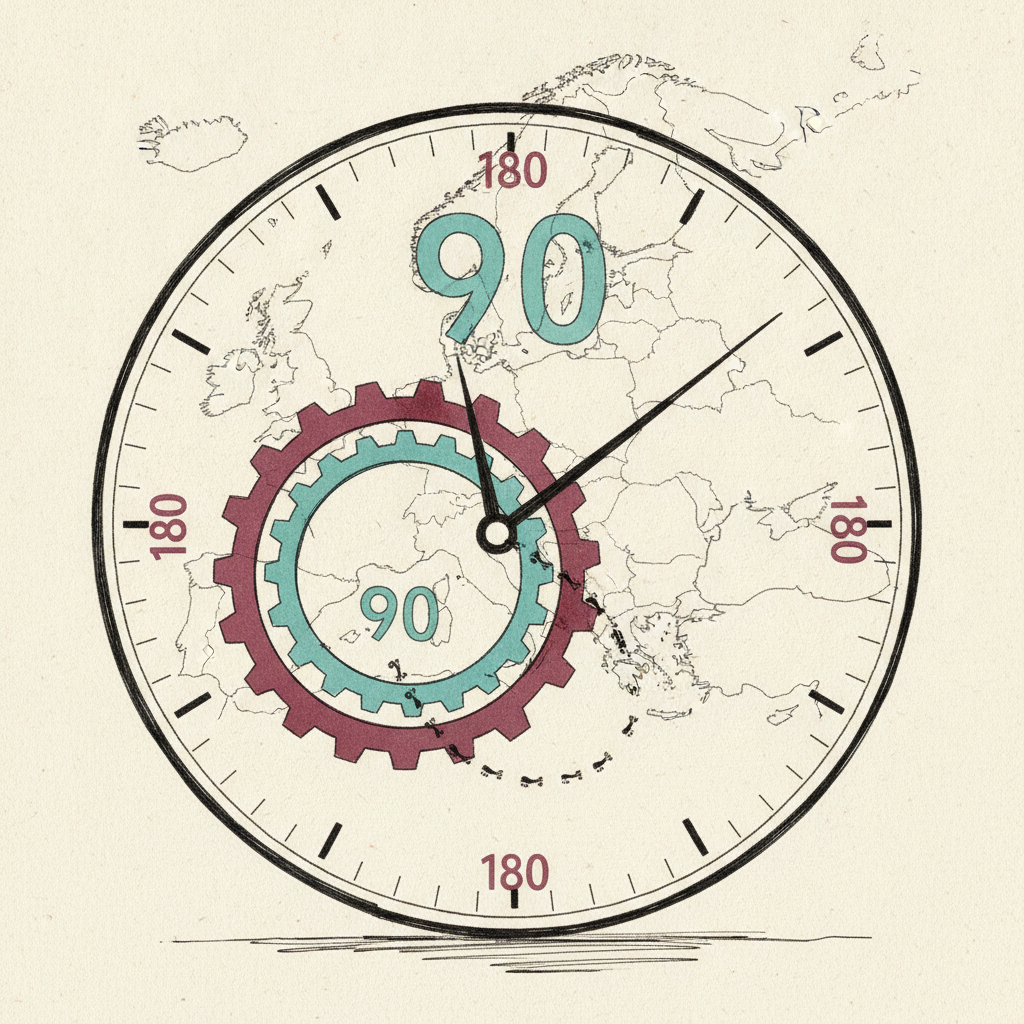
Schengen 90/180-day rule
The EU rule allowing non-EU visitors up to 90 days of stay within any rolling 180-day period across the Schengen area.
Last refreshed: 2 July 2026 · Appears in 1 active topic
Why can't nomads game the Schengen 90-day rule by border-hopping any more?
Timeline for Schengen 90/180-day rule
Europe automates its 90-day nomad clock
Nomads & CommunitiesWhat is the Schengen 90/180-day rule?
How is the Schengen 90-day rule enforced now?
Can I reset the Schengen 90-day clock by leaving to Georgia or the UK?
Background
The Schengen 90/180-day rule caps how long a non-EU visitor can stay across the Schengen area at 90 days within any rolling 180-day window. Since 10 April 2026 the rule has been enforced automatically at the border by the EU's Entry/Exit System, which replaced manual passport stamping with biometric day-counting.
The rule itself predates EES by decades, but enforcement used to depend on a border officer reading and adding up stamps, a process nomads could game by timing exits carefully or crossing to a non-Schengen country like Georgia or the United Kingdom to reset the count. That informal margin has closed.
With the rule now tracked electronically, the only lawful way to exceed 90 days in 180 is to hold a residence permit in a member state, such as Bulgaria's EUR 27,533-a-year nomad permit. National nomad visas do not ADD Schengen-wide days; they only grant residence in the issuing country.