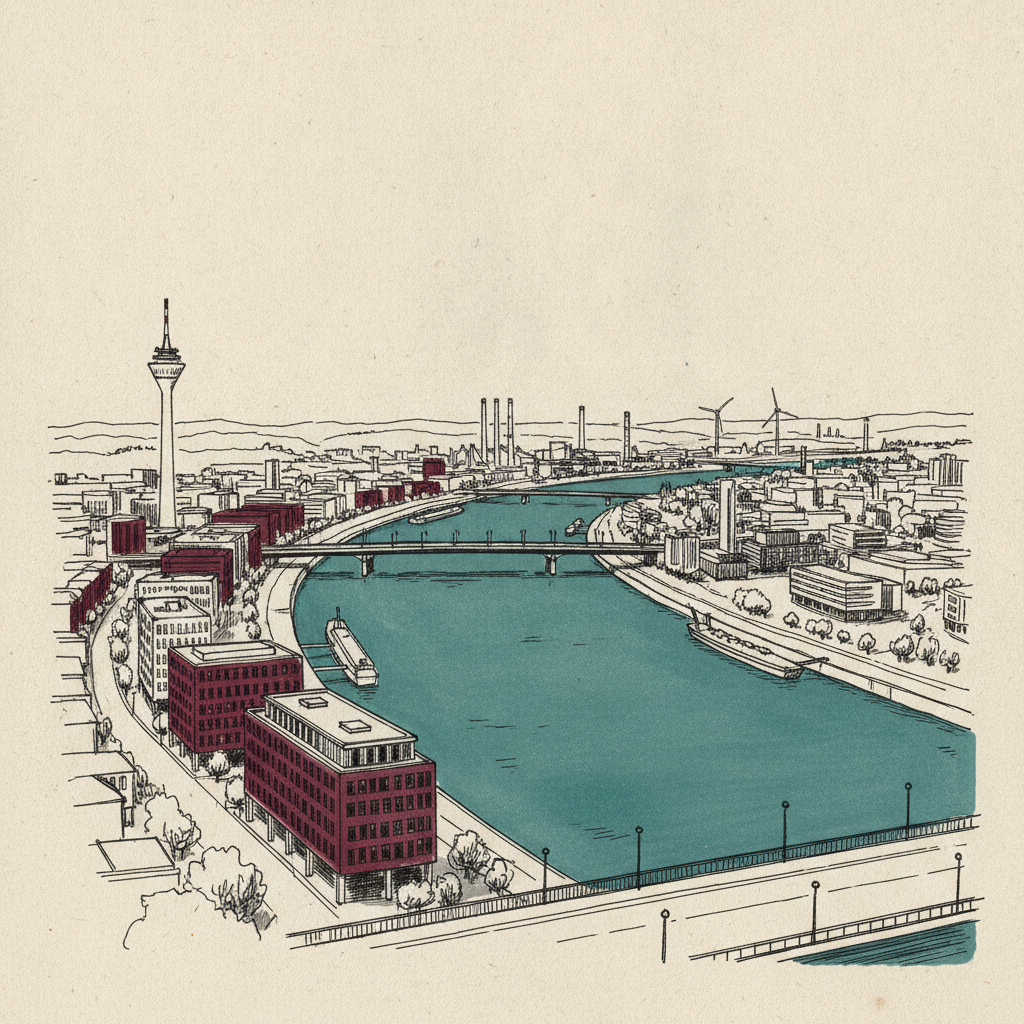
North Rhine-Westphalia
Germany's most populous state, in the west, capital Düsseldorf.
Last refreshed: 20 November 2026 · Appears in 1 active topic
Why did Germany's first capacity auction favour North Rhine-Westphalia?
Timeline for North Rhine-Westphalia
Received three awards for about 2,118 rMW
European Energy Markets: LEAG, RWE win German capacity auctionBackground
North Rhine-Westphalia took the largest share of Germany's first long-term capacity auction: three awards for about 2,118 reliable megawatts, roughly 41% of the 5,160 awarded, the Bundesnetzagentur's results of 3 November 2026 show. Most of the round went to North Rhine-Westphalia, Brandenburg and Saxony.
It is Germany's most populous state, with 17,986,214 residents at the end of 2025 on 34,113 km², and Düsseldorf is its capital. The federal government's profile of the state says coal mining and steel are giving way to bio-chemicals and high technology. In July 2026 the European Commission approved €353m of German aid for Element 3-5's silicon-carbide wafer project there.
On Lowdown's reading, most of the first round's capacity sits north of the grid bottleneck that leaves the south short in a wind lull. The regulator's president, Klaus Müller, says the regional spread of the winning bids will help to safeguard network operation.
How much capacity did North Rhine-Westphalia win in Germany's capacity auction?
What is the most populous state in Germany?
Why does it matter where Germany's new power plants are built?


Written with AI from Lowdown's published reporting. Not individually reviewed by an editor. Updated 20 November 2026. Editorial standards.